What Does Code P0296 Mean?
The diagnostic trouble code P0296, “Cylinder 12 Contribution/Balance Fault,” indicates that the Powertrain Control Module (PCM), also known as the Engine Control Module (ECM), has detected a discrepancy in the power output or rotational contribution of cylinder 12 compared to the other cylinders in the engine. The PCM continuously monitors the rotational speed and acceleration of the crankshaft via the crankshaft position sensor (CKP) signal, often in conjunction with camshaft position sensor (CMP) data. During each cylinder’s combustion event, a precise acceleration profile is expected. If cylinder 12 fails to contribute its expected share of power, causing a measurable deviation in crankshaft acceleration or a lack of consistent rotation, the PCM interprets this as a “contribution fault” for that specific cylinder. This diagnostic strategy aims to identify specific cylinders that are not firing efficiently, misfiring, or experiencing mechanical issues, directly impacting the engine’s combustion and power delivery subsystem.
Common Symptoms
- Check Engine Light (CEL) Illumination: The most common and direct symptom.
- Engine Misfire or Rough Idle: Noticeable uneven running, especially at idle or low RPMs.
- Reduced Engine Power and Acceleration: The engine may feel sluggish or lack its usual responsiveness.
- Increased Fuel Consumption: Inefficient combustion can lead to more fuel being used to maintain performance.
- Engine Hesitation or Stumble Under Load: The vehicle may hesitate or stumble when accelerating or under heavier loads.
- Abnormal Exhaust Odor: Unburnt fuel due to a misfire can lead to a raw fuel smell from the exhaust.
- Engine Vibrations: Increased vibration felt through the steering wheel, seat, or floorboard.
What Causes the Code P0296?
- Faulty Spark Plug: A worn, fouled, cracked, or incorrectly gapped spark plug in cylinder 12.
- Defective Ignition Coil: A failing or shorted ignition coil or coil pack specifically for cylinder 12.
- Damaged Spark Plug Wire: (If applicable) A damaged or high-resistance spark plug wire leading to cylinder 12.
- Clogged or Faulty Fuel Injector: A fuel injector for cylinder 12 that is restricted, stuck open, stuck closed, or electrically faulty.
- Low Compression in Cylinder 12: Mechanical issues such as worn piston rings, a damaged valve, a bent connecting rod, or a failed head gasket allowing combustion pressure to escape.
- Valve Train Malfunction: Problems with cylinder 12’s valves (e.g., burnt valve, sticky valve, excessive valve lash, worn camshaft lobe).
- Vacuum Leak: An intake manifold gasket leak or a vacuum line leak in the vicinity of cylinder 12, allowing unmetered air into that cylinder.
- Wiring Harness Issue: Damaged, corroded, or loose wiring/connectors leading to the ignition coil or fuel injector for cylinder 12.
- Contaminated or Faulty CKP/CMP Sensor: While less common for cylinder-specific codes, an intermittent or inaccurate signal from these sensors can sometimes contribute if the PCM misinterprets rotational data.
- PCM Software/Hardware Issue: Rarely, an internal PCM fault or outdated software calibration can incorrectly trigger this code.
How to Diagnose and Troubleshoot
Diagnosis of P0296 requires a systematic approach using specialized tools:
- Initial Scan and Data Review:
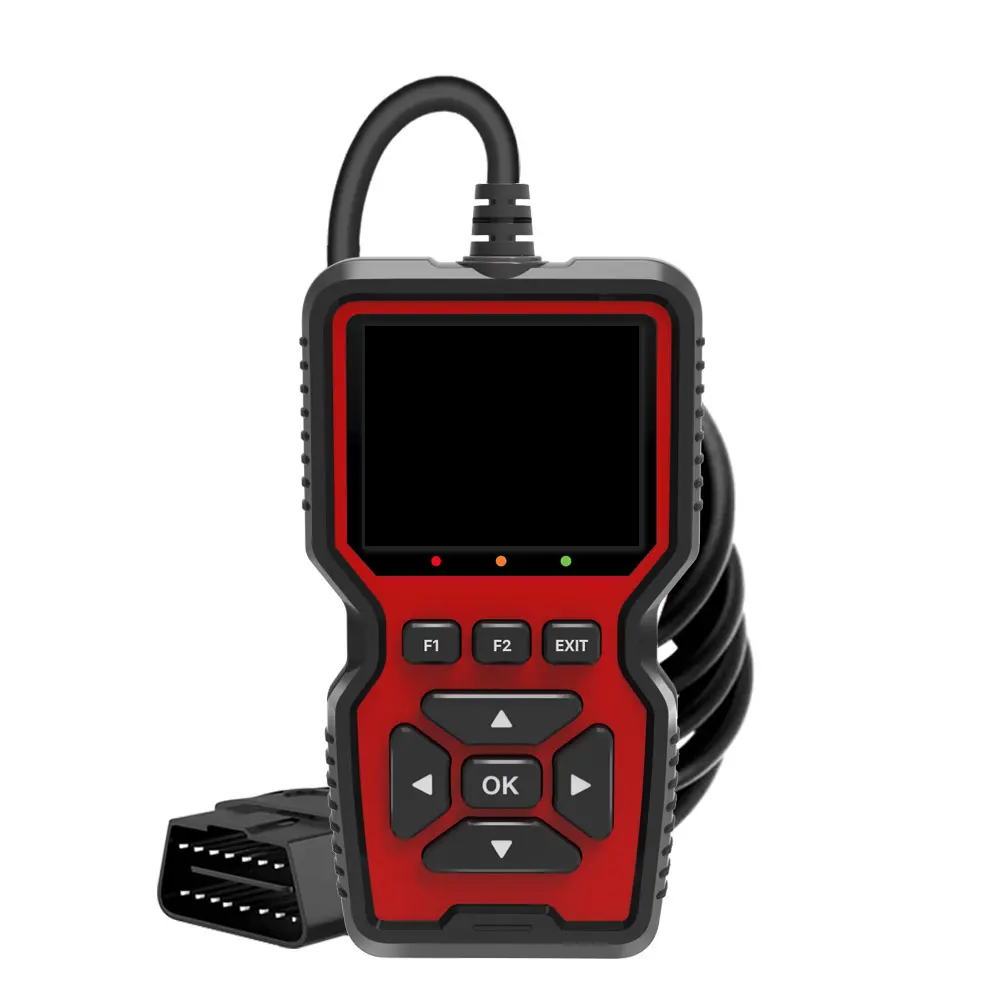
- Connect an OBD-II scanner. Record P0296 and any other accompanying codes. Address any general misfire codes (P0300) or fuel trim codes (P0171, P0174) first, as they may point to underlying system issues affecting multiple cylinders.
- Clear the codes and road test the vehicle if possible to see if P0296 returns immediately.
- Access live data to monitor misfire counters for all cylinders. Pay close attention to cylinder 12’s misfire count compared to others, both at idle and under load.
- Monitor fuel trims (STFT & LTFT) to rule out lean/rich conditions that might impact combustion.
- Visual Inspection:
- Carefully inspect the wiring harness and connectors for cylinder 12’s ignition coil and fuel injector for any signs of damage, fraying, corrosion, or loose connections.
- Check for obvious vacuum leaks around the intake manifold, vacuum lines, and PCV system near cylinder 12. A smoke machine can be highly effective for this.
- Ignition System Verification:
- Spark Plug Inspection: Remove the spark plug from cylinder 12. Inspect its condition (e.g., carbon fouling, oil fouling, wear, electrode damage, proper gap). Compare it to a known good plug if available. Replace if compromised.
- Ignition Coil Test: With the engine off, use a digital multimeter (DMM) to check the primary and secondary resistance of the cylinder 12 ignition coil, comparing values to manufacturer specifications and known good coils. For quick field diagnosis, swap the cylinder 12 ignition coil with a known good coil from an adjacent cylinder (e.g., cylinder 11). If the misfire shifts to the new cylinder’s location, the coil is faulty.
- Spark Test: Use an inline spark tester to confirm consistent, strong spark delivery to cylinder 12.
- Fuel System Verification:
- Fuel Injector Listening Test: Use a mechanic’s stethoscope or a long screwdriver to listen for a distinct clicking sound from the cylinder 12 fuel injector, indicating it is attempting to cycle. Compare its sound to other injectors.
- Fuel Injector Resistance Test: Disconnect the injector harness for cylinder 12 and use a DMM to measure its resistance. Compare the reading to manufacturer specifications and other injectors. An open circuit (infinity) or short circuit (very low resistance) indicates a faulty injector.
- Fuel Injector Swap Test: Similar to the ignition coil, swap cylinder 12’s fuel injector with one from an adjacent cylinder. If the misfire migrates with the injector, the injector is at fault.
- Fuel Injector Signal Test: Use a noid light or an oscilloscope to verify that the PCM is sending the correct pulse signal to the cylinder 12 fuel injector connector. A DMM can also be used to check for proper voltage and ground at the connector during cranking.
- Engine Mechanical Verification:
- Compression Test: Perform a wet and dry compression test on cylinder 12 and compare the readings to manufacturer specifications and the compression of other cylinders. A reading significantly lower than others indicates an internal mechanical issue.
- Leak-Down Test: If compression is low, a leak-down test will help pinpoint the exact source of the mechanical fault (e.g., air escaping from the intake manifold indicates an intake valve issue, exhaust manifold indicates an exhaust valve issue, dipstick tube indicates piston ring issues, or radiator indicates a head gasket issue).
- Wiring and PCM Integrity:
- If all components test good, carefully inspect the continuity of the wiring from the PCM connector to the ignition coil and fuel injector connectors for cylinder 12 using a DMM. Check for short circuits to ground or power. Inspect PCM connectors for corrosion or bent pins.
- Only consider PCM recalibration or replacement as a last resort, after meticulously ruling out all other possibilities.
Recommended Repairs and Solutions
- Replace Spark Plug: If the spark plug for cylinder 12 is found to be faulty, replace it. It’s often prudent to replace all spark plugs if they are due for maintenance or have high mileage.
- Replace Ignition Coil/Coil Pack: If diagnostics confirm a faulty ignition coil for cylinder 12, replace it. Depending on vehicle mileage and age, consider replacing all coils as a preventative measure if others are original.
- Replace Fuel Injector: If the fuel injector for cylinder 12 is clogged, electrically faulty, or has an improper spray pattern, replace it. A professional fuel system cleaning might be attempted for minor clogs, but replacement is often more effective for persistent issues.
- Repair Vacuum Leaks: Locate and repair any identified vacuum leaks, which typically involves replacing intake manifold gaskets, throttle body gaskets, or damaged vacuum lines.
- Address Internal Engine Damage: If compression or leak-down tests indicate a mechanical failure (e.g., worn piston rings, burnt valve, head gasket failure), more extensive engine repair or even an engine rebuild will be necessary. This is usually the most significant and costly repair.
- Repair Wiring Harness: If damaged or corroded wiring or connectors are identified, repair or replace the affected section of the wiring harness to ensure proper electrical conductivity.
- PCM Software Update or Replacement: In very rare instances, after all other components have been thoroughly tested and verified, a PCM software update or replacement may be required. This should only be performed by a qualified technician with appropriate programming tools.