What Does Code P0339 Mean?
DTC P0339 indicates an intermittent electrical fault within the “A” circuit of the Crankshaft Position (CKP) sensor. The CKP sensor is a critical component that monitors the rotational speed and precise position of the crankshaft, providing this data to the Powertrain Control Module (PCM), also known as the Engine Control Module (ECM). The PCM utilizes the CKP signal primarily for determining engine RPM, ignition timing, fuel injection timing, and detecting engine misfires. When the PCM sets a P0339 code, it means that while a CKP signal is generally present, it has intermittently detected periods where the signal is erratic, inconsistent, temporarily lost, or has an incorrect waveform characteristic, but not a complete or continuous absence of signal. This intermittency can manifest as signal dropouts, spikes, or an unstable frequency output that falls outside the PCM’s calibrated parameters for a specified duration, often within a particular range of engine speed or load. This directly impacts the PCM’s ability to accurately synchronize engine operation, affecting the ignition and fuel delivery subsystems.
Common Symptoms
- Intermittent Engine Cranking, No Start: The engine may crank but fail to start, especially when the signal is absent or erratic during the initial synchronization phase.
- Engine Stalling: The engine may unexpectedly die while driving, often followed by the ability to restart after a brief period.
- Rough Idling or Misfires: Inconsistent CKP signals can lead to inaccurate ignition and fuel timing, causing noticeable engine roughness, hesitation, or misfire conditions.
- Reduced Engine Performance: The vehicle may experience a lack of power, poor acceleration, or a general feeling of sluggishness as the PCM struggles with engine synchronization.
- Check Engine Light (MIL) Illumination: The Malfunction Indicator Lamp will illuminate, sometimes accompanied by other related misfire codes (e.g., P0300-P030x) if the misfire condition is severe.
- Erratic Tachometer Readings: The tachometer may display fluctuating or incorrect RPM readings, directly reflecting the unstable CKP sensor signal.
- Extended Crank Time: The engine may take longer than usual to start as the PCM attempts to acquire a stable CKP signal.
What Causes the Code P0339?
- Intermittent Open, Short, or High Resistance in CKP Sensor Wiring: This is a primary cause for intermittent codes. Wiring harnesses can suffer from chafing against engine components, heat degradation, rodent damage, or internal breaks that create intermittent contact, often exacerbated by engine vibration.
- Faulty Crankshaft Position Sensor (CKP Sensor): The sensor itself may have an internal defect causing its output signal to become erratic under certain conditions, such as temperature fluctuations, vibration, or due to magnetic degradation in inductive sensors.
- Poor Electrical Connection at CKP Sensor or PCM Connector: Loose terminals, corrosion, bent pins, or inadequate pin tension at either the CKP sensor connector or the PCM connector can lead to intermittent signal loss or degradation.
- Damaged Crankshaft Reluctor Wheel/Tone Ring: A bent, chipped, cracked, or excessively corroded tooth (or missing tooth) on the crankshaft-mounted reluctor wheel can cause the CKP sensor to generate an inconsistent or incorrect signal. Debris adhering to the tone ring can also interfere with the magnetic field.
- Electromagnetic Interference (EMI): Improperly shielded wiring or proximity of the CKP sensor wiring to high-current ignition components (e.g., ignition coils, spark plug wires) can induce electrical noise into the signal circuit, causing intermittent signal corruption.
- PCM Internal Fault (Rare): While less common, an internal fault within the PCM’s input circuit or signal processing capabilities can intermittently misinterpret a perfectly good CKP signal, leading to a false P0339.
How to Diagnose and Troubleshoot
Diagnosing an intermittent P0339 requires meticulous attention to detail and often the use of an oscilloscope.
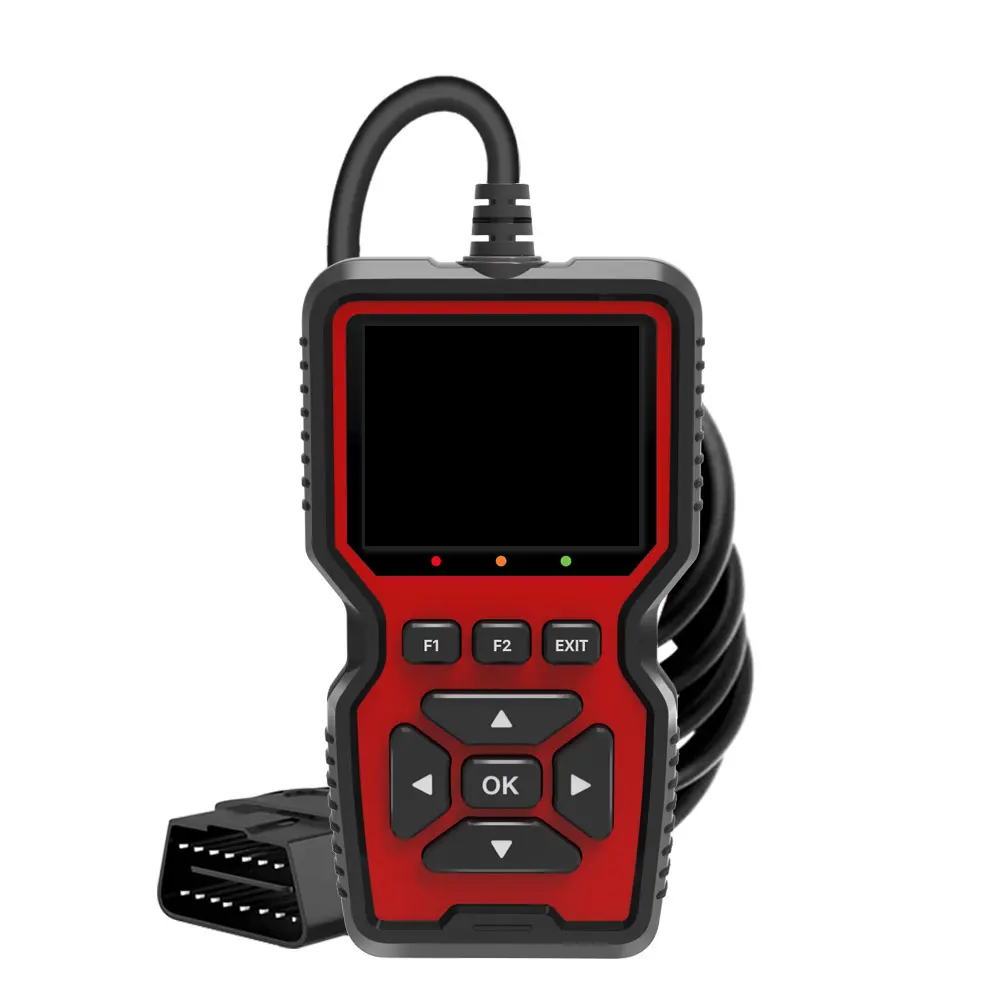
- Retrieve & Analyze DTCs and Freeze Frame Data: Use an OBD-II scanner to confirm P0339 and check for any accompanying codes. Crucially, analyze the freeze frame data to understand the engine conditions (RPM, engine load, coolant temperature, vehicle speed) at the moment the fault was detected. This provides vital clues for replicating the fault.
- Visual Inspection of CKP Sensor and Wiring:
- Locate the CKP sensor. Inspect its electrical connector for signs of corrosion, bent pins, or loose connections.
- Carefully trace the entire wiring harness from the CKP sensor back to the PCM. Look for any signs of physical damage: chafing, cuts, exposed wires, melting, or evidence of rodent damage. Pay close attention to areas where the harness passes near hot engine components or sharp edges. Perform a “wiggle test” on the harness while monitoring live data or with an oscilloscope.
- Inspect the sensor’s mounting for security; excessive vibration can impact signal integrity.
- Electrical Testing (DMM and Oscilloscope are CRITICAL):
- Voltage Supply and Ground (for Hall Effect Sensors): Disconnect the CKP sensor connector. With the ignition ON, use a digital multimeter (DMM) to verify the 5-volt (or 12-volt, depending on design) reference voltage and a solid ground at the appropriate terminals of the sensor’s harness connector.
- Circuit Continuity and Resistance: With the battery disconnected and both the CKP sensor and PCM connectors disconnected, use a DMM to check for continuity on all wires between the sensor connector and the PCM connector. Test for shorts to ground and shorts to voltage (if applicable) on each wire. Any intermittent opens or shorts can be difficult to catch with a DMM; gentle manipulation of the harness during testing can sometimes reveal them.
- Sensor Resistance (for Inductive Sensors): If the CKP sensor is a two-wire inductive type, measure its internal resistance across the terminals. Compare this reading to manufacturer specifications. An out-of-spec reading or an open circuit indicates a faulty sensor.
- Oscilloscope Waveform Analysis: This is the most effective diagnostic tool for intermittent CKP issues. Connect an oscilloscope to the CKP sensor signal wire. Start the engine (if possible) or crank it while observing the waveform.
- Look for clean, consistent square waves (Hall effect) or sine waves (inductive).
- Identify any dropouts, missing pulses, erratic amplitude fluctuations, or excessive noise in the signal.
- Perform a “wiggle test” on the CKP sensor connector and its wiring harness while observing the oscilloscope for any changes in the waveform. This often reveals intermittent connection issues.
- Compare the observed waveform to a known good waveform for the specific vehicle and sensor type.
- Heat/Vibration Cycling: If the fault is temperature-dependent (e.g., only occurs when hot), carefully use a heat gun (from a safe distance) to warm the sensor or portions of the wiring harness while monitoring the CKP signal with an oscilloscope. Conversely, controlled application of freezer spray may reveal faults that occur when cold.
- Reluctor Wheel Inspection: If all other electrical tests pass and an oscilloscope shows an inconsistent signal not related to the sensor or wiring, the reluctor wheel (tone ring) on the crankshaft may be damaged. This often requires significant engine disassembly to visually inspect. Look for bent, chipped, or missing teeth, or excessive metal debris adhering to its surface.
Recommended Repairs and Solutions
- Repair or Replace Damaged Wiring and Connectors: Given the intermittent nature of P0339, wiring faults and poor connections are extremely common. Precisely locate the intermittent fault in the wiring harness or connectors. Use high-quality, automotive-grade wires and connectors for repairs. Solder and heat-shrink connections for durability and moisture resistance. Ensure all connections are secure and free from corrosion.
- Replace the Crankshaft Position Sensor: If diagnostic tests, particularly oscilloscope analysis, confirm that the CKP sensor itself is intermittently failing (e.g., erratic signal under heat or vibration despite good wiring), replacement is necessary. Always use an OEM quality or equivalent aftermarket sensor for reliable performance.
- Clean or Repair/Replace Reluctor Wheel: If the crankshaft reluctor wheel is found to be damaged, repair (if minor and permissible) or replacement will be required. This can be a labor-intensive repair, often involving removal of the transmission or engine depending on the reluctor wheel’s location. If debris is found on the tone ring, carefully clean it off.
- Re-route or Shield Wiring: If electromagnetic interference (EMI) is suspected as the cause of signal noise, re-routing the CKP sensor harness away from high-current ignition components or adding appropriate shielding can resolve the issue.
- PCM Reprogramming or Replacement: Only consider PCM replacement as a last resort, after all other potential causes have been thoroughly diagnosed and ruled out by a qualified technician using appropriate diagnostic procedures and tools. In some rare cases, a PCM software update may address known intermittent signal interpretation issues.