What Does Code P0430 Mean?
The OBD-II diagnostic trouble code P0430 signifies “Catalyst System Efficiency Below Threshold (Bank 2).” This code indicates that the Engine Control Module (ECM) or Powertrain Control Module (PCM) has detected that the catalytic converter on Bank 2 is not operating at its required efficiency level for reducing exhaust emissions. Catalytic converters are critical components of a vehicle’s emission control system, designed to convert harmful pollutants such as carbon monoxide (CO), unburnt hydrocarbons (HC), and nitrogen oxides (NOx) into less harmful substances like carbon dioxide (CO2), water vapor (H2O), and nitrogen (N2).
The ECM monitors catalyst efficiency by comparing the signals from two oxygen sensors (or Air/Fuel Ratio sensors) associated with each catalytic converter bank: an upstream sensor (Sensor 1) located before the converter, and a downstream sensor (Sensor 2) located after the converter. A properly functioning catalytic converter will store oxygen and exhibit a stable, relatively high voltage signal from the downstream sensor, indicating minimal oxygen content and effective conversion of pollutants. The upstream sensor, conversely, will show rapid fluctuations between rich and lean conditions as the ECM adjusts fuel trim. When the downstream sensor’s signal begins to mirror the rapid fluctuations of the upstream sensor, it signifies that the catalyst’s oxygen storage capacity and conversion efficiency have degraded below the pre-programmed threshold set by the manufacturer. Bank 2 refers to the engine bank that does not contain cylinder number one, typically the driver’s side on a V-type engine in North America, but this can vary by manufacturer.
Common Symptoms
- Malfunction Indicator Lamp (MIL) Illumination: The “Check Engine” light will illuminate on the dashboard, often being the only noticeable symptom.
- Decreased Fuel Economy: While not always a direct symptom of the catalyst itself, underlying issues that damage the catalyst (like misfires or rich running) can lead to reduced fuel efficiency.
- Reduced Engine Performance: A severely restricted catalytic converter can cause significant exhaust backpressure, leading to a noticeable loss of power, poor acceleration, and engine hesitation.
- Sulphur or “Rotten Egg” Smell: A strong smell of sulfur from the exhaust can indicate an overloaded catalytic converter, often due to an overly rich air-fuel mixture that is not being properly processed.
- Failed Emissions Test: The vehicle will fail mandated exhaust emissions tests due to elevated pollutant levels.
What Causes the Code P0430?
- Degraded or Failed Catalytic Converter (Bank 2): This is the most common direct cause, resulting from age, thermal degradation (overheating due to misfires or rich running), chemical contamination (from leaded fuel, silicone sealants, excessive oil, or coolant consumption), or physical damage.
- Faulty Downstream Oxygen Sensor (Bank 2, Sensor 2): An inaccurate or sluggish downstream O2 sensor can report incorrect catalyst efficiency, even if the converter is functioning correctly.
- Exhaust System Leaks: Leaks in the exhaust manifold, exhaust pipe, or gaskets upstream of the downstream O2 sensor on Bank 2 can introduce unmetered oxygen, skewing sensor readings and leading the ECM to falsely detect low catalyst efficiency.
- Engine Misfires: Persistent misfires on Bank 2 cylinders allow unburnt fuel to enter the exhaust system, which ignites inside the catalytic converter, causing extreme overheating and irreparable damage to the catalyst substrate.
- Excessive Oil or Coolant Consumption: If engine oil or coolant leaks into the combustion chambers and is expelled through the exhaust, it can contaminate and “poison” the catalyst, reducing its efficiency.
- Rich or Lean Fuel Mixture Conditions: Prolonged operation with an excessively rich or lean air-fuel mixture can overload the catalytic converter, causing damage over time. This can be due to faulty fuel injectors, an incorrect fuel pressure regulator, a failing Mass Air Flow (MAF) sensor, or issues with the upstream oxygen sensor (Bank 2, Sensor 1).
- Faulty Upstream Oxygen Sensor (Bank 2, Sensor 1): A slow or inaccurate upstream O2 sensor can cause the ECM to command incorrect fuel trims, leading to catalyst damage or improper monitoring of its efficiency.
- PCM/ECM Software Issues or Failure: In rare cases, a software glitch or internal failure within the ECM/PCM could lead to misinterpretation of sensor data or improper catalyst monitoring algorithms.
How to Diagnose and Troubleshoot
Diagnosing P0430 requires a systematic approach to differentiate between a truly failed catalytic converter and other components that could trigger the code.
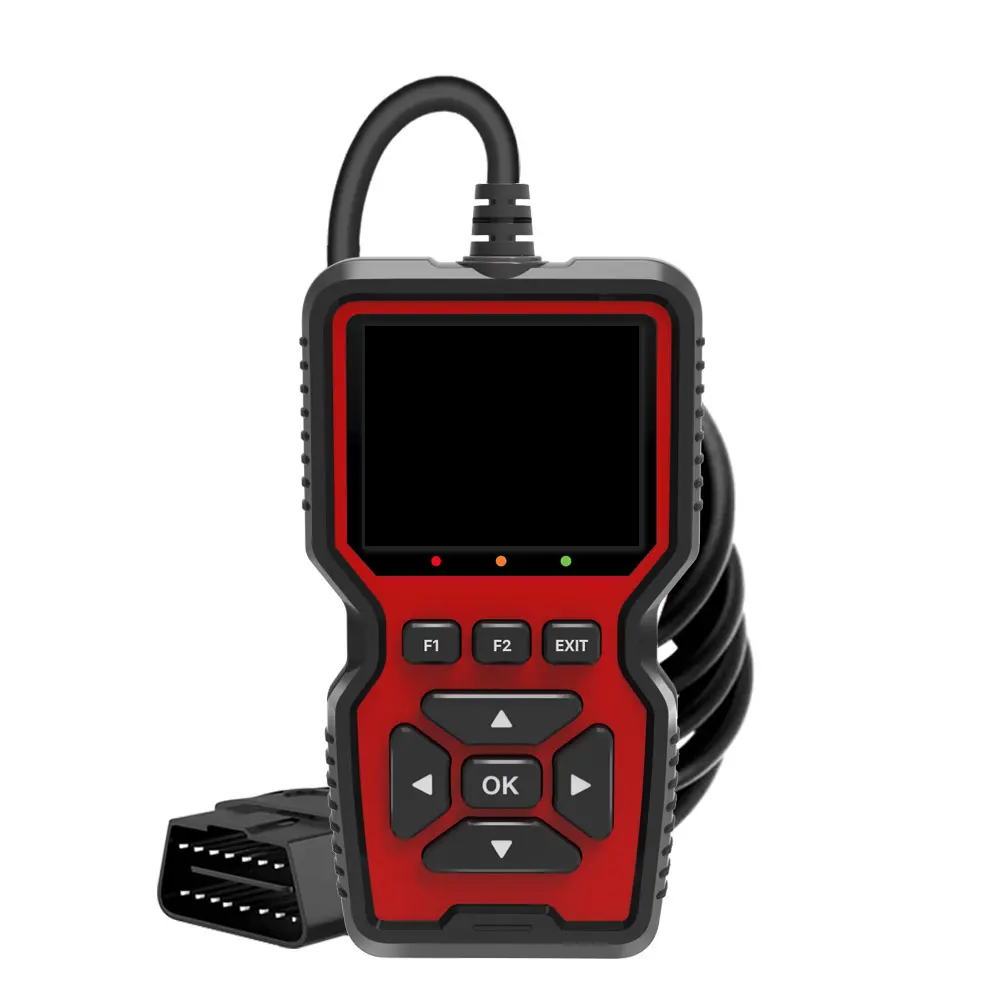
- Retrieve and Analyze Freeze Frame Data: Use an OBD-II scanner to retrieve the P0430 code along with its associated freeze frame data. This data captures the engine parameters (engine RPM, vehicle speed, engine temperature, fuel trims, sensor voltages) at the exact moment the code was set, providing crucial clues about the operating conditions that led to the fault.
- Visual Inspection:
- Inspect the entire exhaust system on Bank 2 for any signs of leaks, cracks, or damage, particularly between the engine and the downstream O2 sensor. Use a smoke machine if available for definitive leak detection.
- Check for any physical damage to the catalytic converter itself (dents, cracks, rattles indicating internal substrate disintegration).
- Look for any signs of engine oil or coolant leaks that could indicate internal engine issues (e.g., blue or white smoke from the exhaust).
- Monitor Live O2 Sensor Data with a Scanner:
- Warm up the engine to operating temperature.
- Monitor the live data streams for Bank 2, Sensor 1 (upstream) and Bank 2, Sensor 2 (downstream) oxygen sensor voltages (or Air/Fuel Ratio sensor equivalence ratios).
- The upstream sensor (S1) should cycle rapidly and consistently between approximately 0.1V (lean) and 0.9V (rich).
- The downstream sensor (S2) should display a relatively stable, higher voltage (typically above 0.6V for zirconium sensors) with minimal fluctuation.
- If the downstream sensor’s voltage signal begins to mirror the rapid fluctuations of the upstream sensor, it strongly indicates that the catalytic converter on Bank 2 has indeed lost its oxygen storage capacity and is inefficient.
- Graphing both sensors simultaneously can provide a clear visual comparison of their activity.
- Check Fuel Trims: Monitor the short-term (STFT) and long-term (LTFT) fuel trims for Bank 2. Significantly positive or negative fuel trims can indicate underlying issues (e.g., vacuum leaks, faulty MAF, leaking injectors) that could be causing misfires or rich/lean conditions, ultimately damaging the catalyst.
- Perform an Exhaust Backpressure Test: If performance issues are noted or the catalyst is suspected of being restricted, remove the upstream O2 sensor (Bank 2, S1) and install an exhaust backpressure gauge. Run the engine at idle and then at 2500 RPM. Excessive backpressure (e.g., more than 1.5 PSI at idle or 2.5 PSI at 2500 RPM) indicates a restricted or clogged catalytic converter.
- Verify Oxygen Sensor Operation (DMM Testing): If scanner data is ambiguous, use a digital multimeter (DMM) to back-probe the O2 sensor signal wires. Verify proper voltage switching for S1 and stable voltage for S2. Check the resistance of the heating element for both O2 sensors (refer to service manual specifications) to ensure they are heating correctly, as this is crucial for accurate readings.
- Check for Misfire Codes: Ensure there are no active or pending misfire codes (P030X for Bank 2 cylinders) that could indicate unburnt fuel damaging the catalyst. Address any misfires before condemning the converter.
Recommended Repairs and Solutions
The repair strategy for P0430 must prioritize addressing the root cause before replacing components. Replacing a catalytic converter without resolving underlying engine issues will inevitably lead to repeat failure of the new converter.
- Address Underlying Engine Issues First: This is the most crucial step.
- Repair Misfires: Diagnose and rectify any cylinder misfires on Bank 2. This may involve replacing spark plugs, ignition coils, fuel injectors, or addressing compression issues.
- Fix Oil/Coolant Consumption: If the vehicle is consuming excessive oil or coolant, identify and repair the source (e.g., worn valve seals, piston rings, head gasket failure).
- Correct Fuel System Imbalances: Repair any conditions causing overly rich or lean mixtures, such as faulty Mass Air Flow (MAF) sensors, leaking fuel injectors, incorrect fuel pressure, or vacuum leaks.
- Replace Faulty Upstream O2 Sensor (Bank 2, S1): If diagnostic tests confirm it is sluggish or reading incorrectly, as this directly affects fuel trim and catalyst loading.
- Replace the Bank 2 Catalytic Converter: If, after thorough diagnosis and ensuring all upstream engine conditions are resolved, the catalytic converter on Bank 2 is confirmed to be inefficient, it must be replaced.
- Quality Matters: Use a high-quality, OEM-equivalent replacement catalytic converter. Aftermarket converters vary significantly in quality and longevity, with cheaper options often failing prematurely or not meeting emission standards.
- Consider Direct-Fit vs. Universal: Direct-fit converters are typically easier to install and maintain proper exhaust flow. Universal converters require cutting and welding and may not offer optimal performance or fitment.
- Replace Bank 2, Sensor 2 Oxygen Sensor: Only replace the downstream O2 sensor if diagnostic tests specifically indicate it is faulty. It is a common mistake to replace this sensor as a first step without proper diagnosis, which rarely resolves the P0430 code if the catalyst itself is indeed the problem.
- Repair Exhaust Leaks: Any exhaust leaks found upstream of the downstream O2 sensor on Bank 2 must be sealed or repaired. This might involve replacing gaskets, clamps, or sections of the exhaust pipe.
- PCM/ECM Reprogramming or Replacement: This is a very rare solution. Only consider if all other components test good, and there’s a specific Technical Service Bulletin (TSB) from the manufacturer indicating a software update for catalyst monitoring, or if the PCM is diagnosed as faulty.
Mechanic’s Tips: Always clear the fault codes after performing repairs and conduct several drive cycles under varying conditions to allow the catalyst monitor to complete and verify the repair. Advise customers on regular vehicle maintenance to prevent recurrence of underlying issues that can damage catalytic converters.