What Does Code P0436 Mean?
DTC P0436 signifies an issue with the Catalyst Temperature Sensor Circuit Range/Performance on Bank 2. This code indicates that the Engine Control Module (ECM) or Powertrain Control Module (PCM) has detected a signal from the Bank 2 catalyst temperature sensor that is implausible, out of its expected operational range, or demonstrating a performance characteristic inconsistent with programmed parameters and other engine operating conditions. Bank 2 refers to the cylinder bank that does not contain cylinder number one, typically the left bank on a V-type engine when viewed from the driver’s seat, but always verify with manufacturer specifications.
The catalyst temperature sensor’s primary role is to monitor the temperature within the catalytic converter. This data is critical for the ECM/PCM to ensure the converter is reaching and maintaining its optimal operating temperature for efficient pollutant reduction, and to prevent potential damage from overheating. When P0436 is set, the ECM has determined that the voltage signal from the sensor is continuously too high or too low, or its response time to temperature changes is excessively slow, or it’s reporting temperatures that are physically illogical given the engine’s current load, speed, and exhaust gas temperatures. This discrepancy triggers the Malfunction Indicator Lamp (MIL) and stores the diagnostic trouble code.
Common Symptoms
- Illumination of the Malfunction Indicator Lamp (MIL) or “Check Engine” light on the dashboard. This is almost always the first and most direct symptom.
- Potential decrease in fuel economy, although often subtle and not directly attributable to the sensor itself, but rather the ECM adjusting fuel trims based on faulty temperature data.
- Possible reduction in engine power or rough idling in rare instances, if the ECM enters a protective ‘limp mode’ or alters engine operation significantly due to perceived catalytic converter issues.
- Failure of an emissions inspection, primarily due to the active MIL.
- No noticeable drivability symptoms other than the illuminated MIL, which is common for “range/performance” codes where the component is still partially functional but out of specification.
What Causes the Code P0436?
- Faulty Catalyst Temperature Sensor (Bank 2): The sensor itself may have failed internally, providing inaccurate, erratic, or out-of-range resistance or voltage readings to the ECM.
- Damaged, corroded, or open wiring/connector: The wiring harness or electrical connector for the Bank 2 catalyst temperature sensor may have an open circuit, a short to voltage, a short to ground, or excessive resistance, preventing an accurate signal transmission to the ECM.
- Exhaust system leaks: Leaks upstream or downstream of the catalytic converter or the sensor can introduce ambient air or disrupt exhaust gas flow, causing incorrect temperature readings.
- High exhaust back pressure: A severely clogged catalytic converter or other exhaust system restriction can alter exhaust gas flow and temperature patterns, causing the sensor to report out-of-range values or operate outside its intended parameters.
- ECM/PCM failure: While rare, an internal fault within the Engine Control Module or Powertrain Control Module could misinterpret the sensor’s signal or fail to process it correctly.
- Internal catalytic converter degradation: A severely degraded or melting catalytic converter can cause actual abnormal temperature profiles, which the sensor may accurately report as being out of range, leading the ECM to flag the sensor’s performance as suspect. However, specific catalyst efficiency codes (e.g., P0420/P0430) usually precede this in such cases.
How to Diagnose and Troubleshoot
Diagnosis of P0436 requires careful, systematic steps using appropriate diagnostic tools. Always prioritize safety, ensuring the engine and exhaust components are cool before inspection.
- Visual Inspection:
- Begin with a thorough visual inspection of the Bank 2 catalyst temperature sensor, its wiring harness, and connector. Look for obvious signs of damage, melted insulation, fraying, corrosion, or loose connections.
- Inspect the exhaust system for any leaks, especially around the catalytic converter and sensor mounting points.
- OBD-II Scanner Diagnostics:
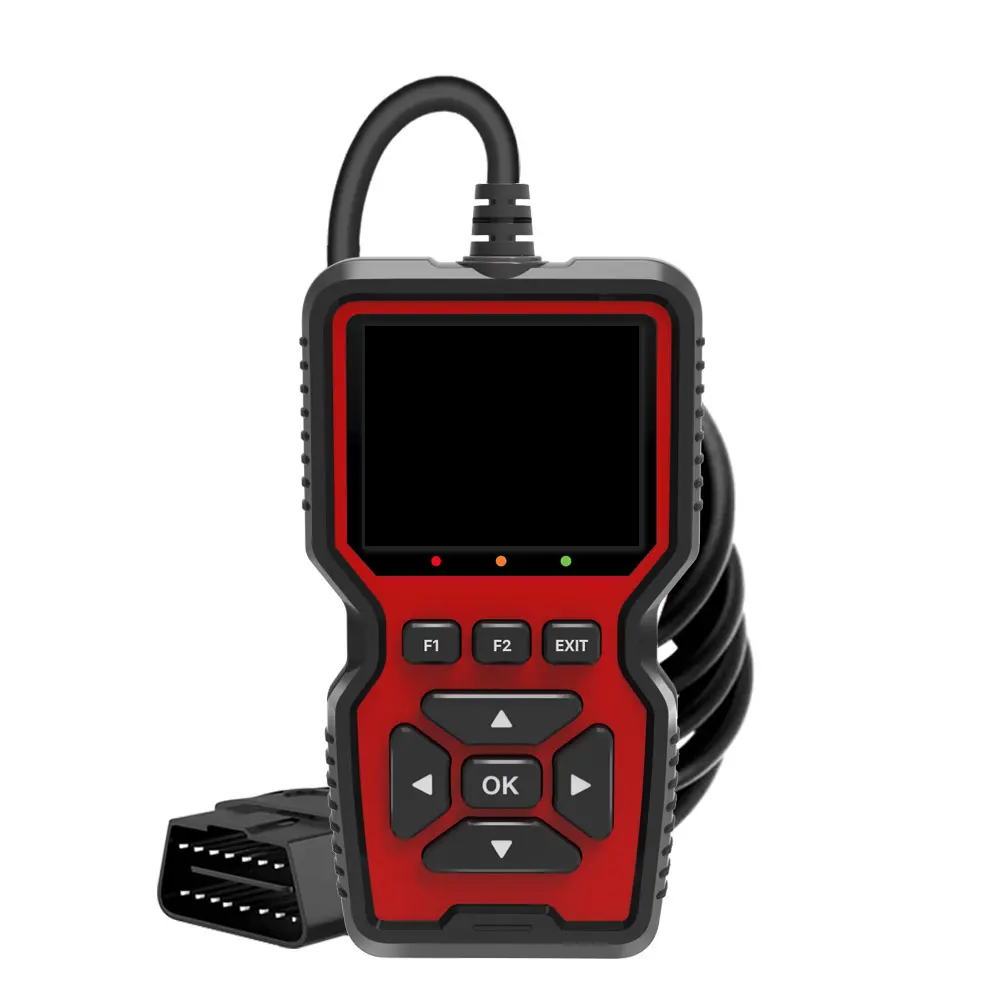
- Connect a professional-grade OBD-II scanner.
- Retrieve freeze frame data associated with P0436. This data captures engine operating conditions (RPM, engine load, temperature, etc.) at the moment the code was set, providing valuable context.
- Access live data stream for the Bank 2 catalyst temperature sensor. Compare its readings to expected values and, if applicable, to the Bank 1 catalyst temperature sensor (if present). Observe for:
- Readings that are consistently too high or too low (e.g., ambient temperature when the engine is hot, or extremely high temperatures at idle).
- Stuck values, where the sensor reading does not change despite variations in engine operating conditions.
- Erratic or illogical fluctuations in the sensor’s voltage or temperature reading.
- Slow response time to changes in exhaust temperature (e.g., during acceleration or deceleration).
- Clear the DTC and perform a comprehensive drive cycle under varying conditions to see if the code returns while monitoring live data.
- Digital Multimeter (DMM) Testing:
- Voltage Reference and Ground Check: With the ignition ON (engine OFF), disconnect the Bank 2 catalyst temperature sensor electrical connector. Using a DMM, back-probe the harness side of the connector to verify the presence of a 5-volt (or 12-volt, consult service manual) reference voltage from the ECM and a solid ground signal. Absence of either indicates a wiring issue back to the ECM.
- Sensor Resistance Check: Disconnect the sensor and measure its resistance across its terminals using the DMM. Compare this reading to manufacturer specifications for a given ambient temperature. Many catalyst temperature sensors are Negative Temperature Coefficient (NTC) thermistors, meaning their resistance decreases as temperature increases. A sensor with significantly deviant resistance values is faulty.
- Sensor Signal Voltage Test: Reconnect the sensor. Back-probe the signal wire while the engine is running and warmed up. Monitor the voltage output on the DMM. The voltage should fluctuate logically with changes in exhaust temperature. For NTC type sensors, an increase in exhaust temperature typically results in a decrease in signal voltage (or increase depending on circuit design). Look for a signal that is constant (stuck high or low), erratic, or non-responsive.
- Wiggle Test: While monitoring live data or DMM readings of the sensor signal, gently wiggle the wiring harness and connector leading to the sensor. Any sudden, significant changes in readings indicate an intermittent connection or damaged wiring.
- Continuity and Resistance Checks (Wiring Harness):
- If wiring issues are suspected, disconnect both the sensor and the ECM connector (if comfortable accessing and with proper pinout diagrams).
- Check for continuity on each wire from the sensor connector back to the ECM connector using the DMM. Resistance should be near 0 ohms.
- Check for shorts to ground and shorts to voltage on each wire by probing between the wire and a known good ground, and between the wire and a battery positive source.
Recommended Repairs and Solutions
Once the diagnostic steps have pinpointed the root cause, implement the appropriate repair:
- Replace the Bank 2 Catalyst Temperature Sensor: This is the most common repair if DMM tests or live data monitoring confirm the sensor itself is providing incorrect, stuck, or out-of-range readings. Ensure the replacement sensor is an OEM equivalent or a high-quality aftermarket unit to guarantee proper fitment and functionality.
- Repair or Replace Damaged Wiring/Connectors: If the visual inspection, wiggle test, or DMM checks indicate damaged wiring, corroded terminals, or loose connections, repair them. Use proper soldering techniques with heat shrink tubing for insulation, or replace the entire section of the harness if damage is extensive. Ensure all connections are secure and weatherproof to prevent future issues.
- Address Exhaust Leaks: If exhaust leaks were identified, they must be repaired. This may involve replacing exhaust gaskets, sealing cracks with high-temperature epoxy, or welding damaged sections of the exhaust pipe.
- Inspect and Address Catalytic Converter Health: While P0436 focuses on the sensor, if other diagnostic insights (e.g., P0420/P0430 codes, excessive back pressure readings, rattling noises from the converter) suggest the catalytic converter is failing, it may need to be inspected further or replaced. However, this should only be considered if the sensor itself and its circuit have been definitively ruled out as the primary cause of P0436.
- ECM/PCM Reprogramming or Replacement: Only consider ECM/PCM issues as a last resort, after all other components and wiring have been thoroughly tested and confirmed to be functioning correctly. Ensure the ECM has the latest software calibration from the manufacturer.
- Clear Codes and Verify Repair: After performing any repair, clear the Diagnostic Trouble Codes using the OBD-II scanner. Then, perform a comprehensive drive cycle that allows the ECM to run all relevant diagnostic monitors. Monitor live data for the Bank 2 catalyst temperature sensor to ensure it is now operating within specified parameters and that the P0436 code does not return.