What Does Code P0445 Mean?
The diagnostic trouble code P0445 signifies “Evaporative Emission Control System Purge Control Valve Circuit Shorted.” This code indicates that the Engine Control Module (ECM), also known as the Powertrain Control Module (PCM), has detected an electrical short circuit within the control or power circuit of the Evaporative Emission Control (EVAP) system’s purge control valve. The EVAP system is critical for preventing fuel vapors from escaping into the atmosphere. The purge control valve, often a normally closed solenoid, is responsible for metering collected fuel vapors from the charcoal canister into the engine’s intake manifold to be burned during combustion. The ECM monitors the voltage and current flow through the purge valve’s electrical circuit. When a short circuit occurs (either a short to ground or a short to a voltage source like battery voltage), the electrical characteristics of the circuit deviate significantly from the ECM’s expected parameters, leading to the illumination of the Malfunction Indicator Lamp (MIL) and the storage of P0445. This fault prevents the ECM from effectively controlling the purge valve, impacting the EVAP system’s ability to function correctly and potentially leading to emissions violations.
Common Symptoms
- Illuminated Check Engine Light (MIL): This is the most consistent and immediate symptom, as P0445 is an emissions-related code.
- Possible Rough Idle or Stalling: While not always directly caused by a circuit short, if the short causes the purge valve to stick open, it can create an unregulated vacuum leak, leading to an overly lean condition at idle or low engine speeds.
- Reduced Fuel Economy: In some cases, a malfunctioning purge valve can lead to improper fuel vapor management, subtly affecting fuel efficiency.
- Difficulty Starting: Less common, but if the valve is stuck open due to the short, it can cause an air-fuel mixture issue, making starts more challenging.
What Causes the Code P0445?
- Faulty EVAP Purge Control Valve: The most common cause is an internal electrical short circuit within the solenoid windings of the purge control valve itself.
- Damaged Wiring Harness: The wiring connecting the purge valve to the ECM/PCM can develop a short to ground (wire insulation chafed and touching chassis metal) or a short to voltage (wire touching a constant power source).
- Corroded Electrical Connector: Water intrusion or severe corrosion in the purge valve’s electrical connector can bridge terminals, creating an unintended electrical path (short circuit).
- Faulty Engine Control Module (ECM/PCM): Although less common, an internal short within the ECM’s driver circuit for the purge valve can trigger this code. This should only be considered after thoroughly ruling out all external causes.
How to Diagnose and Troubleshoot
Diagnosis of P0445 requires careful electrical testing and visual inspection:
- Initial Visual Inspection: Begin by visually inspecting the EVAP purge control valve, its electrical connector, and the associated wiring harness running from the valve back towards the ECM/PCM. Look for signs of physical damage, chafing, melted insulation, corrosion, or loose connections. Ensure the vacuum lines connected to the valve are intact and properly seated.
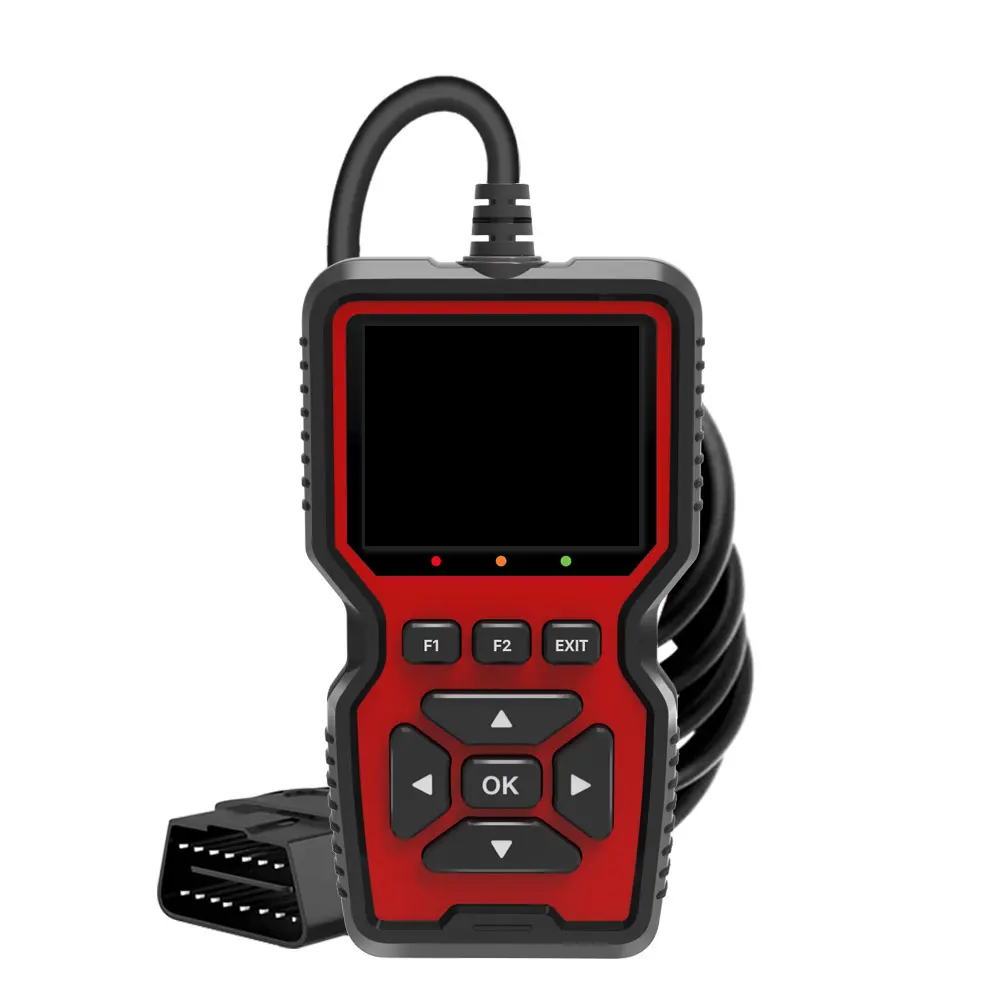
- OBD-II Scanner Check: Connect an OBD-II diagnostic scanner to confirm P0445 is the active code. Check for any other related EVAP or powertrain codes that might provide additional context. Clear the codes and see if P0445 returns immediately or after a specific drive cycle.
- Electrical Test of Purge Valve (Disconnected):
- Disconnect the electrical connector from the purge control valve.
- Using a Digital Multimeter (DMM) set to ohms, measure the resistance across the two terminals of the purge valve itself. Refer to the vehicle service manual for the specified resistance range (typically between 10 to 30 ohms). A reading significantly lower than specified (e.g., near 0 ohms) indicates an internal short within the valve. An open circuit (OL or infinity) indicates an open winding, which would likely trigger a P0443 (open circuit) rather than P0445.
- Electrical Test of Wiring Harness (Disconnected from Valve):
- With the purge valve connector still disconnected from the valve, switch the DMM to voltage mode. Turn the ignition to the ‘ON’ position (KOEO – Key On, Engine Off).
- Identify the power supply wire (usually 12V) to the purge valve. Place the DMM’s red lead on this wire terminal and the black lead on a known good chassis ground. You should read battery voltage. If no voltage is present, trace the power supply back to the fuse box and check the relevant fuse.
- Identify the control wire (ECM-controlled ground or positive trigger). Place the DMM’s red lead on this wire terminal and the black lead on a known good chassis ground. If this is an ECM-controlled ground circuit, you may see a very small voltage or no voltage with the valve disconnected. If you read a constant 12V (or higher than expected) on a ground-controlled circuit, it indicates a short to voltage in the wiring.
- Switch the DMM to continuity or resistance mode. Test for a short to ground in the wiring harness. Place one DMM lead on each terminal of the harness connector (one at a time) and the other DMM lead on a known good chassis ground. There should be no continuity or very high resistance (OL). If you read very low resistance or continuity, it indicates a short to ground in that specific wire.
- Command Test (if applicable): If your scanner has bidirectional control, attempt to command the purge valve ON and OFF. While observing live data, this can sometimes help identify if the ECM is attempting to control the valve but failing due to the short. However, this is primarily for functionality testing, the electrical tests are more direct for a short circuit.
Recommended Repairs and Solutions
Based on the diagnostic findings, the appropriate repair typically involves:
- Replace the EVAP Purge Control Valve: If electrical tests confirm an internal short or incorrect resistance within the valve, replacing the purge control valve is the most common and effective solution. Ensure the replacement part is an OEM equivalent or a high-quality aftermarket component to avoid recurrence.
- Repair or Replace Damaged Wiring: If the diagnosis points to a short circuit in the wiring harness, the damaged section must be repaired. This involves carefully stripping back the wire, soldering in a new section of wire of the correct gauge, and insulating it with heat-shrink tubing. Alternatively, replace the entire affected section of the harness if damage is extensive. Ensure proper routing and securement of the wiring to prevent future damage.
- Clean or Replace Corroded Connector: If corrosion is present in the electrical connector, use a specialized electrical contact cleaner and a small brush to thoroughly clean the terminals. If the terminals are severely damaged, bent, or spread, the connector housing and pins should be replaced.
- ECM/PCM Replacement: Only consider replacing the ECM/PCM as a last resort, after all other components and wiring have been thoroughly tested and confirmed to be in good working order. ECM replacement often requires reprogramming and can be costly.
- Post-Repair Verification: After completing any repairs, clear the DTCs with an OBD-II scanner. Perform an EVAP system functional test if your scanner supports it, or complete several drive cycles under varying conditions to allow the ECM to run its diagnostic monitors and confirm the repair. Check for pending codes or recurring MIL illumination.
- Mechanic’s Tip: Always double-check related fuses, as a severe short can sometimes blow a fuse in addition to setting the code. However, P0445 specifically indicates a circuit fault, which might not always result in a blown fuse if the resistance of the short still allows some current flow. When replacing any EVAP component, ensure all vacuum lines and electrical connectors are securely reattached to prevent additional codes or vacuum leaks.