What Does Code P0460 Mean?
The diagnostic trouble code P0460 signifies a detected malfunction within the primary Fuel Level Sensor (FLS) circuit, often designated as “A.” The Powertrain Control Module (PCM), or Engine Control Module (ECM) in some architectures, continuously monitors the electrical signal output from the FLS to determine the approximate fuel volume remaining in the vehicle’s fuel tank. The FLS is typically a potentiometer-type sensor mechanically linked to a float arm. As the fuel level changes, the float arm moves, altering the resistance across the potentiometer. This change in resistance translates into a varying voltage signal that the PCM interprets.
When the PCM detects an input signal from the FLS circuit that is outside of its programmed, expected operating range for a specified period – either excessively high (indicating an open circuit or short to voltage) or excessively low (indicating a short to ground or a faulty sensor with minimal resistance) – it registers a P0460 code. This indicates that the PCM cannot obtain a reliable reading of the fuel level, which can impact fuel gauge accuracy and potentially fuel management strategies, although the latter is less common for this specific code. The “A” designation typically refers to the main fuel tank’s level sensor, especially in vehicles with multiple fuel tanks or complex fuel systems.
Common Symptoms
- Inaccurate Fuel Gauge Readings: The fuel gauge on the instrument cluster may display an incorrect fuel level (e.g., showing full when empty, or empty when full).
- Erratic Fuel Gauge Operation: The fuel gauge needle may fluctuate wildly or intermittently jump to different readings.
- Fuel Gauge Stuck: The gauge may remain stuck at a specific reading, regardless of the actual fuel level.
- Check Engine Light (CEL) Illumination: The Malfunction Indicator Lamp (MIL) on the dashboard will illuminate to alert the driver of an issue.
- Incorrect Fuel Range Display: Vehicles equipped with digital fuel range estimators may display incorrect remaining range.
- Failure of Emissions Testing: In jurisdictions where MIL illumination is an automatic failure, the vehicle will not pass.
What Causes the Code P0460?
- Faulty Fuel Level Sensor/Sending Unit: The most common cause, involving internal wear or damage to the potentiometer, a bent or broken float arm, or electrical failure within the sensor itself.
- Wiring Harness Issues: An open circuit (break in a wire), a short to ground, or a short to voltage within the FLS signal, reference, or ground wires between the sensor and the PCM. Corrosion or damage to the wiring can also impede signal integrity.
- Poor Electrical Connection: Corroded, loose, or damaged connector pins at the fuel pump module (where the FLS is often integrated), or at the PCM connector.
- Fuel Pump Module Assembly Failure: Since the FLS is frequently part of the entire fuel pump module, a broader failure of the module’s electrical components can affect the FLS circuit.
- Faulty Instrument Cluster: While less common for P0460, a malfunction within the instrument cluster’s fuel gauge circuitry could potentially mimic an FLS issue if the cluster is erroneously signaling a circuit fault back to the PCM, although P0460 usually points directly to the sensor circuit itself.
- PCM Malfunction: A rare but possible scenario where the PCM’s internal circuitry responsible for monitoring the FLS input fails.
How to Diagnose and Troubleshoot
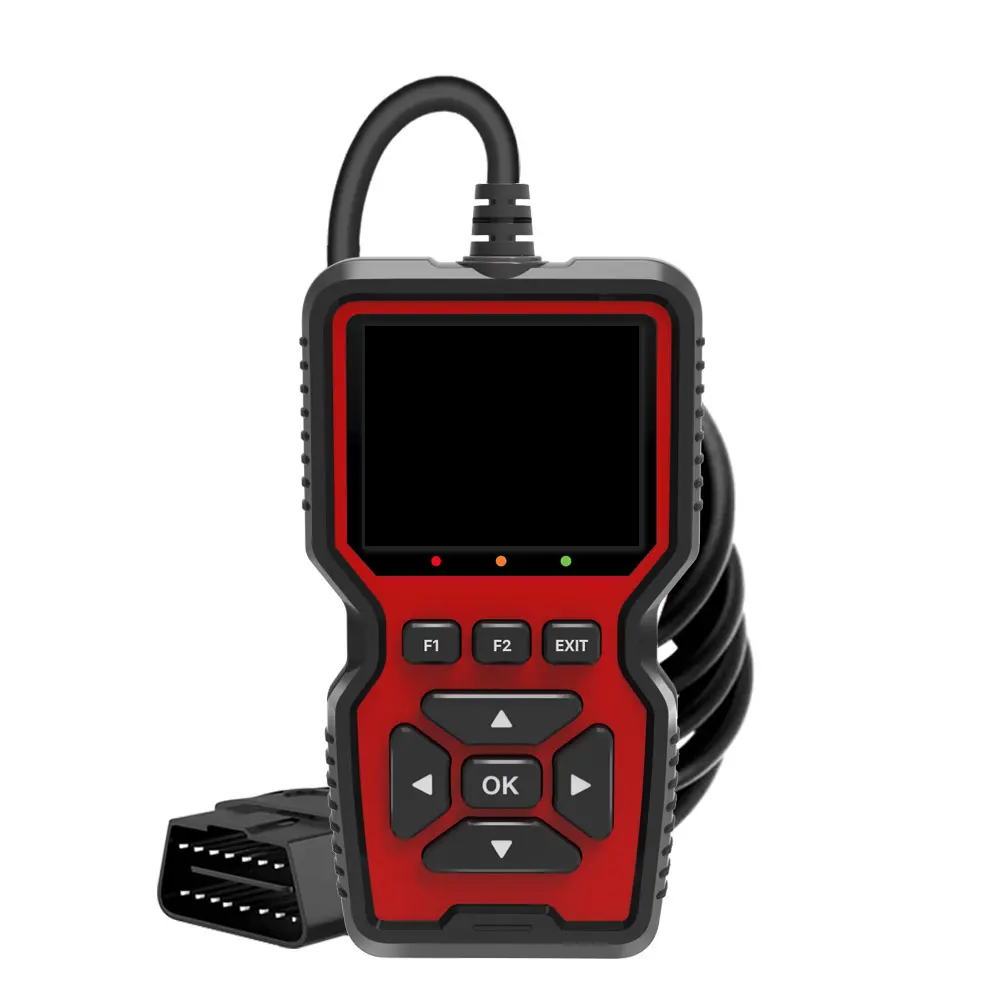
Diagnosing P0460 requires a systematic approach, often involving a digital multimeter (DMM) and an OBD-II scanner with live data capabilities. Always begin with a thorough visual inspection.
- Preliminary Inspection and Code Retrieval:
- Connect an OBD-II scanner and confirm P0460 is the primary code. Check for any other related codes that might provide additional context.
- Visually inspect the wiring harness running to the fuel tank and fuel pump module for any obvious signs of damage, fraying, cuts, or corrosion. Pay close attention to the connector at the fuel pump module.
- Ensure the vehicle’s battery voltage is stable and within specifications, as low voltage can sometimes trigger erroneous codes.
- Fuel Level Sensor (FLS) Resistance Test:
- Locate and access the fuel pump module/FLS connector. This often requires removing the rear seat or accessing an inspection panel, or in some cases, dropping the fuel tank.
- Disconnect the FLS connector. Using a DMM set to ohms, measure the resistance across the FLS terminals (signal and ground) directly on the sensor side of the connector.
- Consult the vehicle’s service manual for the specified resistance range for both an empty and full tank.
- If accessible, manually move the float arm while observing the DMM. The resistance should change smoothly and predictably (e.g., higher resistance for full, lower for empty, or vice-versa depending on design).
- An open circuit (OL reading) or a near-zero resistance reading that doesn’t change indicates a faulty FLS. Compare readings to specifications.
- Wiring Harness Integrity Test:
- With the FLS still disconnected, test the wiring harness side of the connector.
- Continuity Test: Disconnect the PCM connector (refer to service manual for correct pinouts). Using the DMM, check for continuity between the FLS signal wire at the fuel tank connector and the corresponding FLS signal pin at the PCM connector. Do the same for the FLS ground wire. Look for continuity (very low resistance, typically < 5 ohms). An open circuit (OL) indicates a break in the wire.
- Short to Ground Test: With the DMM set to ohms, place one lead on the FLS signal wire at the tank connector and the other lead on a known good chassis ground. There should be infinite resistance (OL). Any reading indicates a short to ground.
- Short to Voltage Test: With the ignition ON (engine OFF), set the DMM to DC volts. Place the positive lead on the FLS signal wire at the tank connector and the negative lead on chassis ground. There should be no significant voltage present (typically close to 0V unless a reference voltage is supplied directly to the sensor from the PCM, which would also be specified in the manual, e.g., 5V). Unexpected voltage indicates a short to power.
- PCM Input Monitoring (Scanner Live Data):
- If the FLS and wiring test correctly, reconnect all components.
- With the OBD-II scanner connected, monitor the “Fuel Level Sensor Voltage” or “Fuel Tank Level (%)” PID in live data.
- Observe the readings. They should be relatively stable and accurately reflect the fuel level. If the voltage is stuck at a high or low extreme, or is erratic, while the physical sensor and wiring test good, it may point towards an intermittent connection issue or, in rare cases, a PCM internal fault.
Recommended Repairs and Solutions
The repair for a P0460 code primarily focuses on addressing the component identified as faulty during diagnosis.
- Replace the Fuel Level Sensor/Sending Unit: This is by far the most common repair. In many vehicles, the fuel level sensor is an integral part of the fuel pump module and cannot be replaced separately. In such cases, the entire fuel pump module assembly will need replacement. Always use a high-quality OEM or equivalent aftermarket part for reliability.
- Repair or Replace Damaged Wiring: If testing reveals an open circuit, short to ground, or short to voltage in the wiring harness, the damaged section should be professionally repaired or, if extensive, the entire harness segment replaced. Use appropriate gauge wire, solder connections, and seal with heat-shrink tubing to prevent future issues.
- Clean and Secure Electrical Connections: For intermittent issues or corrosion, disconnect the FLS connector and the PCM connector, thoroughly clean the pins using electrical contact cleaner, and apply dielectric grease to protect against moisture and corrosion. Ensure all connectors are firmly seated.
- PCM Replacement (Rare): Only consider replacing the PCM as a last resort, after thoroughly eliminating all other potential causes, and if specific diagnostic tests confirm an internal PCM fault related to the FLS input circuit. This is an expensive repair and often requires programming.
- Post-Repair Verification: After completing any repairs, clear the P0460 code using the OBD-II scanner. Drive the vehicle for several drive cycles across varying fuel levels to allow the PCM to complete its diagnostic monitors. Observe the fuel gauge operation and monitor the FLS live data on the scanner to confirm accurate readings and ensure the code does not return.