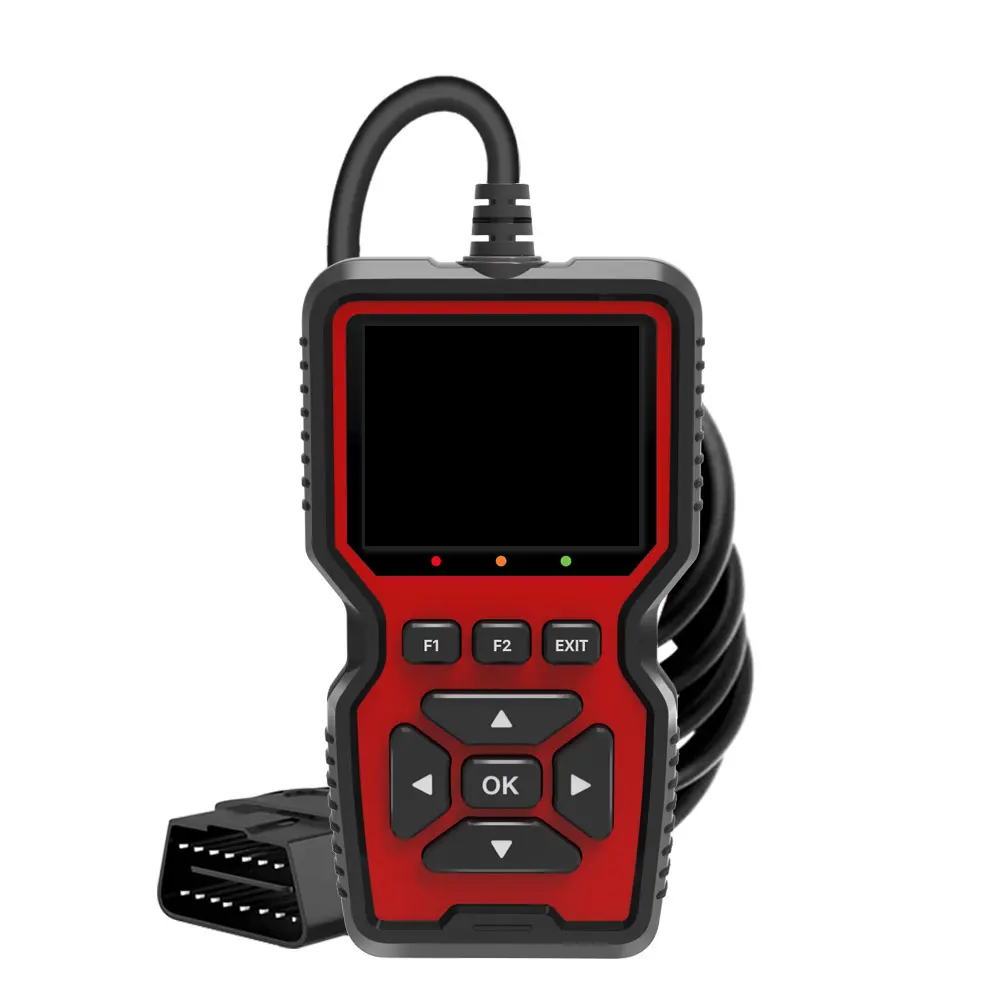
What Does Code P0650 Mean?
The diagnostic trouble code P0650 signifies a malfunction within the Malfunction Indicator Lamp (MIL) control circuit. The MIL, commonly known as the “Check Engine Light,” is a critical component of the vehicle’s onboard diagnostic (OBD-II) system, designed to alert the driver to detected emissions-related faults or other significant powertrain issues. The Engine Control Module (ECM), often referred to as the Powertrain Control Module (PCM), is responsible for commanding the MIL to illuminate when a fault code is stored. When the ECM/PCM sets P0650, it indicates that it has detected an electrical anomaly within the dedicated circuit that controls the MIL. This anomaly could manifest as an unexpected voltage reading, an open circuit, a short to ground, or a short to voltage, preventing the ECM/PCM from correctly commanding the MIL to its intended state (on or off). The subsystem directly affected is the vehicle’s primary driver notification system for emissions and powertrain faults, potentially leaving the driver unaware of critical underlying issues.
Common Symptoms
- Malfunction Indicator Lamp (MIL) Remains On: The Check Engine Light stays constantly illuminated, even if no other active fault codes are present that would typically trigger it.
- MIL Fails to Illuminate During Key-On Engine-Off (KOEO) Test: The MIL does not light up at all when the ignition is initially turned to the “ON” position (before engine start), which is its mandated bulb-check self-test.
- Intermittent MIL Operation: The MIL may flicker, illuminate erratically, or fail to respond correctly to ECM/PCM commands.
- No Other Driveability Concerns: Frequently, the vehicle exhibits no noticeable performance issues, as P0650 primarily concerns the warning light system itself rather than direct engine operation.
- Inability to Pass Emissions Inspection: A non-functional MIL or one that is illuminated due to P0650 will typically result in an automatic failure during an emissions or state inspection.
What Causes the Code P0650?
- Faulty MIL Bulb or LED: A burned-out incandescent bulb or a damaged Light Emitting Diode (LED) within the instrument cluster.
- Open or Shorted Wiring: Compromised wiring in the MIL control circuit, leading to an open circuit (loss of continuity) or a short to ground/voltage between the ECM/PCM and the instrument cluster.
- Defective Instrument Cluster: A malfunction within the instrument cluster’s internal circuitry or the driver responsible for illuminating the MIL.
- Poor Electrical Connections: Corroded, loose, or damaged terminals at the ECM/PCM connector, instrument cluster connector, or within inline harness connectors.
- Faulty Engine Control Module (ECM/PCM): Although less common, the internal driver circuit within the ECM/PCM responsible for providing the output signal to the MIL can fail.
How to Diagnose and Troubleshoot
Diagnosis of P0650 requires systematic electrical testing, often involving a digital multimeter (DMM) and an advanced OBD-II scanner capable of bi-directional control.
- Preliminary Visual Inspection: Begin by thoroughly inspecting the wiring harness and connectors leading to the instrument cluster and the ECM/PCM. Look for any signs of chafing, fraying, cuts, pinch points, or corrosion. Ensure all connectors are securely seated.
- Verify MIL Operation (Key-On Engine-Off Test): With the ignition turned to the “ON” position (engine off), observe the instrument cluster. The MIL should illuminate briefly as part of its self-test before extinguishing. Note if it fails to illuminate or remains continuously lit.
- Scan for Additional DTCs: Connect an OBD-II scanner and retrieve all stored, pending, and historical diagnostic trouble codes. Pay close attention to any other related codes, especially B-codes (body control module) or U-codes (communication network), which might indicate a broader electrical or communication issue affecting the instrument cluster.
- Isolate and Test the MIL Circuit:
- Obtain the specific wiring diagram for the MIL control circuit for your vehicle’s make and model. Identify the ECM/PCM output pin and the instrument cluster input pin for the MIL.
- Continuity Test: Disconnect the ECM/PCM and the instrument cluster connectors. Using a DMM set to resistance (ohms), test for continuity between the MIL control wire at the ECM/PCM connector and its corresponding pin at the instrument cluster connector. Resistance should be very low (close to 0 ohms). An infinite reading indicates an open circuit.
- Short to Ground Test: With both connectors still disconnected, test for continuity between the MIL control wire and a known good chassis ground. There should be no continuity (infinite resistance). Any reading indicates a short to ground.
- Short to Voltage Test: Reconnect the ECM/PCM and instrument cluster temporarily. With the ignition “ON” and engine “OFF”, use the DMM to measure voltage on the MIL control wire (back-probing at the instrument cluster connector). Compare the measured voltage to the specified voltage in the wiring diagram when the MIL is commanded OFF. An unexpected voltage could indicate a short to voltage.
- Test MIL Bulb/LED: If the cluster uses a replaceable bulb, remove it and test its continuity with the DMM. For integrated LEDs, if your scanner supports bi-directional control, attempt to command the MIL on and off. If the ECM/PCM commands it on, and the circuit integrity is confirmed, but the MIL doesn’t light, the issue is likely within the cluster itself.
- ECM/PCM Output Verification: If all wiring and the instrument cluster appear functional, use a DMM to test the MIL control output directly at the ECM/PCM connector (back-probing is ideal). With the ignition ON and the scanner commanding the MIL ON/OFF, observe if the voltage state changes as commanded. A lack of voltage change or an incorrect voltage output indicates a probable internal ECM/PCM fault.
Recommended Repairs and Solutions
The repair strategy for P0650 depends on the root cause identified through diligent diagnosis:
- Replace Faulty MIL Bulb/LED: If an incandescent bulb is burned out, replacement is straightforward. For vehicles with integrated LEDs within the instrument cluster, this may necessitate repair by a specialist or replacement of the entire instrument cluster, which can be costly and may require programming.
- Repair or Replace Damaged Wiring: Address any identified open circuits, shorts, or damaged insulation in the MIL control circuit. Use appropriate gauge wire, automotive-grade connectors, solder connections, and heat-shrink tubing for a durable and reliable repair.
- Repair or Replace Instrument Cluster: If internal cluster components are faulty, the instrument cluster may need to be repaired by a specialized electronics technician or replaced. Be aware that replacement instrument clusters often require programming to match the vehicle’s VIN, mileage, and immobilizer system by a dealership or a professional with specialized tools.
- Clean and Secure Electrical Connections: If corrosion or loose terminals were found, carefully clean the connector pins with electrical contact cleaner and a suitable brush. Ensure all connectors are securely seated and apply dielectric grease to prevent future corrosion.
- Replace Engine Control Module (ECM/PCM): This should be a last resort. If all other components (wiring, cluster, bulbs/LEDs) have been thoroughly tested and confirmed functional, and the ECM/PCM’s output for the MIL is incorrect, the ECM/PCM itself may have failed. ECM/PCM replacement is a significant repair that almost always requires programming to the vehicle’s specific VIN, immobilizer, and powertrain configuration.
After any repair, clear the DTCs using an OBD-II scanner and perform the KOEO test and potentially a short drive cycle to confirm the MIL operates as expected and the P0650 code does not return.