What Does Code P0655 Mean?
The diagnostic trouble code P0655 signifies an “Engine Hot Lamp Output Control Circuit Malfunction.” This code is set when the Powertrain Control Module (PCM), also referred to as the Engine Control Module (ECM) or Engine Control Unit (ECU), detects an electrical fault within the circuit responsible for illuminating the Engine Hot Lamp. The Engine Hot Lamp, commonly known as the coolant temperature warning light or overheat indicator, is a critical safety feature designed to alert the vehicle operator to an excessively high engine coolant temperature. The PCM actively monitors the integrity of the output circuit that drives this lamp. A P0655 code indicates that the PCM has identified an abnormal voltage condition (e.g., short to ground, short to voltage), an open circuit, or an incorrect current draw in this dedicated control circuit. This malfunction means the PCM cannot reliably command the lamp ON or OFF, potentially leading to a situation where the driver is not warned of an engine overheating condition, or the lamp remains illuminated falsely. It is crucial to understand that P0655 does not indicate an actual engine overheating event, but rather a fault within the warning system designed to signal such an event.
Common Symptoms
- The Engine Hot Lamp (coolant temperature warning light) may fail to illuminate during the key-on engine-off (KOEO) self-test.
- The Engine Hot Lamp may illuminate continuously, even when the engine coolant temperature is within normal operating range.
- The Engine Hot Lamp may fail to illuminate when an actual engine overheating condition occurs, depriving the driver of a critical warning.
- Other dashboard warning lights related to electrical system faults may accompany P0655, depending on the root cause.
- In some cases, there may be no noticeable symptoms to the driver other than the stored diagnostic trouble code, if the circuit fault is intermittent or affects only specific operational checks.
What Causes the Code P0655?
- Faulty Instrument Cluster: The Engine Hot Lamp itself, its internal driver, or the associated circuitry within the instrument cluster may be defective. This is a common point of failure, especially for incandescent bulbs which can burn out, or LED drivers that fail.
- Wiring Harness Issues: An open circuit (break), short to ground, or short to voltage in the specific wire connecting the PCM’s Engine Hot Lamp output to the instrument cluster. Damage can occur from chafing, rodent activity, or poor repair work.
- Corrosion or Loose Connections: Degraded or oxidized terminals and pins at the PCM connector, the instrument cluster connector, or any intermediate harness connectors can disrupt circuit integrity.
- Faulty Powertrain Control Module (PCM/ECM): Less common, but the internal driver circuit within the PCM responsible for controlling the Engine Hot Lamp output can fail. This would prevent the PCM from sending the correct signal to illuminate the lamp.
How to Diagnose and Troubleshoot
Diagnosing P0655 requires a methodical approach, focusing on the electrical circuit integrity from the PCM to the instrument cluster. Always begin with preliminary visual inspections and basic scanner functions.
- Preliminary Checks and Scanner Verification:
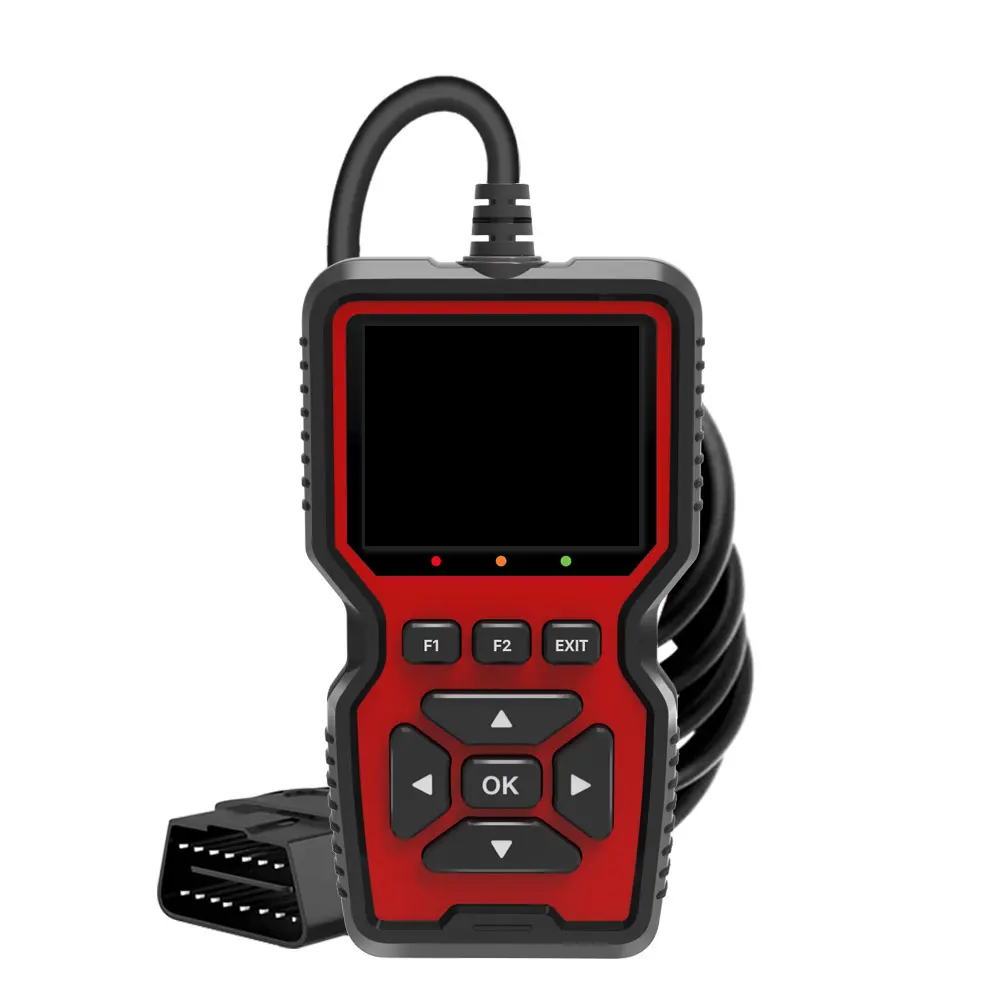
- Connect an OBD-II scanner and confirm P0655 is present. Check for any other related codes that might point to a broader electrical issue. Note the freeze frame data.
- Perform a thorough visual inspection of the instrument cluster for any signs of physical damage, moisture intrusion, or aftermarket modifications.
- Inspect the wiring harness leading from the PCM to the instrument cluster, paying close attention to areas prone to chafing, heat damage, or rodent damage. Look for any loose or corroded connectors.
- If the scanner has bidirectional control capabilities, attempt to command the “Engine Hot Lamp” ON and OFF. Observe if the lamp responds as commanded. If it fails to respond, it strongly suggests a circuit or lamp issue.
- Verify Lamp Operation (KOEO):
- Turn the ignition to the Key-On Engine-Off (KOEO) position. The Engine Hot Lamp should illuminate momentarily as part of the bulb check routine. If it does not, or if it remains constantly illuminated, proceed with further electrical testing.
- Electrical Circuit Testing (Digital Multimeter – DMM):
- Obtain a reliable wiring diagram for your specific vehicle to identify the correct wire (signal wire) for the Engine Hot Lamp output circuit, including its pin locations at the PCM and instrument cluster connectors.
- Isolate the Circuit: Disconnect the battery negative terminal. Disconnect the electrical connectors from both the PCM and the instrument cluster.
- Check for Continuity: Using a DMM set to ohms, measure the resistance between the signal wire pin at the PCM connector and the corresponding signal wire pin at the instrument cluster connector. Resistance should be very low, typically less than 5 ohms. A significantly higher resistance or an open circuit (OL – Over Limit) indicates a break in the wire.
- Check for Short to Ground: With the DMM set to ohms, place one lead on the signal wire pin and the other lead on a known good chassis ground. The reading should be infinite resistance (OL). If you read low resistance, the wire is shorted to ground.
- Check for Short to Voltage: Reconnect the battery. With the instrument cluster connector still disconnected, turn the ignition to KOEO. Set the DMM to DC volts. Measure the voltage between the signal wire pin (at the instrument cluster harness connector) and ground. There should be no significant voltage present unless the PCM is actively commanding the lamp ON. If voltage is present when the lamp should be off, there’s a short to voltage in the circuit.
- PCM Output Verification:
- If the wiring harness tests prove good, the issue could be the PCM itself. With the PCM connected and powered, and the instrument cluster disconnected, use a DMM to back-probe the PCM connector pin for the Engine Hot Lamp output.
- Using the bidirectional controls on your scanner, command the Engine Hot Lamp ON. Observe the voltage at the PCM output pin. The PCM should output the appropriate signal (e.g., ground signal for a pull-down circuit, or 12V for a direct drive circuit) when commanded. If the PCM fails to produce the correct signal, the internal driver within the PCM is likely faulty.
- Instrument Cluster Input Verification:
- If the PCM output is confirmed to be correct and the wiring is sound, the fault resides within the instrument cluster. Reconfirm that the correct signal from the PCM is indeed reaching the instrument cluster’s input pin. If the signal is present and correct, but the lamp does not illuminate or behaves erratically, the cluster itself is defective.
Recommended Repairs and Solutions
Based on the diagnostic findings, the following repairs are typically recommended:
- Wiring Repair or Replacement: If an open circuit, short to ground, or short to voltage is identified in the wiring harness, the damaged section should be repaired using appropriate automotive-grade wire, splices, and heat shrink. For extensive damage, replacing the entire sub-harness is often the more reliable long-term solution. Ensure proper routing and securement to prevent future damage.
- Instrument Cluster Replacement: If diagnostics definitively point to an internal fault within the instrument cluster (e.g., burned-out lamp, failed internal driver circuit), the cluster will need to be replaced. Be aware that many modern instrument clusters require programming, VIN synchronization, or mileage transfer after replacement, which typically requires specialized diagnostic tools or dealership service.
- PCM/ECM Replacement: If all wiring and the instrument cluster are confirmed to be functional, and the PCM’s output driver for the Engine Hot Lamp is verified as faulty, then PCM replacement is necessary. This is a costly repair and should only be undertaken after all other possibilities have been thoroughly exhausted. A new or remanufactured PCM will require programming and calibration to the specific vehicle.
- Connector Maintenance: For issues related to corrosion or loose pins, clean the affected connector terminals thoroughly using an electrical contact cleaner and a small brush. Ensure all pins are properly seated and secure. Applying a thin layer of dielectric grease can help prevent future corrosion.
- Post-Repair Verification: After performing any repair, clear the P0655 code and any related codes using your OBD-II scanner. Perform the KOEO bulb check again to ensure the Engine Hot Lamp illuminates correctly. If applicable, use bidirectional controls to command the lamp on and off. Finally, conduct a test drive to complete a full drive cycle and confirm that the code does not return and the warning system functions as intended.