What Does Code P0717 Mean?
Diagnostic Trouble Code P0717 signifies that the Powertrain Control Module (PCM) or Transmission Control Module (TCM) has detected a loss of signal from the Input Shaft Speed (ISS) sensor, also often referred to as the Turbine Speed Sensor (TSS). This sensor is crucial for the proper operation of an automatic transmission as it monitors the rotational speed of the transmission’s input shaft, which is directly coupled to the torque converter turbine. The PCM/TCM uses this information, along with Output Shaft Speed (OSS) sensor data, to calculate slip across the torque converter, determine appropriate gear ratios, and manage shift points and torque converter clutch (TCC) engagement. When the PCM/TCM expects to see a rotational speed signal from the ISS sensor (e.g., when the engine is running and the transmission is in a drive range) but detects a consistent absence or an implausible zero RPM reading, it registers a P0717 code. This indicates a critical failure in the sensor, its wiring circuit, or the module’s ability to interpret the signal, directly impacting transmission control strategies.
Common Symptoms
- Check Engine Light (CEL) Illumination: The most immediate and common symptom.
- Harsh or Erratic Shifting: The transmission may shift abruptly or at incorrect RPMs due to the lack of vital speed data.
- Transmission Entering Limp Mode: To prevent damage, the transmission may default to a “safe” or “limp-home” mode, often locking into a single gear (e.g., 2nd or 3rd gear) and severely limiting vehicle speed and performance.
- Lack of Torque Converter Lock-Up: Without accurate input speed data, the PCM/TCM cannot properly control TCC engagement, leading to increased engine RPM at cruising speeds and reduced fuel efficiency.
- Reduced Fuel Economy: A direct consequence of improper shifting and the absence of torque converter lock-up.
- Vehicle Stalling: In some cases, if the torque converter cannot be correctly disengaged due to the lack of ISS data, the engine may stall when coming to a stop.
- Inability to Shift Gears: The transmission may refuse to shift out of park or into higher gears.
What Causes the Code P0717?
- Faulty Input/Turbine Speed Sensor (ISS/TSS): The sensor itself has failed internally, leading to an absence of signal. This is the most common cause.
- Damaged Wiring Harness: An open circuit, short to ground, or short to voltage within the wiring connecting the ISS/TSS to the PCM/TCM. This can be caused by chafing, cuts, rodent damage, or corrosion.
- Corroded or Loose Electrical Connectors: Poor electrical contact at the ISS/TSS connector or the corresponding PCM/TCM connector due to moisture intrusion, dirt, or bent pins.
- Internal Transmission Issue: While less common for a “no signal” code, severe mechanical damage preventing the ISS tone ring from rotating could technically lead to this, though usually accompanied by other transmission mechanical codes.
- Faulty Powertrain Control Module (PCM) or Transmission Control Module (TCM): Although rare, a malfunctioning control module that fails to provide necessary power to the sensor, improperly grounds the circuit, or is unable to process the sensor’s signal can trigger P0717.
How to Diagnose and Troubleshoot
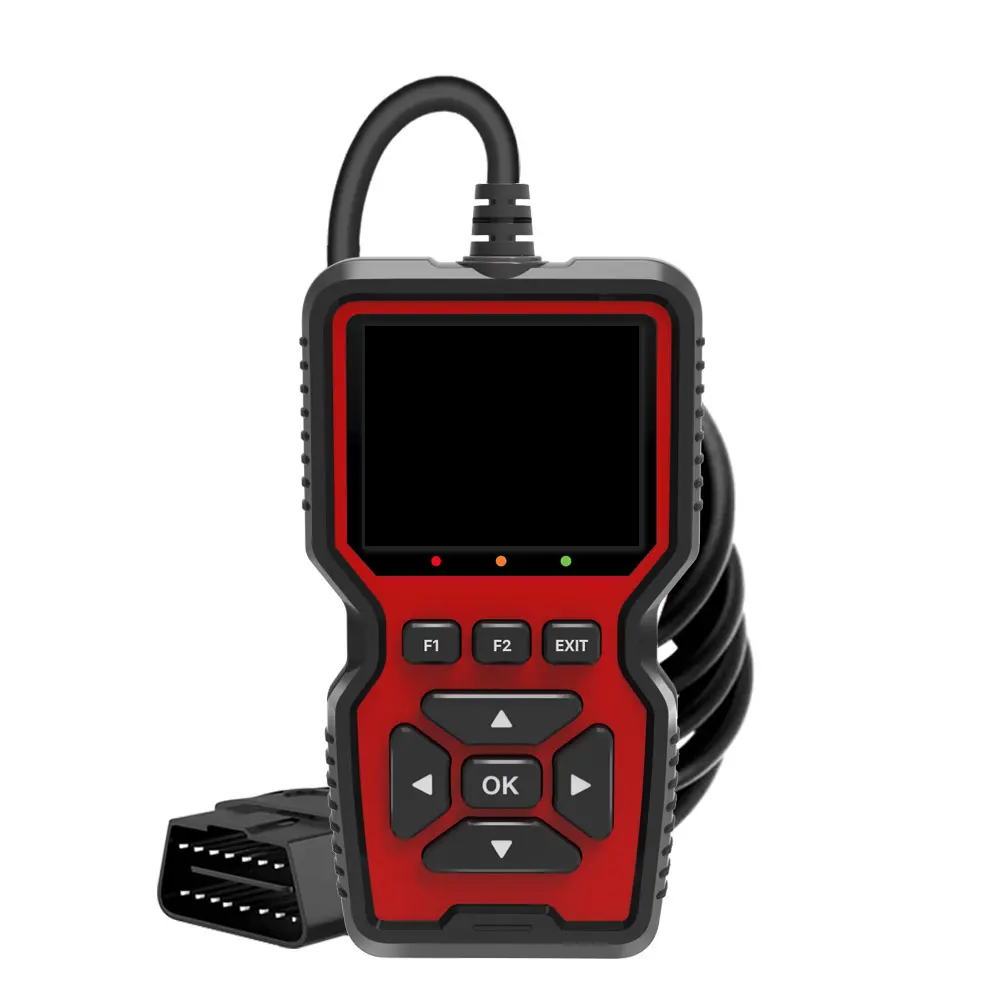
Diagnosing P0717 requires a systematic approach, often utilizing a digital multimeter (DMM) and an advanced OBD-II scanner:
- Retrieve and Record DTCs: Use an OBD-II scanner to confirm P0717 and check for any other related transmission or engine codes that might provide additional context. Record freeze frame data.
- Visual Inspection:
- Locate the Input/Turbine Speed Sensor (consult a service manual for specific vehicle location, often on the transmission case).
- Carefully inspect the sensor’s wiring harness from the sensor to the PCM/TCM for any signs of damage such as chafing, cuts, exposed wires, or pinch points.
- Inspect the sensor’s electrical connector and the PCM/TCM connectors for corrosion, bent pins, or loose connections. Clean or repair as necessary.
- Live Data Analysis (OBD-II Scanner):
- With the engine running and transmission in various drive ranges (ensuring safety precautions), monitor the “Input Shaft Speed,” “Turbine Speed,” or similar parameter on the scanner’s live data stream.
- If the reading consistently shows 0 RPM or is erratic and illogical compared to engine RPM (when in gear), it confirms a signal issue. Compare this to the Output Shaft Speed (OSS) sensor reading.
- Circuit Continuity Test (DMM):
- Disconnect the ISS/TSS and the PCM/TCM connectors.
- Using a DMM set to resistance (ohms), check for continuity between each terminal at the ISS/TSS connector and its corresponding pin at the PCM/TCM connector. An infinite resistance (open circuit) indicates a break in the wire.
- Test for shorts to ground by checking continuity between each wire and a known chassis ground. Infinite resistance is desired.
- Test for shorts to voltage by checking continuity between each wire. Infinite resistance is desired.
- Power and Ground Supply Test (DMM):
- With the PCM/TCM connected (back-probe the connector if possible) and the ignition ON, check for the specified reference voltage (typically 5V or 12V, depending on the sensor type) at the power supply wire of the ISS/TSS connector.
- Verify a proper ground connection at the ground wire of the ISS/TSS connector.
- Sensor Resistance/Output Test (DMM – for inductive sensors):
- If the ISS is an inductive type (typically two wires), disconnect it and measure its internal resistance across its terminals. Compare this value to manufacturer specifications. An open circuit or a resistance significantly outside the specified range indicates a faulty sensor.
- Note: Hall effect sensors (typically three wires: power, ground, signal) cannot be reliably tested for resistance and usually require an oscilloscope to verify signal output. If power and ground are present, and the wiring is good, a lack of signal often points to internal sensor failure.
Recommended Repairs and Solutions
Once the root cause of P0717 has been accurately diagnosed, the following repairs are typically recommended:
- Replace the Input/Turbine Speed Sensor: If the sensor itself is confirmed to be faulty (failed resistance test for inductive types, or lack of signal output despite proper power/ground for Hall effect types), replacement is the most common and effective solution. Always use an OEM-quality replacement part.
- Repair or Replace Damaged Wiring: If the wiring harness is found to have an open circuit, short, or severe damage, the affected section must be professionally repaired or replaced. Use appropriate gauge wire, solder connections (if permitted by manufacturer), and protect repairs with heat-shrink tubing and electrical tape to ensure durability and prevent future issues.
- Clean or Replace Corroded Connectors: If corrosion or poor contact is found at the sensor or PCM/TCM connectors, clean them thoroughly using an electrical contact cleaner and a small brush. If pins are bent, broken, or severely corroded, the connector shell and/or individual terminals should be replaced.
- Address Internal Transmission Issues: While less likely to directly cause a “no signal” code, if diagnostic procedures point to an internal mechanical failure preventing the tone ring from rotating, a transmission overhaul or replacement may be necessary. This should only be considered after ruling out all electrical causes.
- PCM/TCM Replacement: This should be a last resort, considered only after all other possibilities (sensor, wiring, connectors) have been thoroughly tested and confirmed to be in good working order. PCM/TCM replacement often requires programming specific to the vehicle, which may need dealership-level tools.
- Clear DTCs and Test Drive: After any repair, clear the diagnostic trouble codes using an OBD-II scanner. Perform an extended test drive, including various driving conditions and speeds, to confirm that the issue is resolved and the code does not return. Monitor live data during the test drive to verify correct ISS operation.