What Does Code P0722 Mean?
DTC P0722 signifies “Output Speed Sensor No Signal.” This code is set by the Powertrain Control Module (PCM) or Transmission Control Module (TCM) when it detects an absence of a rotational speed signal from the Output Speed Sensor (OSS) despite the transmission output shaft being expected to rotate. The OSS, typically a magnetic reluctance or Hall effect sensor, monitors the rotational speed of the transmission’s output shaft or a driven component within the transmission (such as the tone wheel/reluctor ring), providing critical data to the control module. This signal is essential for calculating vehicle speed, determining appropriate transmission shift points, managing torque converter lock-up, and ensuring the smooth operation of automatic transmission functions. When the PCM/TCM fails to receive the expected pulse train signal from the OSS while other vehicle speed inputs (e.g., from the Vehicle Speed Sensor on the differential or wheel speed sensors) or engine RPM suggest the vehicle is in motion, it interprets this as a “no signal” condition and registers P0722. The absence of this data significantly impairs the control module’s ability to precisely manage transmission operation, often leading to default or “limp-home” mode strategies.
Common Symptoms
- Erratic or harsh transmission shifts: Without accurate output speed data, the PCM/TCM struggles to time shifts correctly.
- Transmission staying in a single gear (limp mode): To prevent damage, the transmission may enter a default gear, often 2nd or 3rd, limiting vehicle speed and performance.
- No upshifts or downshifts: The transmission may refuse to shift out of its current gear.
- Inaccurate or inoperative speedometer/odometer: In some configurations, the OSS directly feeds the speedometer circuit or provides data that is used to derive vehicle speed.
- Illuminated Check Engine Light (CEL): The primary indicator for most OBD-II related faults.
- Illuminated ABS or Traction Control Lights: In systems where OSS data contributes to vehicle speed calculation for these systems.
- Decreased fuel economy: Due to incorrect gear selection or torque converter operation.
What Causes the Code P0722?
- Faulty Output Speed Sensor (OSS): This is the most common cause. The sensor itself may have failed internally, preventing it from generating a signal.
- Damaged or corroded wiring harness or connectors: Open circuits, short circuits, or high resistance in the wiring between the OSS and the PCM/TCM can interrupt the signal. This includes corrosion at the sensor or module connectors.
- Internal transmission mechanical failure: Damage to the reluctor wheel (tone wheel) that the OSS reads, or an issue with the sensor’s mounting location, can prevent a proper signal. Debris or metallic particles on a magnetic OSS can also interfere with its reading.
- Low transmission fluid level or contaminated fluid: While less direct, severe fluid issues can sometimes indirectly affect sensor operation if it relies on fluid for cooling or is susceptible to debris.
- Faulty Powertrain Control Module (PCM) or Transmission Control Module (TCM): Though rare, an internal failure within the control module itself could prevent it from correctly processing the OSS signal or providing necessary reference voltage.
How to Diagnose and Troubleshoot
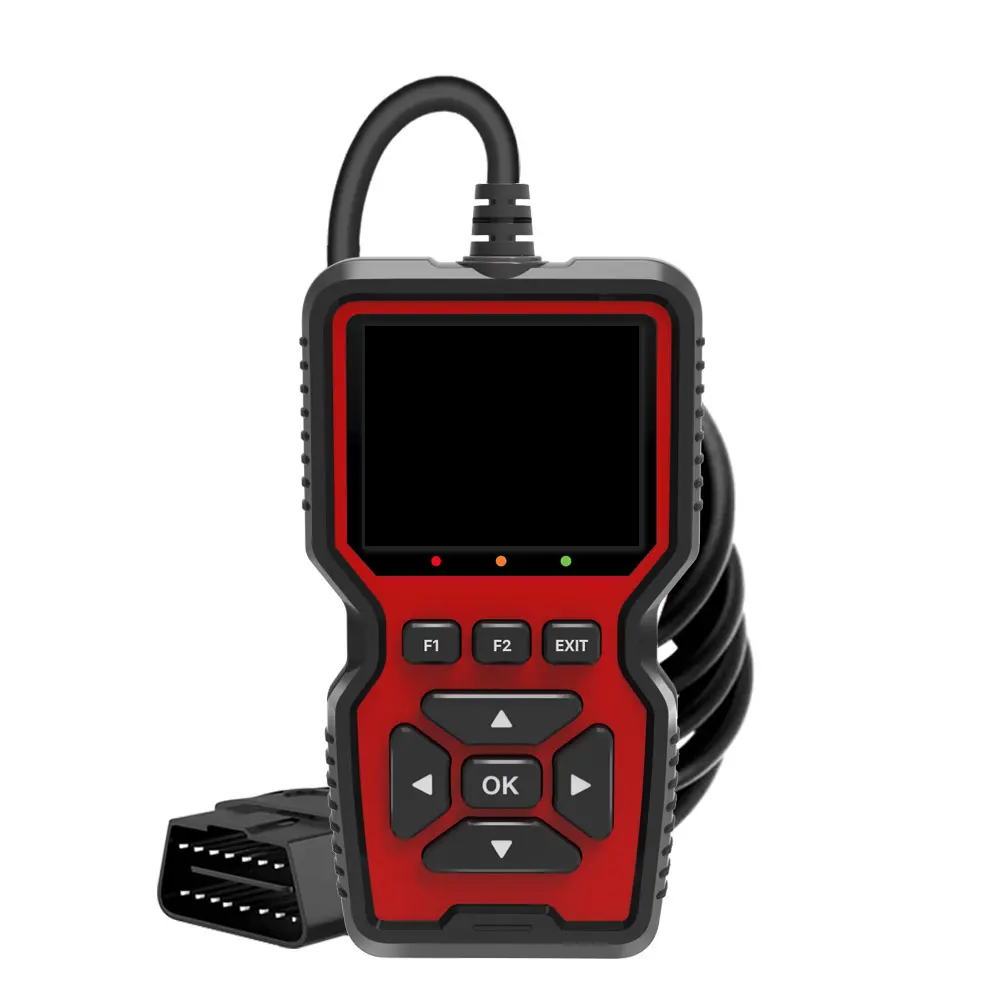
Diagnosing P0722 requires a systematic approach, often utilizing a digital multimeter (DMM) and an OBD-II scan tool with live data capabilities.
- Verify the Code and Related DTCs: Use an OBD-II scanner to confirm P0722 is present. Check for any other related transmission or vehicle speed sensor codes that might provide additional context. Clear the code and road test the vehicle, if possible and safe, to see if it immediately returns.
- Visual Inspection:
- Locate the Output Speed Sensor, typically found on the transmission case. Inspect the sensor itself for any visible damage, cracks, or signs of impact.
- Examine the wiring harness leading to the OSS for signs of chafing, cuts, pinches, or corrosion. Pay close attention to areas where the harness might rub against engine or transmission components.
- Inspect the electrical connector at the sensor and, if accessible, at the PCM/TCM for bent pins, corrosion, or loose connections.
- Electrical Testing with a DMM:
- Check for Reference Voltage and Ground: Disconnect the OSS connector. With the ignition ON (engine OFF), use a DMM to check for the appropriate reference voltage (typically 5V or 12V, depending on the system) and a good ground signal at the connector’s harness side. Refer to the vehicle’s specific wiring diagram for exact pinouts and voltage specifications. Lack of reference voltage or ground indicates a wiring issue or a PCM/TCM fault.
- Test Sensor Resistance (if applicable): For certain types of magnetic reluctance sensors, measure the internal resistance across the sensor’s terminals. Compare this reading to factory specifications. An open circuit (OL) or a reading significantly outside the specified range indicates a faulty sensor.
- Check Sensor Output (if accessible): With the sensor connected and the vehicle safely raised on a hoist (or wheels off the ground, engine OFF), manually rotate the output shaft or a driven wheel. If it’s a magnetic pickup sensor, you might be able to measure a low AC voltage signal (mV) as the reluctor wheel passes. Hall effect sensors typically produce a square wave signal, which is best viewed with an oscilloscope.
- Wiring Continuity Check: With the battery disconnected, perform continuity checks on each wire from the OSS connector to the PCM/TCM connector. Look for open circuits (infinite resistance) or short circuits to ground or to other wires. Also check for excessive resistance, which can impede signal integrity.
- Scan Tool Live Data: If the sensor is intermittent, an advanced scan tool with live data capabilities can be invaluable.
- Monitor the “Output Speed Sensor” or “Transmission Output Speed” PID while driving the vehicle. Compare this reading to the Vehicle Speed Sensor (VSS) reading. If the VSS shows speed but the OSS shows 0 RPM or an erratic signal, it confirms an OSS or its circuit issue.
- Check Transmission Fluid: Inspect the transmission fluid level and condition. Extremely low or contaminated fluid could indirectly contribute to issues, though less directly to a “no signal” code.
Recommended Repairs and Solutions
The repair for P0722 is directly dependent on the root cause identified during diagnosis:
- Replace the Output Speed Sensor (OSS): If the sensor itself is confirmed faulty through electrical testing, replacement is typically straightforward. Ensure to use an OEM or high-quality aftermarket sensor for optimal performance and longevity. Access to the sensor varies by vehicle; some are externally mounted, while others may require pan removal or partial disassembly of the transmission.
- Repair or Replace Damaged Wiring/Connectors: If the diagnosis points to issues within the wiring harness or connectors, carefully repair any open circuits, shorts, or corroded terminals. Use appropriate wiring repair kits, solder connections, and properly seal them to prevent future issues. Replace damaged connectors if necessary.
- Address Internal Transmission Issues: If diagnostic steps suggest damage to the reluctor wheel or other internal components affecting the OSS signal, this will necessitate professional transmission repair or overhaul. This is a more extensive and costly repair.
- PCM/TCM Replacement or Reprogramming: In rare cases where the PCM/TCM is determined to be the cause, it will require replacement and subsequent programming to the vehicle. This should only be pursued after ruling out all other possibilities.
After performing any repairs, clear the DTCs from the PCM/TCM memory using an OBD-II scanner. Always perform a thorough road test under varying conditions to ensure the fault does not return and that normal transmission operation has been restored. Pay attention to shift quality and speedometer function during the test drive.