What Does Code P1100 Mean?
The diagnostic trouble code P1100, categorized as a manufacturer-specific code, primarily indicates an issue with the Mass Air Flow (MAF) sensor circuit, often specifically an intermittent or erratic signal, or that the MAF monitor self-test has not completed its diagnostic cycle within the Engine Control Module (ECM) or Powertrain Control Module (PCM). While P0100 series codes typically denote a MAF sensor circuit malfunction (e.g., range/performance, low, high input), P1100 specifically points to a signal that is inconsistent, fluctuating out of expected parameters intermittently, or a situation where the PCM has not yet gathered sufficient data to confirm the MAF sensor’s operational integrity.
The ECM/PCM continuously monitors the MAF sensor’s voltage or frequency output, correlating it with other engine parameters such as throttle position, engine RPM, manifold absolute pressure (MAP), and intake air temperature (IAT). For P1100 to set, the PCM has detected an anomaly in the MAF signal that doesn’t fit the expected patterns during varying engine loads and speeds, but without a complete failure that would trigger a more severe P01xx code. Alternatively, especially after a battery disconnect or DTC clear, the code can signify that the necessary drive cycle conditions have not been met for the MAF monitor (and consequently, other emissions readiness monitors) to run and complete its diagnostic checks. This condition prevents the vehicle from setting “ready” status for emissions testing, even if no hard fault is present, until the MAF sensor’s functionality is fully validated by the PCM.
Common Symptoms
- Illuminated Check Engine Light (CEL): Often the primary and sometimes only immediately noticeable symptom.
- Erratic or Rough Idle: Unstable engine speed at idle due to incorrect air/fuel mixture.
- Hesitation or Stumble on Acceleration: Engine may not respond smoothly to throttle input.
- Reduced Engine Performance: Diminished power output, especially under load.
- Decreased Fuel Economy: Inaccurate MAF readings can lead to an overly rich or lean condition.
- Difficulty Starting: Engine may crank longer or start rough.
- Incomplete Emissions Readiness Monitors: The vehicle may fail an emissions test because critical monitors, particularly the MAF and fuel system, have not run and set to “ready.”
What Causes the Code P1100?
- Intermittent MAF Sensor Failure: The MAF sensor itself may have internal electronic faults that cause its signal to become erratic or drop out momentarily, rather than failing completely.
- Contaminated MAF Sensor: Accumulation of dirt, oil residue (especially from aftermarket oiled air filters), or debris on the hot wire/film elements can disrupt sensor accuracy and cause inconsistent readings.
- Wiring Harness Damage: Frayed, chafed, shorted, or open circuits within the MAF sensor’s electrical harness (power, ground, signal wires) leading to intermittent connectivity or signal disruption.
- Corroded or Loose Electrical Connectors: Poor connection at the MAF sensor connector or at the PCM connector, leading to high resistance or intermittent signal loss.
- Air Intake System Leaks: Unmetered air entering the engine downstream of the MAF sensor (vacuum leaks) can cause the PCM to calculate an incorrect air-to-fuel ratio, leading to the PCM questioning the MAF sensor’s plausibility, even if the sensor itself is technically working. (Less direct for P1100 but can contribute to signal interpretation issues).
- ECM/PCM Software Glitch or Internal Fault: While rare, a software anomaly or a failing internal component within the ECM/PCM could cause misinterpretation of the MAF signal or prevent the MAF monitor from completing.
How to Diagnose and Troubleshoot
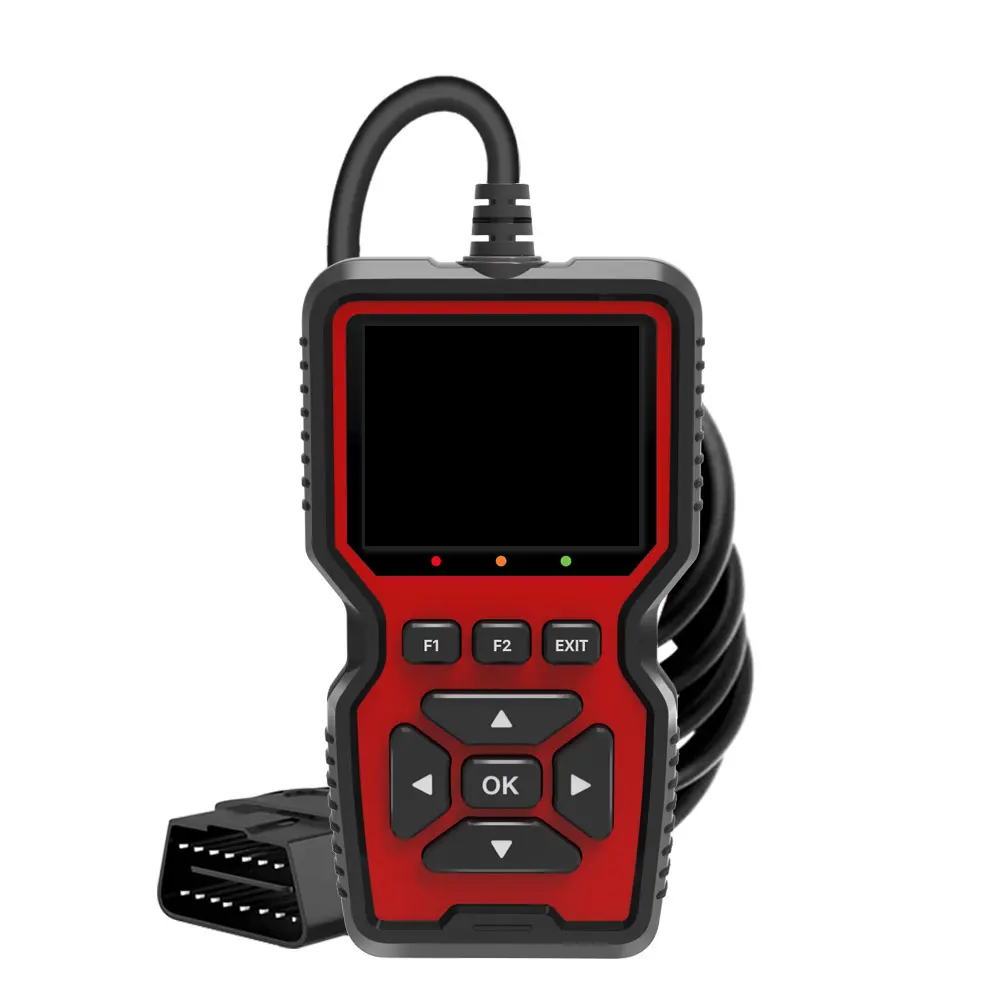
Diagnosis of P1100 requires a methodical approach, utilizing an OBD-II scanner and a digital multimeter (DMM) to pinpoint the source of the intermittent or unconfirmed MAF signal.
- Visual Inspection:
- Thoroughly inspect the MAF sensor element for visible contamination (e.g., oil, dust, lint).
- Examine the MAF sensor electrical connector for corrosion, bent pins, or signs of a loose connection. Perform a “wiggle test” on the connector and harness while monitoring live data.
- Inspect the entire MAF sensor wiring harness from the sensor to the PCM for any signs of chafing, cuts, rodent damage, or improper repairs.
- Check the air intake system, including air filter housing, intake boot, and vacuum lines, for any leaks, cracks, or loose clamps upstream or downstream of the MAF sensor. A smoke test can be highly effective for detecting subtle vacuum leaks.
- Connect an advanced OBD-II scanner and check for pending and stored DTCs, as well as freeze frame data which can provide context (engine speed, load, temperature) when the code was set.
- Monitor MAF sensor live data (typically in grams per second (g/s) or Hertz (Hz) for digital MAF sensors) at idle and various engine speeds.
- At idle (warm engine), observe the MAF reading. For most 4-cylinder engines, expect around 2-4 g/s; 6-cylinder engines 3-6 g/s; and 8-cylinder engines 4-8 g/s. Note any erratic, jumpy, or inconsistent readings.
- Slowly increase engine RPM to 2500-3000 and hold steady. The MAF reading should increase smoothly and remain stable. Look for sudden drops, spikes, or flat-line readings.
- Monitor other relevant PIDs like Throttle Position Sensor (TPS), Engine RPM, and Engine Load to correlate with MAF readings and identify inconsistencies.
- Check the status of emissions readiness monitors. If the MAF monitor (or others) is incomplete, a drive cycle may be required after any repairs.
- Power and Ground: With the ignition ON and engine OFF, disconnect the MAF sensor. Use a DMM to test for appropriate voltage (typically 12V or 5V, depending on specific MAF design) at the power supply pin and a good ground at the ground pin of the MAF connector. Consult the vehicle’s wiring diagram for pin identification.
- Signal Integrity: Backprobe the MAF signal wire (with the sensor connected and engine running). If it’s an analog MAF, measure the voltage output at idle and during gradual throttle increases. Compare to manufacturer specifications (e.g., 0.5V-1.5V at idle, increasing to 4V+ at wide open throttle). For digital MAF sensors, a specialty scope or frequency counter may be needed to verify frequency output. Look for any intermittent drops to 0V or wildly fluctuating readings.
- Perform a voltage drop test across the MAF ground circuit to ensure it’s robust.
Recommended Repairs and Solutions
Once the root cause of P1100 has been identified through diagnosis, the appropriate repairs can be implemented:
- Clean the MAF Sensor: If contamination is observed, carefully clean the MAF sensor using a specialized MAF sensor cleaner only. Avoid using carburetor cleaner, brake cleaner, or other harsh solvents, as these can damage the delicate sensor elements. Allow to air dry completely before reinstallation.
- Repair or Replace Wiring and Connectors: If damaged wiring or corroded connector pins are identified, perform precise repairs. Use proper crimping and soldering techniques with heat-shrink tubing for wiring repairs. Replace entire connector pigtails if corrosion or damage is extensive and irreversible.
- Replace the MAF Sensor: If cleaning does not resolve the intermittent signal issue, and DMM/scanner tests confirm that the MAF sensor itself is providing erratic or out-of-specification readings, replace the MAF sensor. It is highly recommended to use an Original Equipment Manufacturer (OEM) or high-quality aftermarket MAF sensor, as lower-quality sensors can often introduce new, subtle drivability issues or recurrences of the code.
- Repair Air Intake Leaks: If vacuum leaks or unmetered air sources were identified, repair or replace the affected components (e.g., intake boot, vacuum hoses, gaskets) to ensure all incoming air is accurately measured by the MAF sensor.
- Perform Drive Cycle and Verify Repair: After any repair, clear the DTCs using the OBD-II scanner. Then, perform a comprehensive manufacturer-specific drive cycle to ensure all readiness monitors reset to “complete” and that the P1100 code does not return. This is a critical step to confirm the repair and ensure the vehicle will pass emissions testing if applicable.
- ECM/PCM Diagnosis (Last Resort): Only if all other components and wiring have been thoroughly tested and confirmed to be in perfect working order, should an ECM/PCM issue be considered. This typically involves further advanced diagnostics by a specialist or dealership.