What Does Code P1137 Mean?
The diagnostic trouble code P1137 indicates a “Lack Of HO2S Switch – Sensor Indicates Lean” for Bank 1, Sensor 2. This code specifically refers to the heated oxygen sensor (HO2S) located after the catalytic converter on the bank of cylinders that includes cylinder #1. The Engine Control Module (ECM) or Powertrain Control Module (PCM) monitors the voltage output from this sensor to assess the efficiency of the catalytic converter and make fine adjustments to fuel trim. A properly functioning post-catalytic converter oxygen sensor typically exhibits a relatively stable voltage signal, generally on the higher side (indicating a rich exhaust gas condition after the catalyst has consumed residual oxygen and processed pollutants), with slow, minimal fluctuations. When P1137 is set, the ECM/PCM has detected that the Bank 1 Sensor 2 is not cycling or “switching” adequately between high and low voltage states, and critically, its output voltage is consistently low, indicating a persistently lean exhaust gas condition. This lack of switching, coupled with a lean indication, suggests that either the sensor itself is faulty, the exhaust gas composition reaching the sensor is genuinely lean due to an external leak, or there’s an electrical issue preventing proper operation, thus impacting the ECM’s ability to accurately monitor catalyst efficiency and potentially leading to incorrect fuel trim calculations.
Common Symptoms
- Check Engine Light (MIL) Illumination: This is the most direct and common symptom.
- Increased Fuel Consumption: The ECM may attempt to richen the air-fuel mixture to compensate for a perceived lean condition, leading to reduced fuel economy.
- Failed Emissions Test: An improperly functioning oxygen sensor or a genuine lean condition can lead to increased tailpipe emissions, particularly NOx.
- Rough Idling or Poor Engine Performance: While less common for a post-catalytic converter sensor, prolonged or severe lean conditions could indirectly affect engine operation.
- Unusual Odor from Exhaust: If the ECM excessively enriches the mixture due to misinterpreting the sensor’s lean signal, a sulfur or fuel smell might be noticeable.
What Causes the Code P1137?
- Faulty Heated Oxygen Sensor (HO2S) – Bank 1 Sensor 2: This is the most prevalent cause. The sensor’s internal chemistry can degrade over time, leading to a slow response or a bias towards a lean reading. The heater element may also fail, preventing the sensor from reaching its optimal operating temperature.
- Exhaust System Leak: A leak in the exhaust manifold, exhaust pipe, or near the oxygen sensor itself (upstream or downstream of the sensor) can allow ambient air to be drawn into the exhaust stream. This dilution causes the oxygen sensor to detect a higher oxygen content and incorrectly report a lean condition.
- Wiring or Connector Issues: Damaged, corroded, shorted, or open circuits in the wiring harness leading to the Bank 1 Sensor 2, or a faulty connector, can disrupt the sensor’s signal or power supply, leading to erroneous readings or complete signal loss.
- Engine Mechanical Issues Causing a Lean Condition: While less direct for a post-cat sensor, severe vacuum leaks, low fuel pressure, clogged fuel injectors, or a failing Mass Air Flow (MAF) sensor can cause the engine to run excessively lean, potentially manifesting as a lean reading even at the post-cat sensor if the condition is persistent.
- ECM/PCM Failure: Although rare, an internal fault within the ECM/PCM could lead to misinterpretation of sensor signals or incorrect diagnostic logic, setting this code.
How to Diagnose and Troubleshoot
A systematic approach is crucial for diagnosing P1137:
- Visual Inspection:
- Begin with a thorough visual inspection of the Bank 1 Sensor 2 and its wiring harness. Look for signs of physical damage, frayed or burnt wires, melted insulation, corrosion at the connector, or loose connections.
- Inspect the exhaust system for any visible leaks, cracks, or loose components, particularly around the oxygen sensor and catalytic converter. Check gaskets and flanges.
- OBD-II Scanner Live Data Analysis:
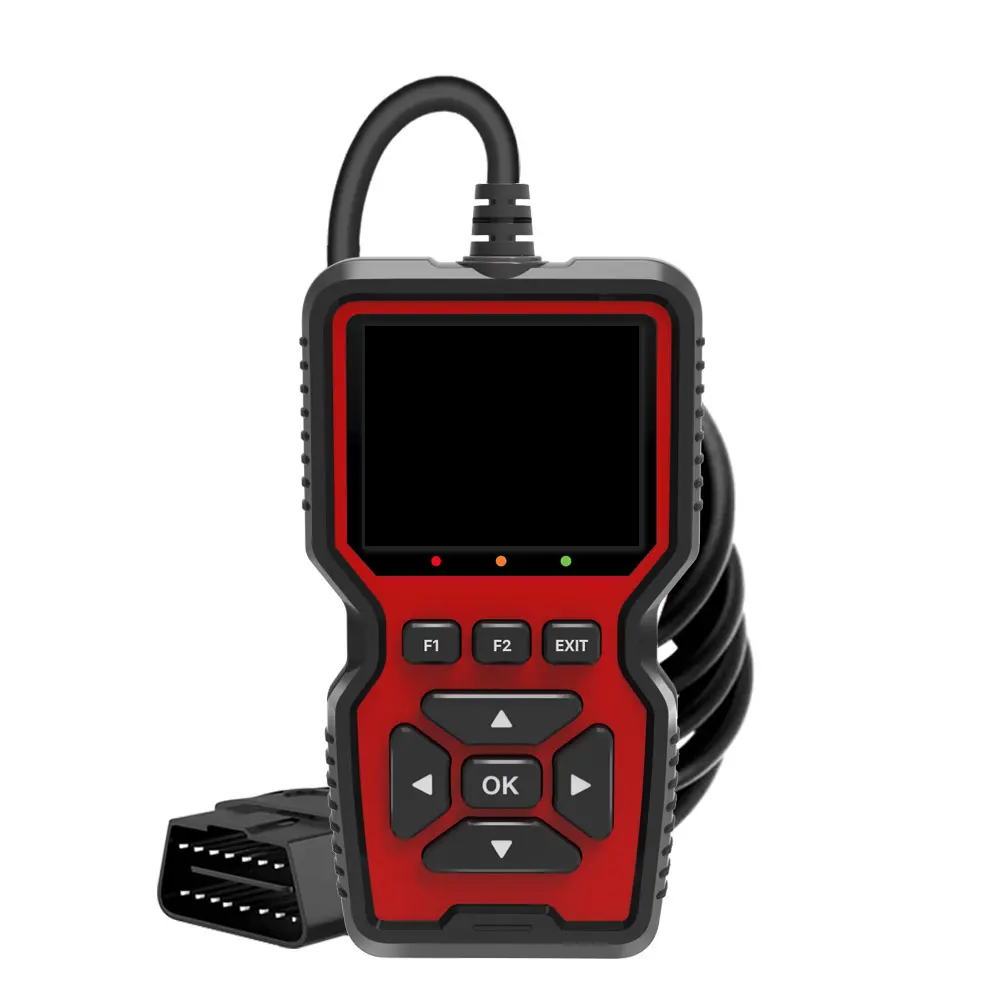
- Connect an advanced OBD-II scanner capable of displaying live data. Monitor the HO2S B1S2 voltage (O2S12 or similar parameter). A normal, healthy post-catalytic converter sensor should show a relatively stable, higher voltage (e.g., 0.6V to 0.9V) with slow, minimal fluctuations. A P1137 condition will typically show the voltage stuck at a consistently low level (e.g., 0.1V to 0.3V) and failing to switch.
- Monitor fuel trims (STFT and LTFT) for Bank 1. High positive fuel trims (+10% or more) might indicate the ECM is trying to compensate for an actual lean condition upstream, which could indirectly cause the B1S2 to read lean or could be a separate issue.
- Check for other related Diagnostic Trouble Codes (DTCs), such as codes for exhaust leaks (e.g., P0420 for catalyst efficiency if not yet set), fuel system lean codes (e.g., P0171, P0174), or HO2S heater circuit codes.
- Exhaust Leak Testing:
- With the engine cold, use a smoke machine to introduce smoke into the exhaust system. Observe for smoke escaping from any part of the exhaust, especially near the Bank 1 Sensor 2 or upstream components.
- Alternatively, a stethoscope or listening device can be used to detect audible exhaust leaks with the engine running.
- Digital Multimeter (DMM) Testing of HO2S B1S2:
- Heater Circuit Test: Disconnect the HO2S connector. With the ignition ON (engine OFF), test for 12V supply and ground at the two heater pins on the vehicle’s harness side of the connector (consult service manual for specific pinout). If either is missing, trace the wiring back to the fuse box or ECM/PCM. Measure the resistance of the heater element within the sensor itself; typical values range from 4-10 ohms. An open circuit (infinite resistance) indicates a faulty heater.
- Signal Circuit Test: Backprobe the signal wire of the HO2S B1S2 with the engine fully warmed up and idling. If the sensor is reading consistently low voltage (as indicated by the scanner), try to manually introduce a rich condition (e.g., briefly introducing propane into the intake manifold or spraying carburetor cleaner into the intake for a few seconds). Observe if the sensor voltage reacts and spikes high. If it shows no or very minimal reaction, the sensor is likely faulty. Ensure the sensor is at operating temperature during this test.
- Component Substitution (if feasible): If all other diagnostics point to the sensor, but you want to confirm, swapping the Bank 1 Sensor 2 with a known good equivalent sensor (if available and compatible, e.g., from Bank 2 Sensor 2 on V-type engines, if applicable) could confirm a faulty sensor.
Recommended Repairs and Solutions
Based on the diagnostic findings, the following repairs are typically recommended:
- Replace the Heated Oxygen Sensor (HO2S) – Bank 1 Sensor 2: If diagnostics confirm the sensor itself is faulty (e.g., stuck lean, slow response, heater circuit open), replacement is the primary solution. Always use a high-quality, OEM-grade replacement sensor to ensure compatibility and longevity. After replacement, clear the DTCs and perform a drive cycle to confirm the repair.
- Repair Exhaust Leaks: If an exhaust leak is identified, the leak point must be professionally repaired. This may involve welding a crack, replacing a damaged pipe section, or replacing exhaust gaskets (e.g., manifold gasket, flange gaskets) and bolts. Ensure the exhaust system is sealed properly before clearing codes.
- Repair or Replace Wiring/Connector: If the issue is traced to damaged wiring or a corroded connector, repair the wiring using proper soldering and heat-shrink techniques, or replace the entire connector assembly. Ensure proper pin tension and weather sealing.
- Address Underlying Lean Condition (if detected): If initial diagnostics (especially fuel trims) pointed towards a genuine lean condition affecting the engine as a whole, further diagnosis of the fuel system (fuel pump pressure, injector performance) or air induction system (vacuum leaks, MAF sensor function) would be necessary to correct the root cause.
Mechanic’s Tip: After any repair related to P1137, always clear the DTCs and perform a full drive cycle that allows the ECM/PCM to complete its readiness monitors. This ensures that the repair has been successful and prevents the code from returning.