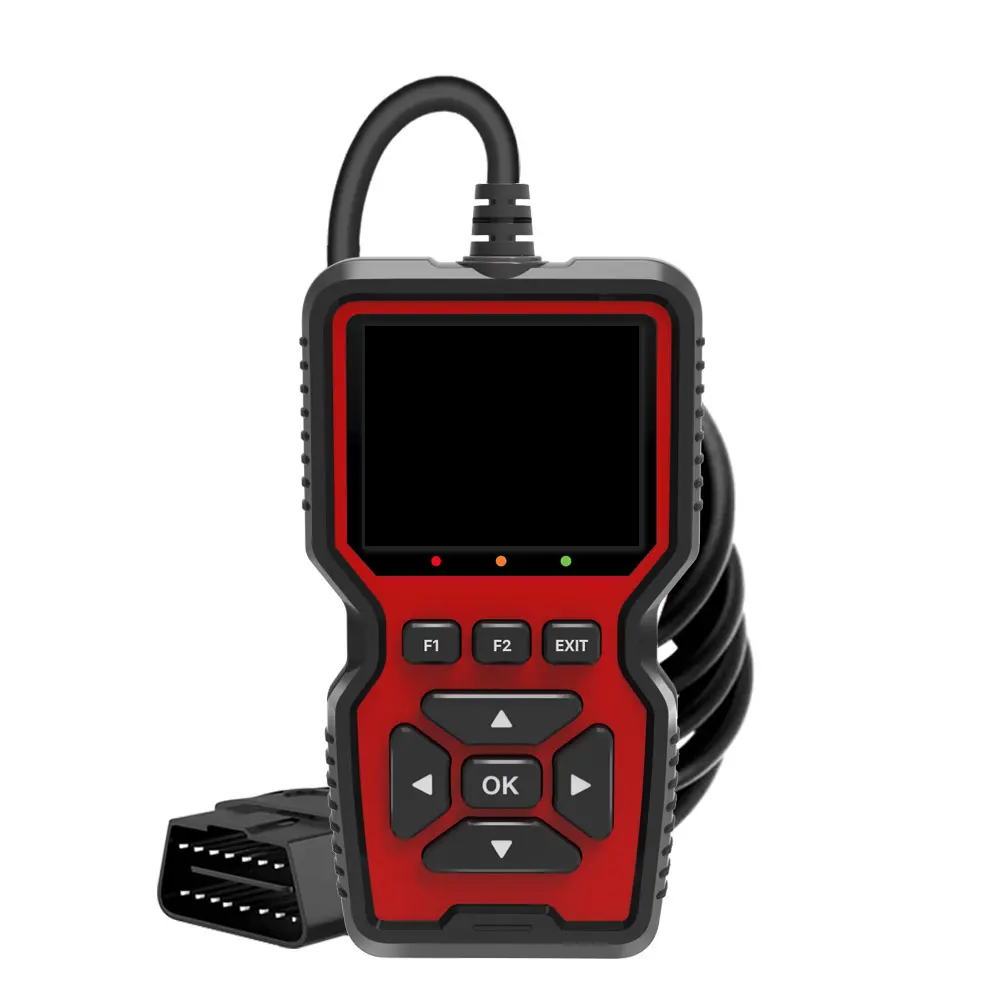
What Does Code P1151 Mean?
The OBD-II diagnostic trouble code P1151, which translates to “Lack Of HO2S21 Switch – Sensor Indicates Lean,” signifies a specific issue detected by the Engine Control Module (ECM) or Powertrain Control Module (PCM) within the vehicle’s fuel management and emissions control systems. HO2S21 refers to Heated Oxygen Sensor (HO2S) located on Bank 2, Sensor 1. Bank 2 denotes the engine bank that does not contain cylinder #1, and Sensor 1 indicates the upstream oxygen sensor, positioned before the catalytic converter.
During closed-loop operation, the ECM/PCM continuously monitors the voltage output of the upstream oxygen sensors to fine-tune the air-fuel mixture. A properly functioning zirconium dioxide-type HO2S on a healthy engine should rapidly oscillate its voltage signal between approximately 0.1 volts (lean condition, high oxygen content in exhaust) and 0.9 volts (rich condition, low oxygen content). These rapid switching cycles indicate the sensor is actively responding to the slight fluctuations in the air-fuel ratio, allowing the ECM/PCM to maintain stoichiometry.
Code P1151 is set when the ECM/PCM detects that the HO2S21 sensor’s voltage output remains consistently low (typically below 0.45V) for a predetermined period during closed-loop operation, without exhibiting the expected rapid switching activity. This indicates that the sensor is continuously reporting a lean condition in the exhaust gases for Bank 2, and critically, it is not “switching” between rich and lean states as designed. This lack of switching suggests either a faulty sensor that is unable to respond or a genuine, severe, and persistent lean condition on Bank 2 that is overwhelming the sensor’s ability to cycle.
Common Symptoms
- Illumination of the Malfunction Indicator Lamp (MIL) or “Check Engine Light” on the dashboard.
- Reduced Fuel Economy: The ECM/PCM may try to compensate for the perceived lean condition by adding more fuel, leading to increased fuel consumption.
- Rough Idle or Stalling: An incorrect air-fuel mixture can cause unstable engine operation.
- Engine Hesitation or Lack of Power: Particularly noticeable during acceleration, as the engine struggles to produce optimal combustion with a lean mixture.
- Failed Emissions Test: Elevated levels of NOx and other pollutants due to improper combustion.
- Poor Engine Performance: General driveability issues, especially under load.
What Causes the Code P1151?
- Faulty Heated Oxygen Sensor (HO2S21): The sensor itself may be aged, contaminated (e.g., by silicone, oil, or coolant), internally shorted, open-circuited, or simply too slow to react to changes in exhaust gas composition. This is the most common direct cause.
- Vacuum Leaks: Unmetered air entering the engine intake system on Bank 2 (or upstream of the MAF sensor, affecting both banks but potentially more pronounced on one) can cause a genuine lean condition. This includes cracked vacuum hoses, intake manifold gasket leaks, PCV system issues, or a faulty brake booster.
- Exhaust Leaks: Leaks in the exhaust system upstream of the HO2S21 sensor can draw ambient air into the exhaust stream, diluting the exhaust gases and causing the sensor to falsely report a lean condition.
- Fuel Delivery Issues on Bank 2:
- Clogged or Failing Fuel Injectors: One or more fuel injectors on Bank 2 may be partially clogged or failing to deliver the correct amount of fuel, leading to a true lean condition.
- Low Fuel Pressure: A weak fuel pump, restricted fuel filter, or faulty fuel pressure regulator can cause insufficient fuel delivery to the engine.
- Wiring or Connector Issues: Damaged, corroded, or loose wiring or connections to the HO2S21 sensor can interrupt the signal or heater circuit, preventing proper operation.
- Mass Airflow (MAF) Sensor Malfunction: An inaccurate MAF sensor can underreport the actual airflow, causing the ECM/PCM to inject less fuel than necessary, leading to a lean condition. While often setting P0171/P0174 first, it can contribute to P1151.
- Contaminated Fuel: Water or excessive ethanol content in fuel can cause inconsistent combustion and lean conditions.
- ECM/PCM Fault: Although rare, an internal fault within the ECM/PCM preventing it from correctly interpreting the HO2S21 signal can also set this code.
How to Diagnose and Troubleshoot
Diagnosing P1151 requires a systematic approach using specialized tools:
- Verify the Code and Freeze Frame Data:
- Connect an OBD-II scanner and confirm P1151 is present.
- Review freeze frame data to understand engine conditions (RPM, engine load, coolant temp, fuel trims) when the code was set. This provides critical context for replication.
- Monitor Live Data with OBD-II Scanner:
- With the engine at operating temperature and in closed-loop, monitor the live data stream for HO2S21 voltage. Expect it to be consistently low (e.g., 0.1-0.3V) and not switching or switching very slowly.
- Observe Short-Term Fuel Trim (STFT) and Long-Term Fuel Trim (LTFT) for Bank 2. Significantly positive fuel trims (e.g., +15% or higher) indicate the ECM/PCM is adding fuel to compensate for a lean condition.
- Compare HO2S21 voltage and fuel trims with HO2S11 (Bank 1 Sensor 1). If HO2S11 is switching correctly and its fuel trims are normal, it helps isolate the problem to Bank 2.
- Monitor Mass Airflow (MAF) sensor readings to ensure they are plausible at various RPMs.
- Visual Inspection:
- Carefully inspect the HO2S21 sensor wiring harness and connector for any signs of damage, fraying, corrosion, or loose connections.
- Check for obvious vacuum leaks around the intake manifold, vacuum hoses, PCV valve, and brake booster. Listen for hissing sounds. A smoke machine is highly effective for locating elusive leaks.
- Inspect the exhaust system upstream of HO2S21 for any cracks, loose flanges, or damaged gaskets that could cause exhaust leaks.
- Examine the HO2S21 sensor itself for physical damage or heavy contamination.
- Digital Multimeter (DMM) Tests:
- Heater Circuit Check: With the ignition ON, engine OFF, disconnect the HO2S21 connector. Refer to the vehicle’s wiring diagram to identify the heater circuit wires. Test for 12V supply and proper ground on the heater circuit pins. A faulty heater circuit can prevent the sensor from reaching operating temperature, causing it to read lean.
- Signal Wire Voltage Test: Backprobe the HO2S21 signal wire (refer to wiring diagram) with the sensor connected and engine running at operating temperature. The DMM should confirm the low, non-switching voltage seen on the scanner.
- Propane Enrichment Test: While monitoring HO2S21 voltage, carefully introduce unmetered propane gas into the intake manifold. If the sensor is functioning, its voltage should rapidly jump to rich (0.8-0.9V). If it fails to respond, the sensor is likely faulty.
- Vacuum Depletion Test: Briefly create a vacuum leak while monitoring the sensor. A good sensor will show a more pronounced lean reading.
- Fuel System Diagnostics (If a genuine lean condition is suspected):
- Perform a fuel pressure test at the fuel rail to ensure adequate fuel delivery.
- Conduct an injector balance test or visually inspect spark plugs on Bank 2 cylinders for signs of lean operation (e.g., white or blistered electrodes).
- Check for restrictions in the fuel filter.
Recommended Repairs and Solutions
Once the root cause of P1151 has been accurately identified through thorough diagnostics, the appropriate repair can be undertaken:
- Replace the HO2S21 Sensor: If the sensor itself is confirmed to be faulty (slow, non-responsive, or internally damaged), replace it with a new, high-quality OEM or equivalent aftermarket sensor. Always use an oxygen sensor-specific socket to avoid damaging the sensor or exhaust threads. Apply anti-seize compound to the new sensor threads if it doesn’t come pre-applied.
- Repair Vacuum Leaks: Replace any cracked, brittle, or disconnected vacuum hoses, intake manifold gaskets, PCV valve components, or brake booster diaphragms. Ensure all clamps and connections are secure.
- Repair Exhaust Leaks: Weld or replace damaged exhaust pipes or components upstream of HO2S21. Replace any compromised exhaust gaskets or tighten loose fasteners.
- Address Fuel System Issues:
- If specific fuel injectors on Bank 2 are found to be clogged, attempt professional cleaning or replace them.
- If low fuel pressure is diagnosed, replace the faulty fuel pump, fuel pressure regulator, or restricted fuel filter as necessary.
- Repair Wiring or Connectors: Splice and properly insulate any damaged wiring using heat-shrink tubing and solder. Clean and secure any corroded or loose electrical connectors.
- Replace MAF Sensor (if applicable): If MAF sensor readings are inconsistent or inaccurate, replace the sensor.
- Clear DTCs and Verify Repair: After completing repairs, clear the P1151 code and any related codes from the ECM/PCM memory using an OBD-II scanner. Perform a comprehensive drive cycle to allow the engine monitors to run and confirm that the code does not return and that the HO2S21 is now switching correctly.
Mechanics’ Tips:
- Never assume the oxygen sensor is the sole problem without performing comprehensive diagnostics. A P1151 code indicates the sensor is reporting a lean condition without switching, which could be an accurate report from a functioning sensor reacting to a genuine engine lean condition.
- Always check for related DTCs, such as P0171 (System Too Lean Bank 1) or P0174 (System Too Lean Bank 2), as these often accompany O2 sensor codes and point towards an actual lean condition.
- Using a smoke machine for vacuum and exhaust leak detection is highly recommended for efficiency and accuracy.
- When replacing an oxygen sensor, ensure the engine is cool to avoid burns and to prevent stripping threads in a hot exhaust component.