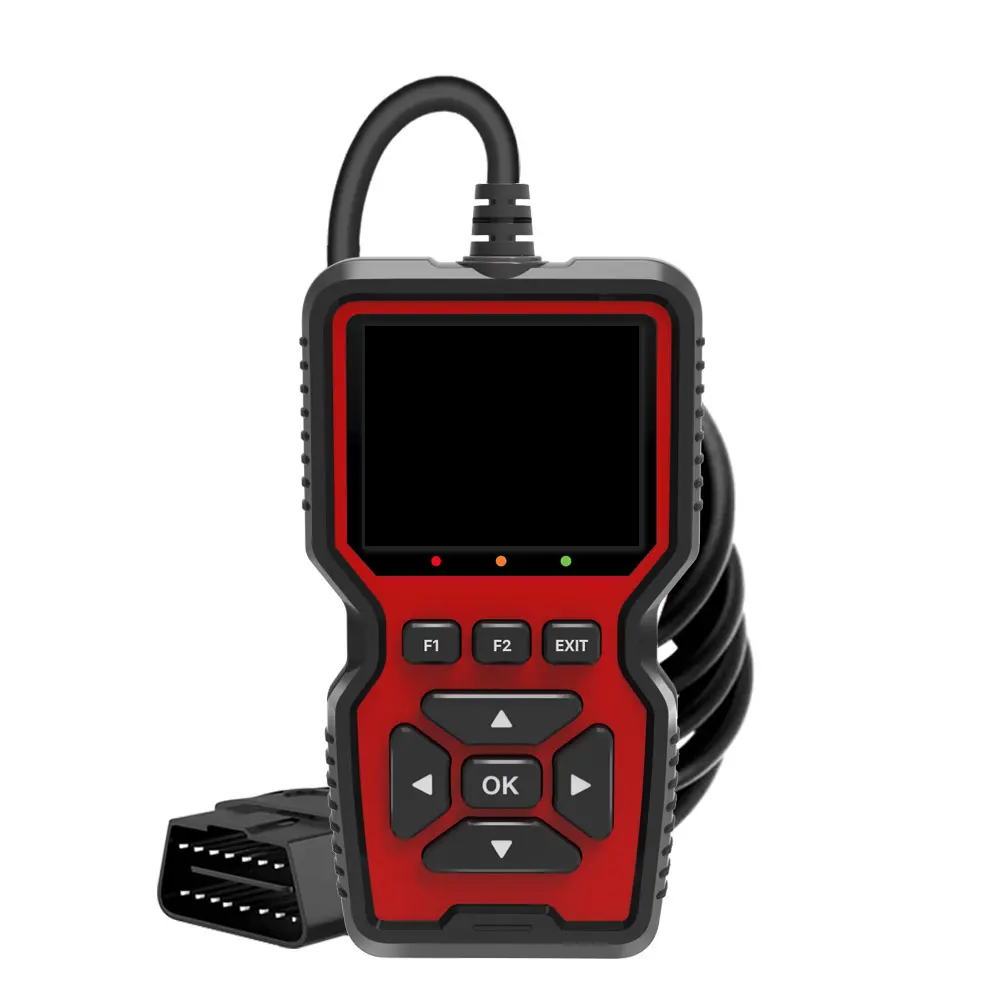
What Does Code P1210 Mean?
The OBD-II diagnostic trouble code P1210 signifies that the Engine Control Module (ECM), also known as the Powertrain Control Module (PCM), has detected an Injector Control Pressure (ICP) level that is consistently above the expected or desired value. This code is most commonly associated with diesel engines utilizing a high-pressure oil system (HPOS) to actuate their fuel injectors, such as Ford Power Stroke engines or some International Harvester applications. The ECM monitors the ICP sensor, which provides a voltage signal proportional to the pressure in the high-pressure oil manifold. Based on various engine operating parameters, including engine RPM, load, and accelerator pedal position, the ECM calculates a desired ICP. When the actual ICP, as reported by the sensor, significantly and consistently exceeds this desired calculated value for a specified period, the ECM flags a P1210 code. This condition indicates an over-pressurization within the high-pressure injection control system, which can adversely affect fuel atomization, injector performance, and potentially lead to engine damage if not addressed.
Common Symptoms
- Rough Engine Idle or Misfires: Due to improper fuel injector operation caused by excessive control pressure.
- Reduced Engine Power and Acceleration: The ECM may defuel the engine or enter a “limp home” mode to protect components.
- Excessive Black Smoke from Exhaust: A sign of incomplete combustion, often due to over-fueling or poor fuel atomization from incorrect injection timing/pressure.
- Engine Hard Start or No Start Condition: While less common for over-pressure, extreme ICP values can prevent proper engine startup.
- Increased Fuel Consumption: Inefficient combustion and potential over-fueling can lead to diminished fuel economy.
- Illuminated Malfunction Indicator Lamp (MIL): The primary indication that a diagnostic trouble code has been set.
What Causes the Code P1210?
- Faulty Injector Control Pressure (ICP) Sensor: The sensor itself may be reporting an inaccurately high pressure reading to the ECM, even if the actual pressure is within limits.
- Stuck or Malfunctioning Injection Pressure Regulator (IPR) Valve: The IPR valve controls the pressure in the high-pressure oil system by diverting excess oil back to the sump. If it’s stuck in a partially or fully closed position, or its solenoid/control circuit is faulty, it can cause the pressure to build excessively.
- Wiring or Connector Issues: Open circuits, shorts to power, or high resistance in the ICP sensor signal wire, IPR valve control circuit, or their respective connectors can lead to incorrect sensor readings or improper IPR valve operation.
- High-Pressure Oil Pump (HPOP) Malfunction: While less common for over-pressure, an internal failure within the HPOP, such as a compromised pressure relief mechanism, could theoretically lead to uncontrolled high pressure.
- Restricted ICP Sensor Port: Debris or sludge partially blocking the passage to the ICP sensor can create a localized pressure reading anomaly.
- Faulty Engine Control Module (ECM/PCM): Although rare, a defective ECM could misinterpret the ICP signal or send incorrect command signals to the IPR valve, resulting in sustained high ICP.
How to Diagnose and Troubleshoot
Diagnosing P1210 requires careful adherence to safety protocols, as the high-pressure oil system operates at extremely high pressures (up to 3,000-4,000 PSI or more).
- Visual Inspection: Begin by visually inspecting the wiring harnesses and connectors for both the ICP sensor and the IPR valve. Look for signs of chafing, corrosion, loose connections, or damage. Ensure the oil level is correct and the oil is clean, as dirty oil can affect IPR valve operation.
- OBD-II Scanner Live Data Analysis:
- Connect an advanced OBD-II scanner capable of displaying live data PIDs specific to your engine.
- Monitor “ICP Actual” versus “ICP Desired” values. At idle, the actual ICP should closely match the desired ICP (e.g., around 500-700 PSI for many diesel applications). During acceleration, both values will rise significantly but should remain correlated. A P1210 indicates Actual ICP is consistently higher than Desired ICP.
- Observe the “IPR Duty Cycle” (or current, depending on the system). The ECM commands the IPR valve to open or close to regulate pressure. If ICP is high, the ECM should command a lower IPR duty cycle (more open) to reduce pressure. If the duty cycle is low, but ICP remains high, the IPR valve may be stuck.
- Check for any other related codes, particularly those for the ICP sensor or IPR valve circuits.
- ICP Sensor Testing:
- With the engine off and key on, disconnect the ICP sensor. Use a Digital Multimeter (DMM) to check for a 5-volt reference voltage and a good ground at the sensor connector from the ECM.
- If accessible, back-probe the ICP sensor signal wire with the sensor connected and the engine running (if possible). Compare the voltage output to manufacturer specifications for various pressure ranges. A voltage reading near the 5-volt reference with low engine demand strongly suggests either a faulty ICP sensor reporting false high pressure or genuinely excessive pressure.
- An ICP sensor showing high voltage (e.g., 4.5V-5V) when the engine is off but the key is on, indicates an internal short or sensor failure.
- IPR Valve Testing:
- With the engine off, disconnect the IPR valve connector. Use a DMM to measure the resistance across the IPR solenoid terminals. Compare this reading to the manufacturer’s specifications (typically 10-12 ohms for many applications). An out-of-spec resistance indicates a faulty IPR solenoid.
- Check for power and ground supply to the IPR valve connector using the DMM.
- If your scanner supports it, perform an IPR “buzz test” or active command test. Listen for audible clicking or buzzing from the valve, indicating it is mechanically actuating.
- Wiring Integrity Check: Perform continuity and resistance checks on all wires between the ICP sensor and IPR valve connectors and the ECM connector. Check for shorts to voltage or ground using the DMM.
- High-Pressure Oil Gauge Test: For definitive diagnosis, connect a specialized high-pressure oil gauge directly into the high-pressure oil rail. Compare the actual pressure reading from the mechanical gauge to the ICP sensor reading reported by the scanner. If the mechanical gauge shows normal pressure while the scanner reports high pressure, the ICP sensor is faulty. If both show high pressure, the issue lies within the pressure regulation system (most likely the IPR valve or rarely the HPOP).
Recommended Repairs and Solutions
- Replace the Injector Control Pressure (ICP) Sensor: If diagnostic tests confirm the ICP sensor is providing inaccurate, consistently high readings. Always use a high-quality OEM or equivalent aftermarket sensor to ensure accuracy and longevity.
- Replace the Injection Pressure Regulator (IPR) Valve: If the IPR valve is found to be sticking, has incorrect resistance, or fails to respond to ECM commands. Ensure the new IPR valve is properly seated and torqued to specifications, and its electrical connector is secure.
- Repair Wiring and Connectors: Address any identified open circuits, shorts to power/ground, or high-resistance issues in the ICP sensor or IPR valve circuits. Use proper wiring repair techniques, such as soldering and heat-shrink tubing, for durable connections.
- Bleed the High-Pressure System: After replacing components like the IPR valve, it is often necessary to cycle the ignition key multiple times and/or crank the engine for short bursts to purge air from the high-pressure oil system. Refer to the specific service manual for the correct procedure.
- ECM/PCM Replacement or Reprogramming: This should only be considered as a last resort, after all other components and wiring have been thoroughly tested and confirmed to be functioning correctly. A new or reprogrammed ECM may be required if it’s determined to be misinterpreting signals or sending incorrect commands.
- Post-Repair Verification: After any repair, clear the DTCs, perform a thorough road test or drive cycle, and re-monitor live data with the OBD-II scanner to confirm that actual ICP and desired ICP values are within specifications and that the P1210 code does not return.