What Does Code P1216 Mean?
The OBD-II diagnostic trouble code P1216 signifies an issue with the Accelerator Pedal Position (APP) Sensor ‘C’ Circuit High Input. The APP sensor, often referred to as the Pedal Position Sensor (PPS), is a critical component of the Electronic Throttle Control (ETC) system, commonly known as “drive-by-wire.” Its primary function is to convert the physical position of the accelerator pedal into an electrical voltage signal that the Engine Control Module (ECM) or Powertrain Control Module (PCM) can interpret. This signal dictates the desired engine power output by controlling the throttle body.
Modern APP sensors typically incorporate multiple redundant circuits (e.g., A, B, C) for safety and reliability. Each circuit provides an independent signal to the ECM, allowing the module to cross-reference their readings for rationality. When the ECM detects a P1216 code, it means the voltage signal from the APP sensor’s ‘C’ circuit is consistently higher than its predetermined maximum operating range or a specific threshold, regardless of the actual pedal position. This “high input” condition often suggests an open circuit, a short to a reference voltage, or an internal sensor malfunction that causes the signal line to float high or receive excessive voltage. The ECM perceives this anomalous high voltage as an invalid input, affecting its ability to accurately command throttle opening and potentially triggering a failsafe or “limp home” mode to prevent unintended acceleration or engine damage.
Common Symptoms
- Malfunction Indicator Lamp (MIL) Illumination: The “Check Engine” light will be illuminated.
- Reduced Engine Power (Limp Mode): The vehicle may enter a restricted operating mode, severely limiting engine RPM and vehicle speed to protect the engine and transmission.
- Erratic or No Throttle Response: The engine may not respond to accelerator pedal input, or the response may be inconsistent and unpredictable.
- Engine Hesitation or Stalling: The engine might hesitate during acceleration or stall intermittently.
- Inability to Accelerate: The vehicle may be unable to gain speed or exceed a very low speed.
- Cruise Control Inoperable: The cruise control system will likely be disabled.
What Causes the Code P1216?
- Faulty Accelerator Pedal Position (APP) Sensor: An internal electrical failure within the ‘C’ circuit of the APP sensor, leading to an incorrect high voltage output. This is a very common cause.
- Wiring Harness Issues:
- Short to Voltage: The signal wire for APP sensor ‘C’ circuit may be shorted to a constant battery voltage (B+) or a 5-volt reference voltage (VREF) supply line.
- Open Ground Circuit: An open or high-resistance in the APP sensor’s ground wire can cause the signal circuit to float high, mimicking a high input.
- Damaged Wiring: Frayed, chafed, pinched, or corroded wiring in the APP sensor harness affecting the ‘C’ circuit.
- Poor Electrical Connections: Corroded, loose, bent, or damaged pins within the APP sensor connector or the ECM/PCM connector.
- ECM/PCM Failure: Although less common, an internal fault within the ECM/PCM’s APP sensor monitoring circuitry could misinterpret the signal as high, setting the code.
How to Diagnose and Troubleshoot
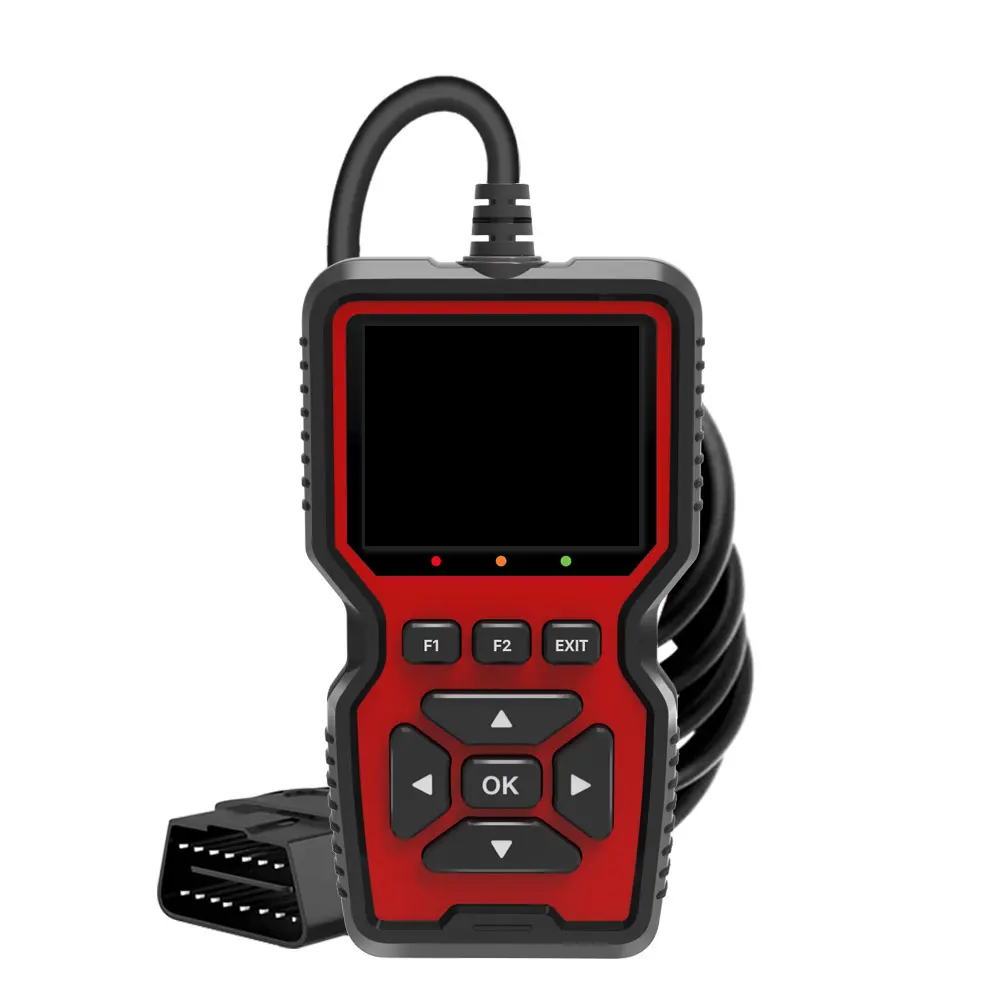
Diagnosing P1216 requires a systematic approach using a digital multimeter (DMM) and an OBD-II scan tool.
- Visual Inspection:
- Begin with a thorough visual inspection of the accelerator pedal assembly and the wiring harness leading to the APP sensor. Look for any obvious signs of damage, such as frayed wires, exposed insulation, pinch points, or corrosion at the electrical connectors.
- Inspect the APP sensor connector itself for bent pins, corrosion, or contamination that could impede proper electrical contact.
- Verify that the accelerator pedal moves freely and returns to its rest position without any mechanical binding or obstructions.
- OBD-II Scan Tool Data Analysis:
- Connect an OBD-II scan tool and check for any additional diagnostic trouble codes (DTCs), especially other APP sensor related codes (e.g., P2127, P2128 for APP ‘C’ circuit low input, or codes related to APP ‘A’ or ‘B’ circuits).
- Access the live data stream and monitor the Accelerator Pedal Position sensor voltages. Identify the readings for APP sensor 1 (or ‘A’), APP sensor 2 (or ‘B’), and APP sensor 3 (or ‘C’, depending on the vehicle’s nomenclature).
- With the ignition ON and engine OFF, slowly depress and release the accelerator pedal. Observe the voltage readings for all APP circuits. The ‘C’ circuit voltage should sweep smoothly from a low voltage (e.g., 0.5V-1.0V at idle) to a high voltage (e.g., 4.0V-4.5V at wide open throttle) in synchronization with the pedal movement. If the ‘C’ circuit voltage remains constantly high (e.g., 5V or near battery voltage) regardless of pedal position, or shows erratic behavior compared to other circuits, it indicates a fault.
- Verify the reference voltage (VREF) provided to the APP sensor, typically 5V. In some cases, a high input could be due to a short to VREF.
- Digital Multimeter (DMM) Testing:
- Power and Ground at Sensor Connector: With the ignition ON, disconnect the APP sensor connector. Use the DMM to check for the 5-volt reference voltage (VREF) at the appropriate pin and a good ground signal at the ground pin. If VREF is absent or incorrect, inspect the wiring back to the ECM/PCM. If ground is absent, repair the ground circuit.
- Signal Wire Voltage (Sensor Disconnected): With the APP sensor disconnected, back-probe the ‘C’ signal wire at the harness connector (ECM side). Check for any voltage present on this wire (especially if ignition is ON). Ideally, it should be very low or 0V. A high voltage here suggests a short to power or VREF in the harness.
- Signal Wire Voltage (Sensor Connected, Back-probed): With the APP sensor reconnected, carefully back-probe the ‘C’ circuit signal wire. Slowly depress and release the accelerator pedal. Monitor the voltage sweep with the DMM. The voltage should change smoothly. A consistent high voltage, irrespective of pedal position, directly points to an internal sensor fault or a wiring short to voltage.
- Continuity and Resistance Checks: Disconnect the battery. Disconnect both the APP sensor connector and the ECM/PCM connector. Use the DMM to check for continuity on the APP ‘C’ signal wire between both connectors. Also, check for shorts to ground and shorts to B+ on the signal wire. Any lack of continuity or presence of a short indicates a wiring harness issue.
Recommended Repairs and Solutions
Once the diagnostic steps have identified the root cause, the following repairs are typically recommended:
- Repair or Replace Wiring Harness: If the visual inspection or DMM testing reveals damaged wires, shorts to voltage, or an open ground in the APP sensor’s ‘C’ circuit, the affected section of the wiring harness must be repaired or replaced. Ensure all connections are secure and corrosion-free.
- Replace Accelerator Pedal Position (APP) Sensor: If the DMM testing consistently shows a high voltage output from the ‘C’ circuit of the APP sensor itself, even when the pedal is at rest, the sensor is faulty and requires replacement. It is crucial to note that the APP sensor is often integrated into the entire accelerator pedal assembly, meaning the whole assembly may need to be replaced.
- Clean and Secure Connectors: If corrosion or poor pin tension is found at either the APP sensor or ECM/PCM connectors, carefully clean the pins using an appropriate electrical contact cleaner and ensure a tight, secure connection upon reassembly.
- ECM/PCM Replacement: This should be considered a last resort. Only after exhaustively ruling out all other possibilities, including the APP sensor, its wiring, and connectors, should an ECM/PCM fault be suspected. An internal ECM/PCM failure is rare and often accompanied by other diagnostic codes.
Important Mechanics’ Tips:
- Always clear diagnostic trouble codes using a scan tool after completing any repairs.
- After replacing an APP sensor or performing repairs on the ETC system, some vehicles may require an accelerator pedal position sensor relearn procedure or a throttle body relearn. Consult the factory service manual for the specific vehicle to ensure proper calibration.
- When monitoring live data, pay close attention to the correlation between all APP sensor circuits. Redundancy is designed for safety; comparing the circuits helps identify which specific circuit is at fault.
- Always ensure the new APP sensor is correctly installed and that the accelerator pedal has full, unrestricted movement throughout its range.