What Does Code P1257 Mean?
The diagnostic trouble code (DTC) P1257 signifies an detected out-of-correlation condition between the output signals of two or more critical accelerator pedal position sensors, specifically referenced as PDS2 and HPDS (High Pedal Position Sensor or equivalent redundant sensor) in certain automotive systems. In modern drive-by-wire (throttle-by-wire) vehicles, the Engine Control Module (ECM) or Powertrain Control Module (PCM) relies on multiple, redundant Accelerator Pedal Position (APP) sensors to accurately determine the driver’s throttle demand. These sensors typically provide a variable voltage signal directly proportional to the pedal’s physical position. The ECM/PCM continuously cross-references these signals for validity, consistency, and safety. When the voltage outputs from PDS2 and HPDS diverge by a pre-programmed threshold for a specified duration or frequency, the ECM/PCM interprets this as a plausible fault within the pedal assembly, its associated sensors, or their respective wiring circuits. This discrepancy poses a significant safety concern as it can lead to unintended acceleration or deceleration, prompting the module to set P1257 and often initiate a “limp home” mode to prevent potential hazards and protect powertrain components by limiting engine power.
Common Symptoms
- Malfunction Indicator Lamp (MIL) Illumination: The “Check Engine” light will be activated on the dashboard, indicating a detected powertrain fault.
- Reduced Engine Power (Limp Home Mode): The ECM/PCM may limit engine RPM and vehicle speed to a preset, reduced value (e.g., 20-30 mph) to ensure safe operation and prevent further damage.
- Erratic or No Throttle Response: The engine may not respond accurately to accelerator pedal input, or its response may be inconsistent, hesitant, or completely absent.
- Rough Idle or Stalling: Inconsistent or incorrect pedal position signals can lead to improper fuel delivery and ignition timing strategies, potentially causing poor idle quality or engine stalling, especially when returning to idle.
- Inability to Accelerate: The vehicle may struggle significantly or be unable to increase speed despite the driver depressing the accelerator pedal.
What Causes the Code P1257?
- Faulty Accelerator Pedal Position (APP) Sensor(s): Internal wear, contamination, open circuits, short circuits, or electronic failure within PDS2 or HPDS (or their equivalents) is the most common cause.
- Damaged or Corroded Wiring/Connectors: Opens, shorts, or excessive resistance in the wiring harness between the APP sensors and the ECM/PCM can disrupt signal integrity. This includes corroded terminals, chafed insulation, pinched wires, or loose connections at the sensor or module.
- Physical Damage to the Accelerator Pedal Assembly: Mechanical wear, binding, or damage to the pedal mechanism itself can prevent the sensors from registering accurate or correlated positions, or even cause intermittent signal loss.
- Faulty Engine Control Module (ECM) / Powertrain Control Module (PCM): While significantly less common, an internal fault within the ECM/PCM affecting its ability to correctly process and compare APP sensor signals can trigger this code.
- High Resistance in Sensor Ground or Reference Voltage Circuits: Issues with the dedicated 5-volt reference voltage (Vref) or sensor ground supplied to the APP sensors can lead to incorrect signal outputs that appear out of correlation.
How to Diagnose and Troubleshoot
Diagnosis of P1257 requires a systematic approach using specialized tools and a detailed understanding of drive-by-wire systems:
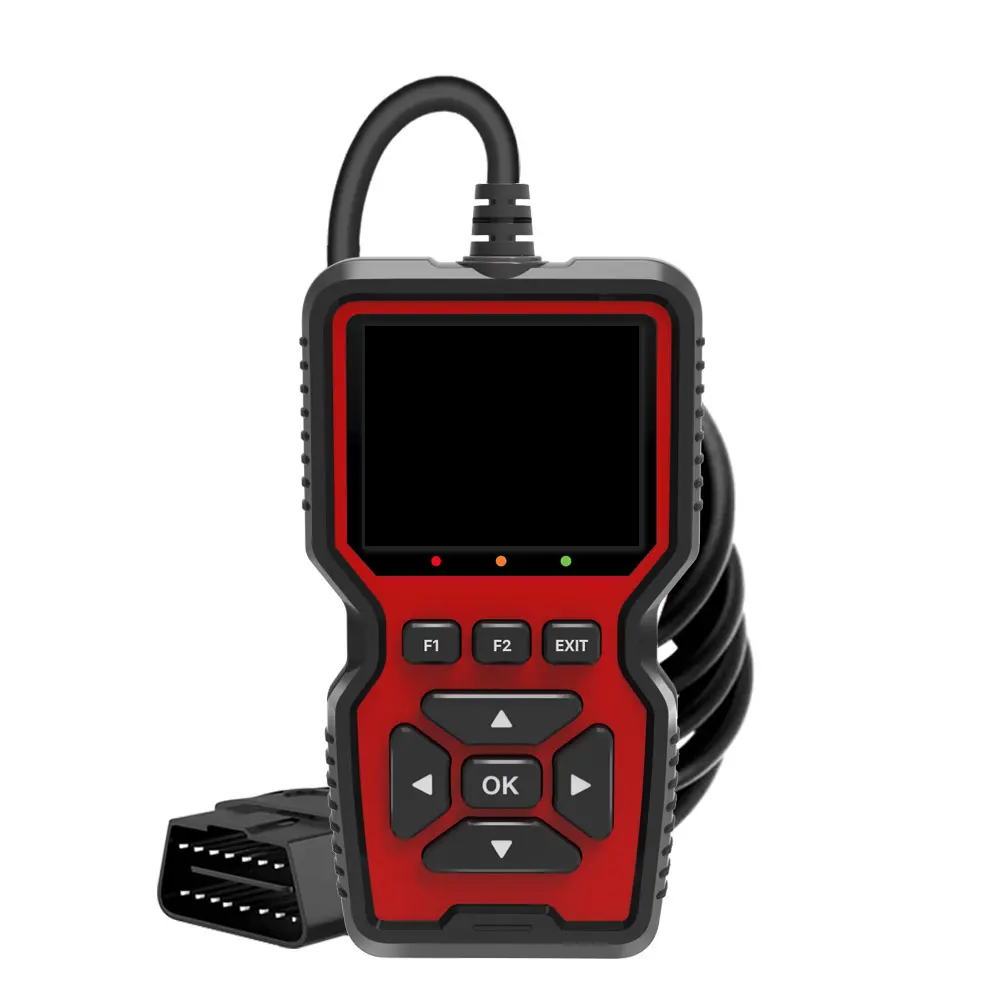
- Verify Code and Gather Data: Connect an OBD-II scanner to the vehicle’s Data Link Connector (DLC). Confirm the presence of P1257 and meticulously check for any related, pending, or historical codes that could offer additional diagnostic clues. Utilize the scanner’s live data stream function to monitor the real-time voltage outputs of APP Sensor 1 (PDS1), APP Sensor 2 (PDS2), and any other relevant pedal position signals (e.g., HPDS) while slowly and smoothly depressing and releasing the accelerator pedal through its full range. Observe for smooth, linear changes in voltage, and critically, note any significant discrepancies, flat spots, erratic jumps, or sudden drops between the sensor readings. The voltages from redundant sensors should typically track each other proportionally, although specific voltage ranges and slopes may differ between sensors.
- Visual Inspection: Prior to any electrical testing, disconnect the vehicle’s battery. Carefully inspect the accelerator pedal assembly for any signs of physical damage, obstruction, binding, or debris that might impede its smooth operation. Trace the wiring harness from the APP sensors back towards the ECM/PCM. Look diligently for frayed wires, pinched sections, burn marks, signs of rodent damage, or loose/corroded connectors. Pay close attention to any areas where the harness passes through firewalls, near hot engine components, or moving parts where chafing could occur.
- Electrical Circuit Testing (DMM):
- Reference Voltage and Ground Verification: With the ignition in the ON position (engine OFF), use a digital multimeter (DMM) to back-probe the APP sensor connectors. Verify the presence of a stable 5-volt reference voltage (Vref) at the appropriate terminal and a solid ground connection (near 0 volts) at the ground terminal for both PDS2 and HPDS. Any significant voltage drops, fluctuations, or absence of Vref/ground indicate a critical circuit issue.
- Signal Voltage Analysis: With the sensors connected, carefully back-probe the signal wire for PDS2 and HPDS. Slowly depress the accelerator pedal through its full travel while continuously monitoring the signal voltage with the DMM. Compare the voltage ranges and linearity between the two sensors. For instance, APP sensor 1 might typically range from 0.5V at idle to 4.5V at Wide Open Throttle (WOT), while APP sensor 2 might range from 0.25V to 2.25V over the same range. A significant deviation (e.g., one sensor flatlining, showing an open circuit reading, or providing drastically different voltage ratios) strongly points to a sensor or wiring fault.
- Continuity and Short-to-Ground/Power Checks: With the battery disconnected and the ECM/PCM connector unplugged (always consult the specific vehicle’s service manual for correct pinouts and safe disconnection procedures), perform a continuity test on each wire (signal, Vref, ground) between the APP sensor connector and the corresponding pin at the ECM/PCM connector. A resistance reading greater than 0.5 ohms suggests a high resistance issue. Additionally, check for shorts to ground or power on all circuits, which would indicate insulation breakdown.
- Component Swap (if applicable/safe): If all wiring and voltages appear correct, and if a known good, compatible accelerator pedal assembly is available, temporarily swap the component. Ensure proper battery disconnection and reconnection procedures are followed. This can quickly rule out an internal sensor or mechanical pedal fault.
- ECM/PCM Diagnosis: Only after thoroughly ruling out APP sensors, wiring, and connectors should ECM/PCM failure be considered. This typically requires advanced diagnostic equipment, specialized technician expertise, and potentially manufacturer-specific diagnostic software to perform module self-tests and programming checks.
Recommended Repairs and Solutions
Once the root cause of P1257 has been identified through diligent and thorough diagnosis, the following repairs are typically recommended:
- Replace Accelerator Pedal Position (APP) Sensor(s): If electrical testing confirms that one or both APP sensors within the pedal assembly are providing erroneous, intermittent, or out-of-correlation signals, the most common and often the only solution is to replace the entire accelerator pedal assembly. This is because the individual sensors are frequently integrated into the pedal mechanism and are not serviceable as separate components. Ensure that the replacement part is an OEM equivalent or a high-quality aftermarket component known for reliability to prevent recurrence.
- Repair or Replace Damaged Wiring/Connectors: If visual inspection or electrical tests reveal opens, shorts, or excessive resistance in the wiring harness, or corroded/damaged connectors, perform precise wiring repairs. Use proper automotive-grade crimping and soldering techniques, followed by heat shrink tubing for insulation and protection. Replace entire connector bodies if terminals are damaged, severely corroded, or if the plastic housing is compromised beyond reliable repair.
- Address Physical Pedal Assembly Damage: If mechanical damage or binding within the pedal itself is identified as the cause, the entire accelerator pedal assembly will need to be replaced. Ensure the new assembly operates smoothly without any obstructions.
- Clear Codes and Road Test: After completing any necessary repairs, use the OBD-II scanner to clear all stored DTCs from the ECM/PCM. Then, perform an extended road test under various driving conditions, including stop-and-go traffic, moderate acceleration, and highway speeds, to confirm that the issue is resolved and the code does not return. During the road test, continuously monitor live data parameters for the APP sensors to ensure their signals remain within specification, are smooth, and accurately correlated throughout the pedal’s range of motion.
- ECM/PCM Reprogramming or Replacement: In rare instances where the ECM/PCM is definitively confirmed to be faulty after all other possibilities have been meticulously exhausted, it may require reprogramming with the latest software calibration or complete replacement. This is typically a dealer-level service or requires specialized programming tools.