What Does Code P1374 Mean?
DTC P1374 signifies an “Early Activation Fault” specifically related to the Crankshaft Position (CKP) sensor signal and the ignition coil for Cylinder 4. This code is set by the Engine Control Module (ECM) or Powertrain Control Module (PCM) when it detects that the primary ignition circuit for Cylinder 4 is being activated or commanded to fire prematurely relative to the expected piston position in its combustion cycle. The ECM precisely monitors the timing of ignition events, relying heavily on input from the CKP sensor to determine crankshaft angle and piston position. It compares the expected ignition timing for Cylinder 4, based on CKP and Camshaft Position (CMP) sensor data, with the actual activation time of the ignition coil. If the ECM registers that the ignition coil for Cylinder 4 is receiving its trigger signal or is discharging significantly earlier than the calculated ignition point, it interprets this as an early activation fault and illuminates the Check Engine Light.
This is a critical timing discrepancy, indicating a potential issue with the accuracy of the CKP signal, the ECM’s ability to interpret or command ignition timing, or an internal fault within the ignition coil itself that causes premature discharge. Unlike a simple misfire code that indicates a lack of combustion, P1374 points to an incorrect timing of the spark event, which can severely impact engine efficiency and operation.
Common Symptoms
- Engine Misfire: Primarily felt as a rough idle or stuttering, often specific to cylinder 4.
- Reduced Engine Performance: Noticeable loss of power, poor acceleration, and overall sluggishness.
- Rough Idle: The engine may vibrate excessively or have an unstable RPM at idle.
- Increased Fuel Consumption: Inefficient combustion dueating to mistimed spark leads to higher fuel usage.
- Check Engine Light (CEL) Illumination: The Malfunction Indicator Lamp (MIL) will be activated.
- Engine Stalling: Especially common during deceleration or at low engine speeds.
- Hesitation or Surge: The vehicle may hesitate during acceleration or surge unexpectedly.
What Causes the Code P1374?
- Faulty Crankshaft Position (CKP) Sensor: An erratic, weak, or inaccurate signal from the CKP sensor can lead the ECM to miscalculate piston position, resulting in an early ignition command for Cylinder 4. This is a primary suspect.
- Damaged Tone Ring/Reluctor Wheel: Physical damage, bent teeth, or excessive debris on the crankshaft tone ring can cause an incorrect or inconsistent CKP signal, leading to timing errors.
- Faulty Ignition Coil (Cylinder 4): An internal fault within the cylinder 4 ignition coil, such as a short to power or an internal driver issue, causing it to fire prematurely even if the ECM command is correct.
- Wiring Harness Issues:
- A short to voltage in the primary control circuit for the Cylinder 4 ignition coil, providing an early trigger signal.
- Damaged or compromised wiring (chafing, corrosion, open circuit, short to ground) in the CKP sensor circuit, leading to an incorrect signal to the ECM.
- Engine Control Module (ECM/PCM) Malfunction: A rare but possible internal failure within the ECM itself, causing it to incorrectly command an early activation for the Cylinder 4 ignition coil driver.
How to Diagnose and Troubleshoot
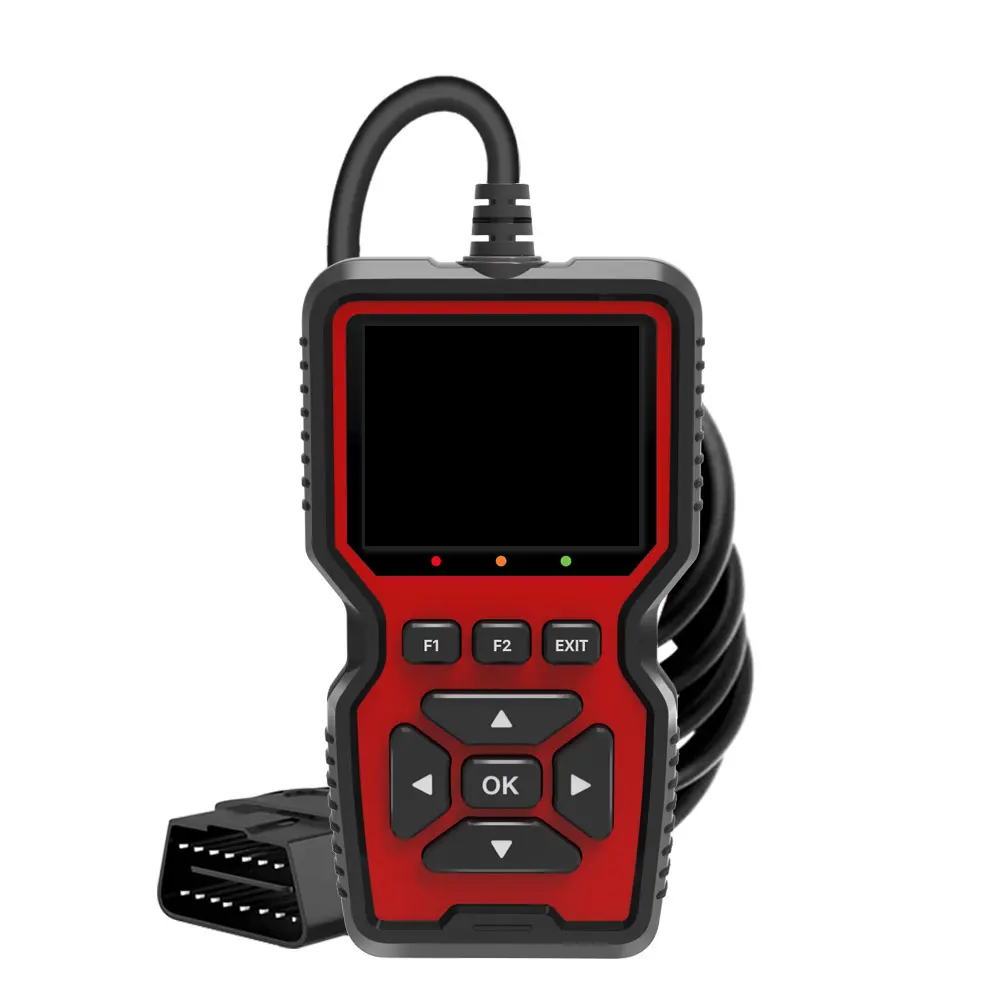
Diagnosing P1374 requires a systematic approach, often involving a digital multimeter (DMM), an OBD-II scanner with live data capabilities, and ideally, an oscilloscope for waveform analysis.
- Initial Scan and Freeze Frame Data: Connect an OBD-II scanner. Record all stored DTCs and observe freeze frame data. This data provides a snapshot of engine conditions (RPM, engine load, temperature, etc.) at the moment the code was set, which can be crucial for replication. Check for any co-occurring CKP sensor codes or other misfire codes. Clear the code and attempt to replicate the fault by driving under similar conditions.
- Visual Inspection:
- Inspect the ignition coil for Cylinder 4 for any visible signs of damage, such as cracks, carbon tracking, bulging, or signs of overheating.
- Thoroughly examine the wiring harness connected to the Cylinder 4 ignition coil and the Crankshaft Position Sensor. Look for frayed wires, chafing against engine components, loose connectors, corrosion, or signs of rodent damage. Ensure all connections are secure.
- Inspect the CKP sensor itself for physical damage or loose mounting.
- Crankshaft Position (CKP) Sensor Signal Verification:
- Oscilloscope Method (Recommended): Back-probe the CKP sensor signal wire and ground. Observe the waveform while cranking the engine (or running, if possible). A healthy CKP sensor should produce a clean, consistent square wave or sine wave pattern (depending on the sensor type) with predictable amplitude and frequency. Look for any erratic spikes, dropouts, or an inconsistent pattern, which would indicate a faulty sensor or tone ring issue. Compare the pattern to manufacturer specifications.
- DMM Method (Less Precise): If an oscilloscope is unavailable and it’s an inductive CKP sensor, set the DMM to AC voltage. Back-probe the sensor wires and crank the engine. A consistent, fluctuating AC voltage (typically 0.5V to 1.5V or more, depending on the sensor) should be observed. If it’s a Hall-effect sensor, measure the DC voltage output, which should toggle between high (e.g., 5V) and low (0V) rapidly.
- Ignition Coil Primary Circuit Test (Cylinder 4):
- Power and Ground: Using a DMM, confirm proper battery voltage (B+) and a good ground at the Cylinder 4 ignition coil connector when the ignition is ON.
- Control Signal Verification: Back-probe the primary control wire from the ECM to the Cylinder 4 ignition coil. Using an oscilloscope, observe the waveform while cranking or idling. The ECM provides a precisely timed ground pulse (for coils with integrated igniters) or a 5V/12V square wave (for coils requiring an external igniter). Look for any premature pulses or an inconsistent signal compared to a known good cylinder. An early pulse on this wire indicates either an ECM fault or signal corruption.
- Inspect Tone Ring/Reluctor Wheel: If the CKP sensor signal is erratic despite the sensor testing good, and an oscilloscope was used, physically inspect the crankshaft tone ring. This often requires removing the CKP sensor to look through its bore or, in more severe cases, removing the harmonic balancer. Look for bent teeth, missing teeth, cracks, or significant accumulation of metallic debris.
Recommended Repairs and Solutions
Based on the diagnostic findings, the following repairs are commonly recommended:
- Replace Faulty Crankshaft Position (CKP) Sensor: If testing definitively points to an inaccurate, erratic, or absent signal from the CKP sensor. Ensure the replacement sensor is of good quality and correctly installed, including any specific gapping requirements.
- Repair/Replace Damaged Tone Ring: If inspection reveals physical damage to the crankshaft tone ring, it must be replaced. This is often a labor-intensive repair, sometimes requiring the removal of the harmonic balancer or even the crankshaft itself depending on engine design.
- Replace Faulty Ignition Coil (Cylinder 4): If the coil itself is determined to be prematurely discharging or failing internally. It’s often advisable to use an OEM or high-quality aftermarket replacement.
- Repair or Replace Wiring Harness: Address any detected shorts to voltage, opens, shorts to ground, or high resistance in the primary control circuit for the Cylinder 4 ignition coil or the CKP sensor circuit. This may involve splicing in new sections of wire or, in severe cases, replacing the entire harness section.
- ECM Reprogramming or Replacement: If all other components (CKP sensor, ignition coil, and wiring) test good, and an oscilloscope confirms the ECM is sending an early activation command, the ECM itself may be faulty. This is a rare and expensive repair, requiring specialized programming after replacement.
Important Mechanics’ Tips:
- Always clear the DTCs after any repair and perform an extended test drive to confirm the fault does not return. Monitor live data for ignition timing advance, misfire counts, and CKP sensor readings during the test drive.
- When replacing electrical components like sensors or coils, ensure all connectors are clean, dry, and securely latched. Apply dielectric grease to protect against corrosion in high-moisture environments.
- If performing CKP sensor replacement, pay close attention to the installation procedure, especially any specified air gap between the sensor and the tone ring, as incorrect gapping can lead to new timing issues.
- Consider inspecting the condition of the spark plug for Cylinder 4 when diagnosing an ignition timing issue, as excessive wear or fouling could sometimes contribute to unusual electrical characteristics, though less likely to cause “early activation.”