What Does Code P1386 Mean?
DTC P1386 signifies a detected fault within the Variable Cam Timing (VCT) or Variable Valve Timing (VVT) system, specifically indicating that the camshaft for Bank 2 is operating in an overadvanced condition relative to the Engine Control Module’s (ECM/PCM) commanded target. Bank 2 refers to the cylinder bank that does not contain cylinder #1. The VCT system is designed to optimize valve overlap and lift by adjusting the camshaft position relative to the crankshaft, thereby enhancing engine performance, fuel efficiency, and reducing emissions across various RPMs and loads.
The ECM monitors the actual camshaft position using the Camshaft Position (CMP) sensor(s) for Bank 2, comparing this data against the desired camshaft position determined by its internal programming and engine operating conditions. When the actual cam angle consistently deviates from the target cam angle, specifically by being too far advanced, and the ECM’s attempts to retard the camshaft prove ineffective for a calibrated period, code P1386 is stored. This indicates a mechanical or hydraulic inability for the camshaft to return to a less advanced or retarded position as commanded by the ECM, affecting the precise timing of valve opening and closing events for Bank 2.
Common Symptoms
- Reduced Engine Performance: Noticeable decrease in power, especially during acceleration or at higher RPMs.
- Increased Fuel Consumption: Inefficient combustion due to incorrect valve timing leads to higher fuel usage.
- Rough Idle or Stalling: Incorrect valve timing can severely disrupt engine stability, particularly at lower RPMs.
- Engine Knocking or Pinging: Pre-ignition or detonation can occur if the intake valves close too early, increasing compression, especially under load.
- Difficulty Starting: Advanced cam timing can affect compression events, making the engine harder to crank and start.
- Illuminated Malfunction Indicator Lamp (MIL): The Check Engine Light will be active on the dashboard.
What Causes the Code P1386?
- Faulty Variable Cam Timing (VCT) Solenoid (Oil Control Valve – OCV) on Bank 2: A common culprit, where the solenoid is stuck in an open or partially open position, or is electrically faulty, preventing proper oil pressure regulation to the cam phaser.
- Contaminated Engine Oil or Low Oil Pressure: The VCT system is hydraulically actuated and highly dependent on clean engine oil of the correct viscosity and adequate oil pressure. Sludge, debris, or insufficient oil pressure can prevent phaser movement.
- Defective Variable Cam Timing (VCT) Cam Phaser on Bank 2: Internal mechanical wear, spring failure, or sludge buildup within the phaser itself can cause it to stick in an advanced position or prevent proper rotation.
- Wiring and Connector Issues: Open circuits, shorts, or high resistance in the wiring harness or connectors leading to the Bank 2 VCT solenoid or its associated CMP sensor can disrupt control or feedback signals.
- Faulty Camshaft Position Sensor (CMP) for Bank 2: An inaccurate or intermittent signal from the CMP sensor can lead the ECM to misinterpret the actual camshaft position, triggering the code.
- ECM/PCM Malfunction: While less common, an internal fault within the ECM/PCM could lead to incorrect VCT control signals or misinterpretation of sensor data.
How to Diagnose and Troubleshoot
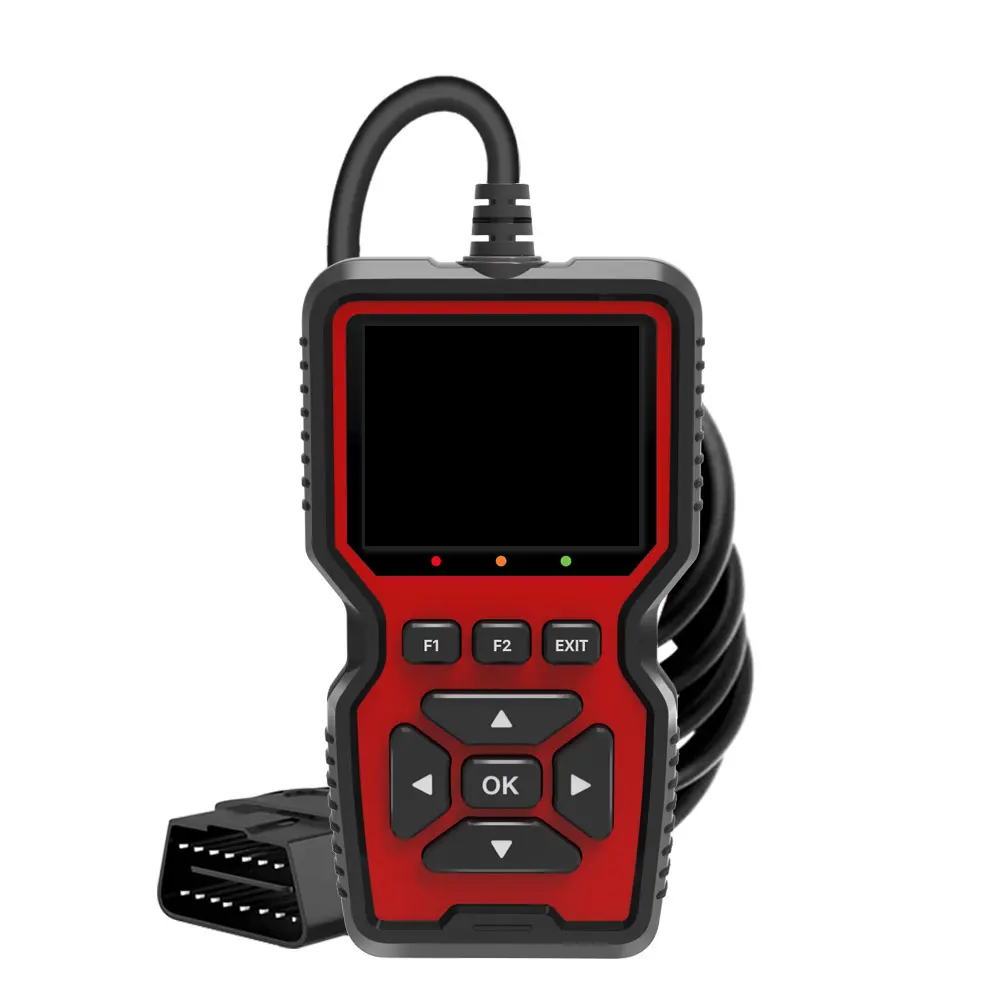
Diagnosis of P1386 requires a systematic approach, often involving an advanced OBD-II scanner and a digital multimeter (DMM) or oscilloscope:
- Initial Visual Inspection: Begin by checking the engine oil level and condition. Ensure it’s clean and at the correct level. Inspect the wiring harnesses and electrical connectors for the Bank 2 VCT solenoid and its corresponding CMP sensor for any signs of damage, fraying, corrosion, or looseness.
- OBD-II Scanner Live Data Analysis:
- Connect an OBD-II scanner and monitor live data streams related to VCT for Bank 2. Specifically look at “Desired Cam Angle (Bank 2)” and “Actual Cam Angle (Bank 2)”. Observe if the actual angle consistently exceeds the desired angle, particularly when the ECM commands a retarded position.
- Check for other related VCT/VVT DTCs (e.g., P0020-P0029, P002A-P002F range for Bank 2) that might provide additional context.
- If available, monitor engine oil pressure PID and compare it to manufacturer specifications.
- VCT Solenoid (OCV) Electrical and Functional Test:
- Disconnect the electrical connector from the Bank 2 VCT solenoid.
- Using a DMM, measure the resistance across the solenoid’s terminals. Compare this reading to manufacturer specifications (typically 6-15 ohms). An open circuit (OL) or significantly high/low resistance indicates an internal fault.
- With the engine running, back-probe the VCT solenoid connector to check for voltage supply (usually battery voltage) and a pulsed ground signal from the ECM. An oscilloscope can confirm the presence and proper modulation (PWM) of the control signal.
- Carefully apply fused battery voltage and ground directly to the solenoid terminals (briefly) to listen for an audible click, indicating mechanical actuation. If no click is heard, the solenoid is mechanically stuck or electrically open.
- Camshaft Position Sensor (CMP) Test (Bank 2):
- If suspicion points to the CMP sensor, use an oscilloscope to back-probe the sensor’s signal wire while cranking or running the engine. Look for a clean, consistent waveform that changes with engine speed. Compare its pattern and amplitude to manufacturer specifications or the Bank 1 CMP sensor (if applicable and functioning correctly).
- Check for proper voltage supply and ground to the CMP sensor.
- Engine Oil Pressure Verification: If live data or visual inspection suggests low oil pressure, connect a mechanical oil pressure gauge to the engine and verify actual oil pressure against manufacturer specifications at various RPMs. Insufficient oil pressure will prevent proper VCT operation.
- Cam Phaser Inspection (Advanced): If the solenoid and oil pressure are confirmed good, and the issue persists, the cam phaser itself is likely at fault. This typically requires significant disassembly to visually inspect for damage or test its mechanical function.
Recommended Repairs and Solutions
Once the diagnostic steps have pinpointed the root cause, the following repairs are typically recommended:
- Replace the Variable Cam Timing Solenoid (OCV) for Bank 2: This is the most frequent repair for P1386. Ensure the replacement part is of high quality, preferably OEM, as aftermarket solenoids can sometimes be inconsistent.
- Perform an Engine Oil Change and Flush: If the engine oil is found to be dirty, sludgy, or of an incorrect viscosity, replacing it with the manufacturer-specified oil and filter, potentially combined with an engine flush, is crucial. This can often resolve VCT issues caused by lubrication problems.
- Replace the Variable Cam Timing Phaser for Bank 2: If the VCT solenoid tests good and oil pressure is adequate, but the camshaft still cannot achieve the desired timing, the phaser itself is likely mechanically compromised. This is a more involved repair, often requiring specialized cam locking tools and removal of timing components.
- Repair or Replace Wiring and Connectors: If diagnostic tests reveal opens, shorts, or high resistance in the electrical circuits for the VCT solenoid or CMP sensor, repair or replace the affected sections of the wiring harness and connectors.
- Replace the Camshaft Position Sensor (CMP) for Bank 2: If the sensor’s signal is confirmed to be inaccurate, intermittent, or completely absent during testing.
- Address Underlying Low Oil Pressure Issues: If a mechanical oil pressure test confirms low oil pressure, the root cause (e.g., faulty oil pump, clogged oil pickup screen, worn engine bearings) must be diagnosed and repaired. Proper oil pressure is fundamental to VCT system operation.
- ECM/PCM Reprogramming or Replacement: Only consider this as a last resort, after all other components, wiring, and mechanical aspects have been thoroughly tested and verified as functional.