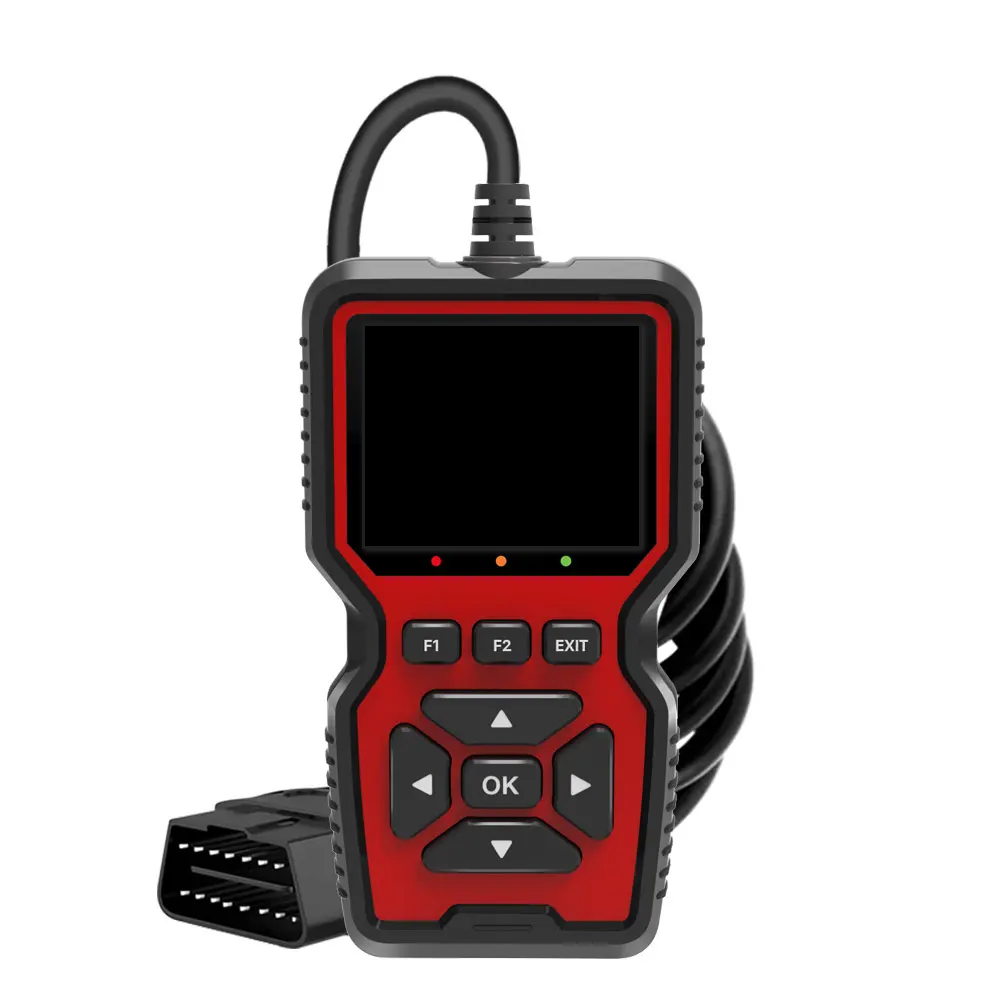
What Does Code P1414 Mean?
DTC P1414 signifies a detected fault within the Secondary Air Injection (SAI) system’s monitoring circuit, specifically indicating a “High Input” condition. The Secondary Air Injection system is an emissions control component designed to reduce exhaust emissions, particularly during cold engine starts. Its primary function is to inject fresh, oxygen-rich air into the exhaust manifold or catalytic converter during the initial warm-up phase. This additional oxygen aids in the oxidation of unburnt hydrocarbons (HC) and carbon monoxide (CO) before the catalytic converter reaches its operating temperature, thereby improving catalyst efficiency and reducing tailpipe emissions. The Engine Control Module (ECM), often referred to as the Powertrain Control Module (PCM), actively monitors various aspects of the SAI system’s operation. For code P1414, the ECM has detected a voltage on a specific SAI system monitoring circuit that is consistently higher than the expected operating range or specified threshold. This high input could be interpreted as an open circuit within the monitoring line where it’s either floating high, or a short to a voltage source (e.g., battery voltage) on the signal line, or a component within the monitoring circuit (such as a pressure sensor or a feedback line from a relay) is erroneously outputting an excessively high voltage. This condition prevents the ECM from accurately determining the operational status of the SAI system or indicates an electrical integrity issue within its control or feedback mechanisms.
Common Symptoms
- Illuminated Check Engine Light (CEL): This is the most common and almost guaranteed symptom.
- Increased exhaust emissions during cold starts: While not directly noticeable by the driver, the SAI system’s malfunction will lead to higher emissions.
- Slightly rough idle during cold start: In some cases, if the SAI system’s inability to inject air impacts combustion parameters during the brief cold-start enrichment period.
- No discernible driveability symptoms: Often, the SAI system’s malfunction does not significantly affect vehicle performance once the engine is warmed up, as its operation is typically limited to cold-start cycles.
What Causes the Code P1414?
- Faulty Secondary Air Injection (SAI) pump relay: A relay that is internally shorted to power, stuck closed, or has a feedback circuit that erroneously reports a high voltage.
- Open circuit or short to voltage in SAI system wiring: Damaged, corroded, or chafed wiring in the monitoring circuit, causing the signal line to float high or short directly to a voltage source (e.g., 12V supply). This could affect the power, ground, or signal return lines.
- Defective SAI pressure sensor: If the system incorporates a pressure sensor to monitor air flow or pressure, a faulty sensor could be internally shorted, sending an erroneously high voltage signal to the ECM.
- Faulty SAI diverter valve or check valve feedback circuit: Some systems utilize feedback mechanisms from these valves. A short or fault in this feedback circuit could trigger the high input.
- Damaged SAI pump motor: While less common for a “circuit high” code, an internal electrical fault within the pump itself that affects its control or monitoring lines could potentially cause this.
- Corroded or loose electrical connectors: Poor connection at the SAI pump, relay, or pressure sensor, leading to intermittent or incorrect voltage readings.
- Faulty Engine Control Module (ECM/PCM): Although rare, an internal fault within the ECM’s monitoring circuitry could cause it to misinterpret correct signals or fail to provide proper reference voltage/ground, leading to a false high input.
How to Diagnose and Troubleshoot
Diagnosing P1414 requires methodical electrical testing using a Digital Multimeter (DMM) and an OBD-II scanner with live data and bi-directional control capabilities.
- Visual Inspection:
- Begin with a thorough visual inspection of the entire SAI system. Check for obvious signs of damage, such as chewed wires, corroded connectors, or compromised vacuum lines (if applicable to valve operation). Pay close attention to the wiring harness leading to the SAI pump, relay, and any pressure sensors.
- Inspect the SAI pump for physical damage or signs of water intrusion.
- OBD-II Scanner Diagnostics:
- Connect an OBD-II scanner and retrieve freeze frame data. This data captures the engine operating conditions (engine RPM, temperature, load, etc.) at the precise moment the DTC P1414 was set, which can provide valuable clues.
- Check for any other related SAI codes (e.g., P0410, P0412, P041X) that might indicate a broader system issue.
- If available, use the scanner’s bi-directional control function to command the SAI pump ON and OFF. Listen for the pump’s operation. Simultaneously monitor any available live data parameters related to SAI system pressure, pump status, or voltage feedback.
- Electrical System Checks with DMM:
- SAI Pump Relay Testing:
- Locate the SAI pump relay, usually found in a fuse/relay box.
- Test for proper power and ground at the relay coil terminals. When commanded ON (via scanner or jumpering), verify voltage at the switch side of the relay.
- Test for continuity across the relay’s switch terminals when it’s energized. A faulty relay, especially one internally shorted, can cause a high input.
- Wiring Integrity Check:
- Disconnect the battery. Disconnect the electrical connectors at the SAI pump, relay, and any associated pressure sensors.
- Identify the specific “monitor circuit” wire (refer to a vehicle-specific wiring diagram). This is typically the signal wire that provides feedback to the ECM.
- Perform a continuity test on this signal wire between the component connector and the ECM connector. Look for an open circuit (infinite resistance), which could cause the signal to float high, or a short to ground (0 ohms).
- Perform a voltage check on this signal wire (with all components reconnected except the ECM, and key ON/engine OFF) to check for a short to battery voltage. If battery voltage is present on a signal wire that should be low or variable, it indicates a short to power.
- Check for shorts to ground and shorts to power on all wires within the SAI system harness, especially if corrosion or damage was observed.
- SAI Pressure Sensor (if applicable):
- With the sensor connected and key ON/engine OFF, measure the voltage on the sensor’s signal wire. Compare this reading to manufacturer specifications. A “high input” typically means the voltage is at or near the 5V reference, or higher if a short to 12V is present.
- Verify the sensor has proper 5V reference voltage and a good ground.
- SAI Pump and Solenoid Checks:
- Verify proper power and ground supply to the SAI pump and any associated solenoids or diverter valves.
- Measure resistance across the SAI pump motor and solenoid coils. Compare to specifications.
- SAI Pump Relay Testing:
- ECM Pin-Out Voltage Check: As a final confirmation, after verifying all external components and wiring, check the voltage on the monitoring circuit pin directly at the ECM connector (back-probing is recommended to avoid damaging the connector). If the high voltage persists at the ECM input pin, and all external wiring and components are verified good, it may point to an internal ECM fault.
Recommended Repairs and Solutions
Based on the diagnostic findings, the following repairs and solutions are commonly implemented:
- Repair or Replace Damaged Wiring/Connectors: The most frequent cause of P1414 due to “Circuit High Input” is often compromised wiring or corroded/loose connectors. Precisely identify the open circuit or short to voltage and perform a professional repair (splicing with heat shrink connectors, replacing sections of harness) or replace the entire affected connector. Ensure all connections are clean, tight, and corrosion-free.
- Replace Faulty SAI Pump Relay: If the relay is found to be internally shorted, sticking, or providing erroneous feedback voltage, replacement is necessary. This is a very common failure point.
- Replace Faulty SAI Pressure Sensor: If diagnostic testing confirms the pressure sensor is sending an excessively high voltage signal to the ECM, it should be replaced. Ensure the replacement sensor is OEM quality or equivalent.
- Replace Faulty SAI Pump Motor: While less direct for a “circuit high” code, an internal fault within the pump itself (e.g., a short within its internal windings affecting the monitoring line) might necessitate pump replacement. Verify power and ground to the pump are correct before condemning the pump itself.
- Replace Faulty SAI Diverter or Check Valve: If equipped with electrical feedback and found to be faulty, causing an incorrect signal.
- ECM Replacement/Reprogramming: Only consider ECM replacement as a last resort, after meticulously ruling out all external wiring and component issues. In some cases, a software update (reprogramming) of the ECM might address a known calibration issue, but this is rare for a hard “circuit high” fault.
Important Mechanics’ Tips:
- Always consult the vehicle-specific wiring diagrams and component location guides. These are invaluable for tracing circuits and identifying correct pinouts.
- After any repair, clear the DTCs with the OBD-II scanner. Perform a series of drive cycles, especially including cold starts, to ensure the SAI system operates correctly and the code does not return.
- Pay close attention to potential environmental factors. SAI components are often located in areas susceptible to water, salt, and debris, leading to accelerated corrosion and wiring damage.
- Before replacing expensive components like the SAI pump, thoroughly verify all associated electrical circuits (power, ground, signal) and the relay.