What Does Code P1586 Mean?
The diagnostic trouble code P1586 signifies that the Powertrain Control Module (PCM), also referred to as the Engine Control Module (ECM) in many applications, has detected an inconsistency or malfunction within the electronic throttle control (ETC) system, specifically regarding the throttle plate position. In drive-by-wire (DBW) systems, the PCM commands the throttle plate position based on various inputs, including accelerator pedal position, engine speed, vehicle speed, and load. The throttle body assembly contains integrated throttle position sensors (TPS1 and TPS2, sometimes more) that provide feedback to the PCM about the actual physical position of the throttle plate. P1586 is typically set when the PCM identifies a significant divergence between the commanded throttle plate angle and the actual feedback from the TPS sensors, or if there’s a discrepancy between the redundant TPS signals themselves (e.g., if one sensor reports a closed throttle while the other reports partially open, or if the signals do not correlate properly as per the PCM’s calibrated logic). This discrepancy suggests that the throttle plate is either not moving to its commanded position, or the PCM is receiving unreliable data about its position, directly impacting engine air intake, fuel delivery, and overall performance.
Common Symptoms
- Illuminated Malfunction Indicator Lamp (MIL): The check engine light will be on.
- Reduced Engine Power or “Limp Home” Mode: The PCM may restrict engine output to prevent damage or unintended acceleration, often limiting RPMs and vehicle speed.
- Erratic or High Idle Speed: The engine may struggle to maintain a consistent idle, or idle at a higher-than-normal RPM.
- Engine Stalling: Particularly when decelerating or coming to a stop.
- Hesitation or Surge During Acceleration: Inconsistent power delivery when the accelerator pedal is depressed.
- No Throttle Response: The engine may not react at all to accelerator pedal input.
- Engine Cranks But Does Not Start: In severe cases, the PCM might prevent engine startup if it cannot verify throttle position.
What Causes the Code P1586?
- Faulty Electronic Throttle Body (ETB) Assembly: The most prevalent cause, involving internal failure of the throttle plate actuator motor, worn gears, or defective integrated throttle position sensors (TPS1, TPS2).
- Wiring Harness and Connector Issues: Open circuits, short circuits, high resistance, or corrosion within the wiring harness or electrical connectors between the ETB and the PCM/ECM.
- Excessive Carbon Buildup in Throttle Body: Accumulated carbon deposits around the throttle plate can restrict its free movement, causing it to stick or bind, leading to inaccurate position feedback.
- Damaged Accelerator Pedal Position (APP) Sensor: Although P1586 specifically relates to the throttle control unit, an incorrect or erratic signal from the APP sensor can cause the PCM to command an impossible or illogical throttle position, indirectly triggering this code.
- Powertrain Control Module (PCM/ECM) Malfunction: Less common, but an internal fault within the PCM’s throttle control circuitry or software logic can lead to incorrect command signals or misinterpretation of TPS feedback.
How to Diagnose and Troubleshoot
Diagnosing P1586 requires a systematic approach, focusing on the electronic throttle body and its associated wiring. Always begin with a thorough visual inspection.
- Visual Inspection and Basic Checks:
- Begin by visually inspecting the entire electronic throttle body assembly. Look for any physical damage, signs of tampering, or loose connections at the electrical connector.
- Carefully remove the air intake hose and visually inspect the throttle plate and bore for excessive carbon buildup. With the ignition off, manually attempt to move the throttle plate. It should move freely without binding and return to its resting position smoothly.
- Inspect the wiring harness leading to the ETB for any signs of chafing, cuts, corrosion, or loose terminals.
- OBD-II Scanner Live Data Analysis:
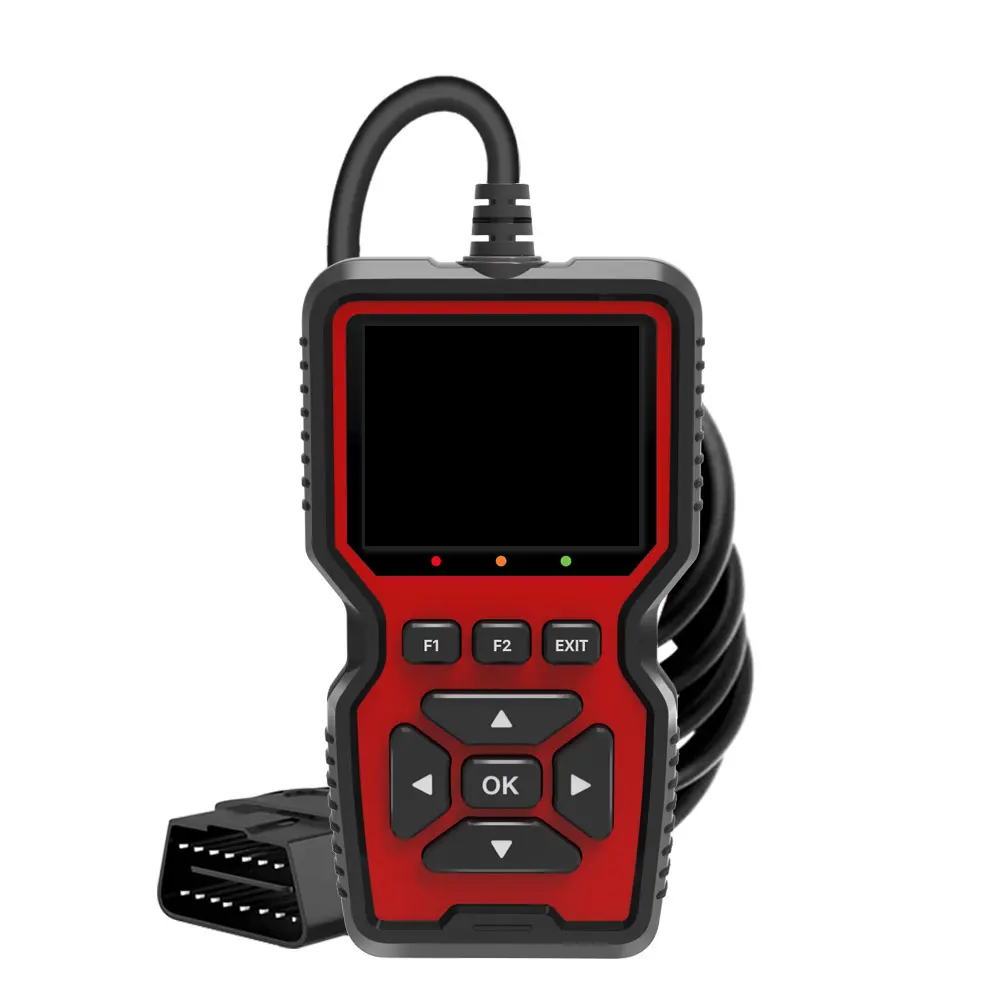
- Connect an advanced OBD-II scanner capable of displaying live data PIDs (Parameter Identifiers).
- With the ignition on (engine off), monitor the following relevant PIDs: Throttle Position Sensor 1 (TPS1) %, Throttle Position Sensor 2 (TPS2) %, Accelerator Pedal Position Sensor 1 (APP1) %, Accelerator Pedal Position Sensor 2 (APP2) %, and Desired Throttle Position %.
- As you slowly depress and release the accelerator pedal, observe the APP sensor readings; they should change smoothly and proportionally.
- Next, observe the TPS1 and TPS2 readings. These sensors are often redundant and may operate inversely (e.g., as TPS1 goes from 0.5V to 4.5V, TPS2 might go from 4.5V to 0.5V, or their percentages might be complementary, summing close to 100%). Both signals should change smoothly and proportionally without erratic jumps, dropouts, or freezes. A significant, unexplainable discrepancy between TPS1 and TPS2, or between the actual TPS feedback and the desired throttle position, indicates an ETB malfunction.
- Wiring Integrity Test (Digital Multimeter – DMM):
- With the ignition off and the ETB electrical connector disconnected, use a DMM to check the wiring harness. Refer to the vehicle’s specific wiring diagram for pinouts and expected values.
- Verify the 5V reference voltage supply to the ETB from the PCM on the appropriate pin.
- Verify a good ground connection at the ETB connector.
- Test the continuity and resistance of the signal wires from the ETB connector back to the PCM connector. Look for open circuits, short circuits to ground or power, or excessive resistance (typically should be less than 1 Ohm). Wiggle the harness during testing to check for intermittent connection issues.
- Throttle Body Actuator Test (Scan Tool):
- If your scan tool has bi-directional control, perform a “Throttle Body Actuator Test” or “Throttle System Check.” This allows you to command the throttle plate to open and close while observing the TPS feedback. Observe if the throttle plate responds as commanded and if the TPS readings accurately reflect the commanded position.
Recommended Repairs and Solutions
Based on the diagnostic findings, the following repairs are typically performed to resolve P1586:
- Clean the Throttle Body: If significant carbon buildup was identified during inspection, a thorough cleaning of the throttle plate and bore using a specialized throttle body cleaner is often the first and most cost-effective solution. After cleaning, ensure the throttle plate moves freely. A throttle body relearn procedure may be necessary afterward (see mechanics’ tips below).
- Replace the Electronic Throttle Body (ETB) Assembly: This is the most common resolution if internal failure of the TPS sensors, actuator motor, or mechanical components within the ETB is confirmed. In most modern vehicles, the TPS sensors are integrated and not separately serviceable. Always use a new or high-quality remanufactured ETB specifically designed for your vehicle.
- Repair or Replace Damaged Wiring/Connectors: If diagnostic tests reveal an open, short, or high-resistance circuit in the wiring harness or a corroded connector, repair the wiring using proper automotive splicing techniques (solder and heat-shrink) or replace the faulty connector.
- Replace the Accelerator Pedal Position (APP) Sensor: If the APP sensor readings were found to be erratic or incorrect during live data analysis, despite P1586 pointing to the throttle body, replacing the APP sensor might resolve the root cause if it was sending faulty commands to the PCM.
- PCM/ECM Replacement/Reprogramming: This should only be considered as a last resort after thoroughly ruling out all other components and wiring. If a PCM fault is suspected, it typically requires specialized diagnostic tools and programming equipment, and should be performed by a qualified technician or dealership.
Important Mechanics’ Tips:
- Always disconnect the battery’s negative terminal before performing any work on electrical components.
- After replacing the ETB, a throttle body relearn procedure is almost always required. This procedure allows the PCM to learn the new throttle body’s minimum and maximum stop positions. Some vehicles perform this automatically after a few drive cycles, while others require a specific sequence of ignition cycles, accelerator pedal inputs, or a scan tool function to complete. Failure to perform a relearn can result in idle issues, stalling, or the persistent return of the P1586 code.
- Clear all diagnostic trouble codes (DTCs) after any repair and perform a comprehensive test drive under varying conditions to ensure the issue is resolved and the code does not return.
- For intermittent issues, consider wiggling relevant wiring harnesses while monitoring live data to pinpoint potential loose connections or damaged wires.