What Does Code P1604 Mean?
DTC P1604, often described as “Code Word Unregistered” or “Internal Control Module Malfunction,” indicates that the Engine Control Module (ECM), also referred to as the Powertrain Control Module (PCM), has detected an internal anomaly within its operational system or an unexpected state during its self-diagnostic processes. This code does not typically point to a specific sensor or actuator failure but rather signifies a critical integrity issue within the ECM itself. The “Code Word Unregistered” interpretation implies that the ECM has encountered a condition or event that does not correspond to a predefined diagnostic trouble code within its memory mapping. This could be due to a transient internal processing error, corruption within the ECM’s firmware or calibration data, or a fault in its internal hardware. Essentially, the ECM is reporting a fault within its own brain, suggesting it may be unable to reliably perform its primary functions, which include fuel delivery, ignition timing, emissions control, and communication with other vehicle modules.
Common Symptoms
- No-Start or Extended Crank: The engine may fail to start, or require prolonged cranking due to incorrect or absent control signals from the compromised ECM.
- Engine Misfires or Rough Running: Erratic engine operation, including stalling, misfires, or a general lack of power, indicating inconsistent command signals.
- Check Engine Light (CEL) Illumination: The Malfunction Indicator Lamp (MIL) will almost certainly be illuminated, and in some cases, other warning lights related to engine or system performance.
- Communication Issues: Difficulty establishing or maintaining communication with the ECM using an OBD-II scan tool, or intermittent communication with other vehicle modules (e.g., TCM, ABS, BCM).
- Intermittent Problems: Symptoms may appear and disappear, especially under varying environmental conditions (temperature, humidity) or during specific operational phases (cold start, acceleration).
What Causes the Code P1604?
- Internal ECM/PCM Failure: The most common cause is a defective or failing internal component within the ECM, such as a processor, memory chip, or power supply circuit.
- ECM/PCM Software/Firmware Corruption: Damage or corruption to the ECM’s operating software or calibration data, potentially due to voltage spikes, incorrect programming attempts, or age-related degradation.
- Poor ECM/PCM Power or Ground Connections: Insufficient or intermittent power supply or ground connections to the ECM can cause internal anomalies, although this often triggers other voltage-related DTCs first.
- Voltage Spikes or Surges: Sudden high voltage events, such as a failing alternator or incorrect jump-starting procedures, can damage sensitive ECM internal components.
- Water Intrusion or Physical Damage: Exposure of the ECM to moisture or physical impact can lead to internal corrosion or component damage.
How to Diagnose and Troubleshoot
Diagnosing P1604 requires a methodical approach, focusing on the ECM’s integrity and its immediate electrical environment, as the code itself points internally.
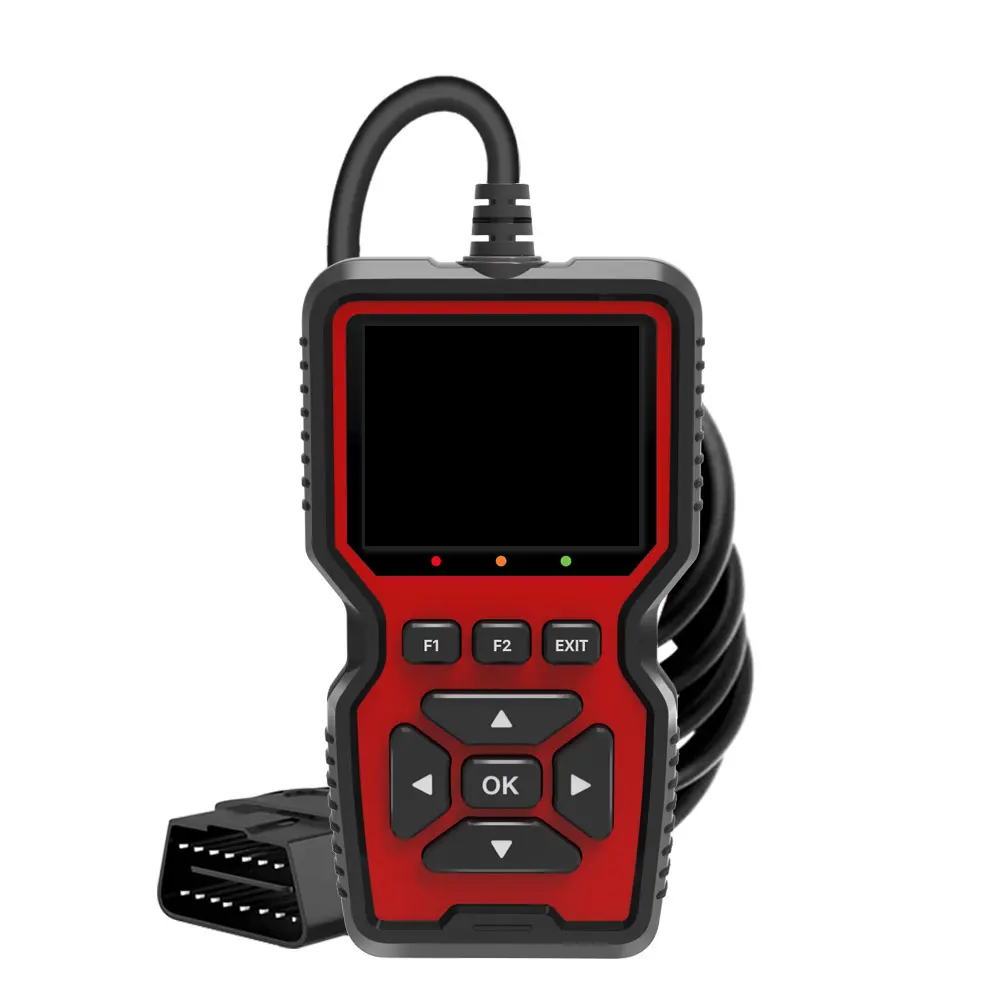
- Initial Scan Tool Inspection: Connect an OBD-II scan tool capable of reading manufacturer-specific enhanced data. Check for any other accompanying DTCs, especially U-codes (communication network codes) or P0xxx codes related to power supply or sensor references, which might provide clues to underlying issues affecting the ECM. Record all freeze frame data.
- Verify ECM Power and Ground:
- Locate the ECM and its harness connectors. Refer to the vehicle’s wiring diagrams to identify all power supply (B+) and ground circuits feeding the ECM.
- With the ignition OFF, use a digital multimeter (DMM) to check for consistent battery voltage at all identified B+ pins at the ECM connector, relative to a known good chassis ground.
- With the ignition ON, check for consistent battery voltage at all identified ignition-switched B+ pins.
- Using the DMM in resistance mode, check the continuity of all ground pins to a known good chassis ground. Resistance should be less than 5 ohms.
- Perform a voltage drop test on both power and ground circuits while the engine is cranking or running (if possible). High voltage drop indicates excessive resistance in the wiring.
- Inspect Wiring and Connectors: Visually inspect the entire engine harness, paying close attention to the ECM connectors and wiring leading to and from the ECM. Look for signs of chafing, corrosion, rodent damage, loose pins, or previous repairs. Ensure all connectors are fully seated and free of moisture.
- CAN Bus Integrity Check: If communication issues are present, test the Controller Area Network (CAN) bus lines.
- With the ignition OFF and battery disconnected, measure the resistance between CAN High and CAN Low pins at the DLC (usually pins 6 and 14). This should be approximately 60 ohms (indicating two 120-ohm terminating resistors in parallel).
- A reading of 120 ohms suggests an open circuit in one of the bus lines or a disconnected module. A reading of 0 ohms suggests a short.
- Voltage Fluctuation Test: Monitor system voltage with a DMM or scope while cranking and running the engine. Abnormal voltage spikes or drops can sometimes trigger internal ECM faults. Check the alternator for proper charging voltage (typically 13.5-14.5V).
- Internal ECM Diagnostic (If Available): Some advanced scan tools or OEM diagnostic software may offer internal ECM self-tests or data parameters related to internal health. Utilize these if accessible.
- ECM Swap (Last Resort): If all external power, ground, and communication circuits are verified to be perfect, and no other external causes are found, the ECM itself is the prime suspect. A temporary swap with a known good, properly programmed ECM (if feasible and available for testing, often requiring immobilizer matching) can confirm the diagnosis, but this is typically reserved for experienced technicians due to programming requirements.
Recommended Repairs and Solutions
Addressing a P1604 DTC primarily revolves around resolving issues with the ECM’s operational integrity or its electrical environment.
- Repair/Replace ECM Power and Ground Circuits: If voltage drop tests or resistance checks identified issues with the ECM’s power or ground connections, repair or replace the affected wiring and connectors. Ensure clean, tight connections for all battery terminals and ground straps.
- Address Voltage Regulation Issues: If testing revealed a faulty alternator or other components causing voltage spikes or drops, replace the defective component to prevent future ECM damage.
- ECM/PCM Reprogramming or Update: In some cases, a P1604 code, especially if intermittent or occurring after specific events, might be resolved by performing an OEM-issued software update or reprogramming the ECM. This can address known firmware bugs that might manifest as internal faults. This requires specialized OEM-specific J2534 passthrough programming equipment.
- ECM/PCM Replacement: If comprehensive diagnostics confirm the ECM itself is faulty after ruling out all external factors (power, ground, wiring, communication lines, external sensors), the ultimate solution is often ECM replacement.
- Obtain Correct Part: Ensure the replacement ECM is the correct part number for the specific vehicle’s year, make, model, and engine configuration.
- Programming and Immobilizer Matching: A new ECM will require programming with the vehicle’s specific calibration data and, critically, matching with the vehicle’s immobilizer system (if equipped). This process typically requires specialized OEM diagnostic tools or advanced aftermarket scan tools with programming capabilities. Failure to properly program the ECM will result in a no-start condition or other system malfunctions.
- Post-Replacement Verification: After replacement and programming, clear all DTCs, perform a relearn procedure (if applicable), and conduct a thorough test drive to ensure the vehicle operates correctly and the P1604 code does not return. Monitor live data parameters to confirm proper ECM function.
Mechanic’s Tip: Always exhaust all external diagnostic possibilities before condemning the ECM. A common mistake is to replace the ECM prematurely, only to find an underlying wiring or power supply issue was the true root cause, leading to damage of the new ECM. Document all diagnostic steps and measurements rigorously. Due to the critical nature of the ECM and the often complex programming involved, ECM replacement and programming are best handled by experienced automotive technicians with access to appropriate diagnostic and programming tools.