What Does Code P1645 Mean?
The diagnostic trouble code P1645, defined as “Fuel Pump Resistor Switch Circuit Malfunction,” indicates that the Engine Control Module (ECM), also commonly referred to as the Powertrain Control Module (PCM), has detected an electrical fault within the circuit responsible for controlling the fuel pump’s speed or output via a series resistor. In many automotive architectures, particularly older or specific models, a fuel pump resistor and an associated bypass switch (often a relay) are utilized to provide two distinct operating voltages to the fuel pump. Under conditions of low fuel demand (e.g., idle, cruising at low speeds, or engine off but ignition on for priming), the ECM may activate the resistor circuit, sending a reduced voltage to the fuel pump. This lowers the pump’s speed, reducing fuel pressure slightly, which can decrease noise, heat generation, and improve fuel economy. When higher fuel demand is present (e.g., acceleration, high engine load), the ECM commands the bypass switch to close, effectively routing full battery voltage directly to the fuel pump, bypassing the resistor and allowing the pump to operate at maximum speed and pressure. The ECM monitors the voltage and/or resistance within this circuit, typically through dedicated feedback lines, to ensure the resistor and its switch are functioning correctly and that the commanded state (resistor engaged or bypassed) is achieved. When the ECM detects a discrepancy—such as an open circuit, a short circuit, an incorrect voltage reading, or a failure of the switch to operate as commanded—it sets the P1645 code, illuminating the Malfunction Indicator Lamp (MIL).
Common Symptoms
- Malfunction Indicator Lamp (MIL) Illumination: The “Check Engine” light will be on.
- Engine No-Start or Hard Start: If the resistor circuit is stuck in a high-resistance state, the fuel pump may not generate enough pressure to start the engine, especially in colder conditions.
- Engine Stall: The engine may stall, particularly at idle or low speeds, if the fuel pump cannot maintain adequate pressure due to a stuck resistor circuit.
- Reduced Engine Performance: The vehicle may experience a lack of power, hesitation, or misfires under acceleration if the fuel pump resistor bypass circuit fails to provide full voltage to the pump when high fuel flow is required.
- Rough Idle: An inconsistent or rough idle may occur if the fuel pressure is not stable due to intermittent operation of the resistor switch.
- Audible Fuel Pump Noise: If the resistor circuit fails, the pump might run at full speed constantly, potentially leading to increased noise from the fuel tank.
What Causes the Code P1645?
- Faulty Fuel Pump Resistor: The resistor itself may fail internally, becoming an open circuit (no current flow) or changing resistance value significantly.
- Malfunctioning Fuel Pump Resistor Switch/Relay: The relay or solid-state switch responsible for bypassing the resistor may be defective, either stuck open (always routing through the resistor) or stuck closed (always bypassing the resistor) or intermittently failing.
- Open or Short Circuit in Wiring: Damaged wiring harness leading to or from the fuel pump resistor, its bypass switch, or the fuel pump itself can cause an open circuit (no continuity) or a short to ground/power.
- Corroded Electrical Connectors: Corrosion within the electrical connectors to the fuel pump resistor, its switch, or the ECM can lead to high resistance, intermittent connections, or complete loss of circuit integrity.
- Faulty ECM/PCM: While less common, an internal fault within the ECM/PCM’s driver circuit for the fuel pump resistor switch or its monitoring circuit can falsely trigger the code.
How to Diagnose and Troubleshoot
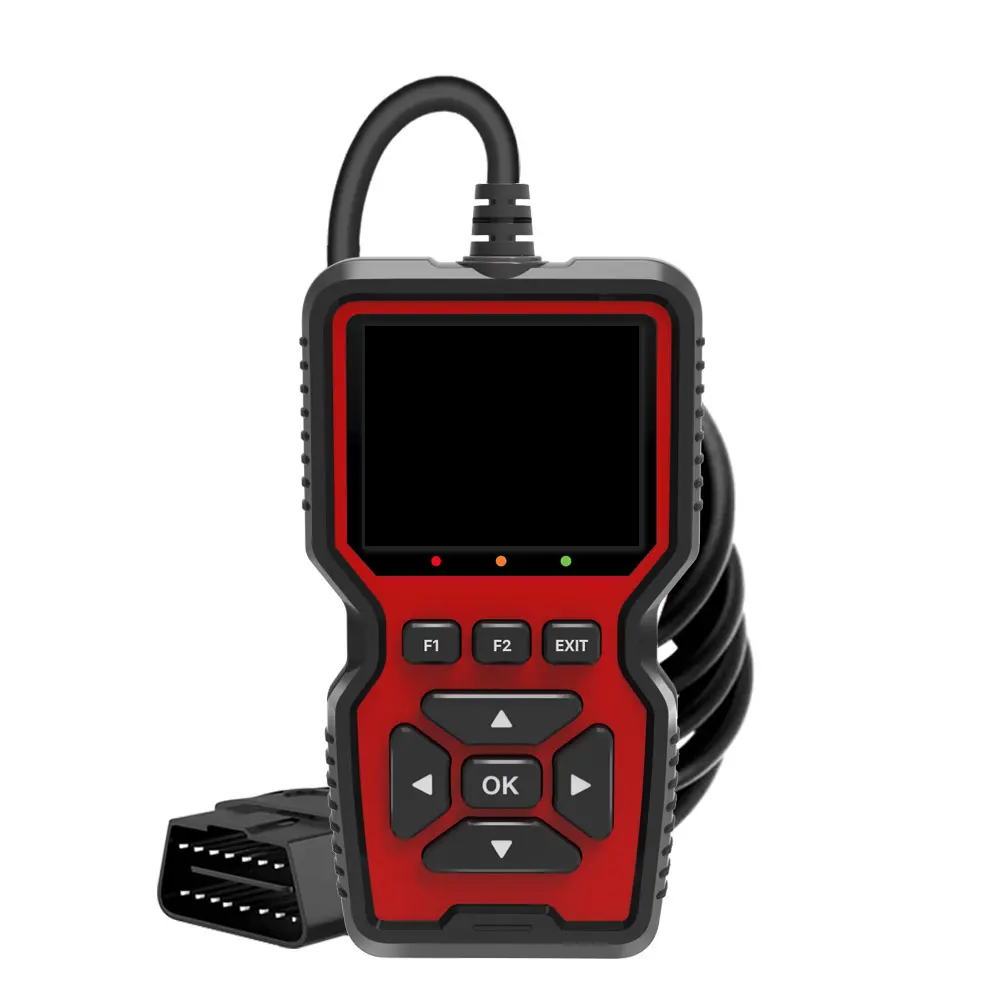
Diagnosing P1645 requires a methodical approach, utilizing an OBD-II scanner, a digital multimeter (DMM), and potentially a wiring diagram specific to the vehicle.
- Verify Code and Freeze Frame Data: Connect an OBD-II scanner to confirm P1645 is present. Review freeze frame data to understand engine conditions (RPM, load, coolant temp, vehicle speed) when the code was set, which can provide clues about when the malfunction occurred. Clear the code and attempt to replicate the conditions.
- Visual Inspection:
- Locate the fuel pump resistor and its associated bypass switch/relay, typically found near the fuel tank, within the engine bay, or sometimes integrated into a fuel pump driver module (FPDM).
- Inspect the wiring harness for visible damage, chafing, corrosion, or loose connections from the ECM/PCM to the resistor switch and to the fuel pump. Pay close attention to any areas exposed to heat, vibration, or moisture.
- Check the electrical connectors for corrosion, bent pins, or proper seating.
- Electrical Testing with DMM (Ignition OFF, Battery Disconnected for resistance/continuity tests):
- Test Fuel Pump Resistor: Disconnect the resistor and measure its resistance. Consult the vehicle’s service manual for the specified resistance value (typically a low ohmic value, e.g., 0.5-2.0 ohms). An open circuit (infinite resistance) or a significantly out-of-spec reading indicates a faulty resistor.
- Test Fuel Pump Resistor Switch/Relay:
- If it’s a relay, test its coil resistance and then apply battery voltage to the coil terminals to check for continuity across the switch contacts in both the normally open (NO) and normally closed (NC) positions.
- If it’s a solid-state switch, testing will be more complex and may require specialized equipment or a dedicated FPDM diagnostic procedure. Focus on input/output signals.
- Circuit Continuity and Shorts:
- With the ECM/PCM and the resistor/switch disconnected, check for continuity in the individual wires from the ECM/PCM connector to the resistor/switch connector, and from the resistor/switch to the fuel pump. Any open circuit indicates a break in the wiring.
- Check for shorts to ground or power in each wire. Connect one DMM lead to battery ground/power and the other to each wire terminal. Any continuity where there shouldn’t be indicates a short.
- Live Data and Activation Test (Ignition ON, Engine OFF or Running):
- Using an advanced scan tool with bidirectional control, attempt to command the fuel pump resistor switch ON and OFF. Monitor live data parameters such as fuel pump voltage or duty cycle (if applicable) and verify the expected change in operation.
- Monitor actual fuel pressure with a mechanical gauge. If the resistor is stuck ON, you might see lower-than-normal fuel pressure even when full pressure is commanded. If it’s stuck OFF, pressure might always be high, but the ECM should still detect the circuit malfunction.
- Back-probe the connector at the resistor switch with the DMM to verify power and ground signals from the ECM/PCM, and the output voltage to the fuel pump. Observe voltage changes when the ECM commands the switch to activate/deactivate the resistor.
Recommended Repairs and Solutions
Once the root cause of the P1645 code has been accurately identified through thorough diagnosis, the appropriate repairs can be implemented:
- Replace Faulty Fuel Pump Resistor: If the resistor itself is found to have incorrect resistance or an open circuit, replace it with a new, OEM-specification part. These are often standalone components or part of a larger assembly.
- Replace Malfunctioning Fuel Pump Resistor Switch/Relay: If the relay or solid-state switch fails to operate correctly, replace the entire component. Ensure the replacement is compatible with the vehicle’s electrical system and ECM commands.
- Repair or Replace Damaged Wiring/Connectors: If an open circuit, short, or high resistance is found in the wiring harness or connectors, perform precise repairs. This may involve splicing in new sections of wire using appropriate gauge and weather-sealed connectors, or replacing the entire sub-harness if damage is extensive. Always ensure connections are robust and protected from environmental factors.
- ECM/PCM Replacement (Last Resort): Only consider replacing the ECM/PCM after all other potential causes, including wiring, connectors, and component failures, have been meticulously ruled out. ECM replacement often requires reprogramming and initialization to the specific vehicle, which must be performed by a qualified technician with specialized tools. This is a rare cause for P1645.
- Clear Codes and Test Drive: After any repair, clear the P1645 code using an OBD-II scanner and perform an extended test drive under various operating conditions to confirm the repair has resolved the issue and that the code does not return. Monitor live data related to fuel pump operation if possible.