What Does Code P1670 Mean?
DTC P1670, defined as “Electronic Feedback Signal Not Detected,” is a manufacturer-specific powertrain diagnostic trouble code indicating that the Engine Control Module (ECM) or Powertrain Control Module (PCM) has failed to receive an expected electronic feedback signal from a monitored system. This signal is crucial for the ECM/PCM to verify the correct operation or position of a controlled component. For many Ford and some other manufacturers, this code frequently pertains to the Exhaust Gas Recirculation (EGR) system, specifically indicating an issue with the Differential Pressure Feedback EGR (DPFE) sensor. The DPFE sensor monitors the pressure difference across an orifice in the EGR tube, converting this pressure into a varying voltage signal that the ECM/PCM uses to determine the actual flow rate of exhaust gases being recirculated. When the ECM/PCM commands the EGR valve to open, it expects a corresponding change in this feedback signal. If the signal remains static, is absent, or falls outside the calibrated range for the commanded state, the ECM/PCM interprets this as a failure of the feedback mechanism, registers P1670, and illuminates the Malfunction Indicator Lamp (MIL). This sub-system failure directly impacts exhaust emissions control and can affect engine performance due to incorrect EGR operation.
Common Symptoms
- Check Engine Light (MIL) illumination is the primary and often only immediate symptom.
- Reduced engine performance, including sluggish acceleration or loss of power, especially under load.
- Rough or erratic idle, potentially leading to stalling.
- Increased exhaust emissions, which may be noticeable as a stronger exhaust odor.
- Engine hesitation or misfires under certain operating conditions.
- Decreased fuel economy.
What Causes the Code P1670?
- Faulty Feedback Sensor: Most commonly, the DPFE (Differential Pressure Feedback EGR) sensor itself has failed internally, providing no signal or an incorrect static signal to the ECM/PCM.
- Damaged Wiring Harness: An open circuit, short circuit, or high resistance in the signal, reference voltage, or ground wires connecting the feedback sensor to the ECM/PCM.
- Corroded or Loose Electrical Connectors: Poor electrical contact at the sensor or ECM/PCM connectors can interrupt the feedback signal.
- Blocked Sensor Ports or Hoses: In the case of a DPFE sensor, the hoses connecting it to the EGR tube may be clogged with carbon deposits, or the sensor’s ports themselves may be blocked, preventing it from accurately reading pressure differentials.
- Failed EGR Valve: While less direct, a completely stuck-closed EGR valve that prevents any exhaust gas flow could, in some systems, result in a static or out-of-range DPFE sensor reading, although other EGR-specific codes might also be present.
- ECM/PCM Malfunction: Although rare, an internal fault within the ECM/PCM preventing it from correctly processing the feedback signal or providing proper reference voltage/ground can cause this code.
How to Diagnose and Troubleshoot
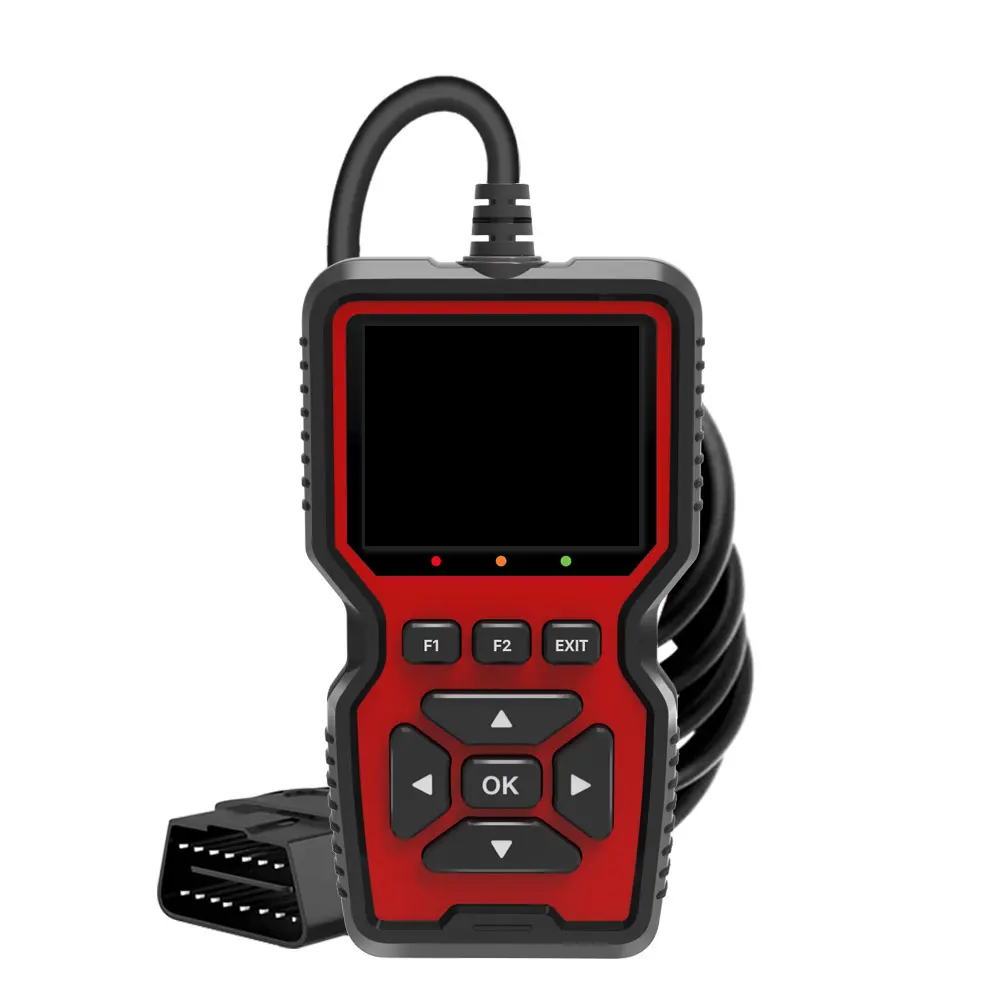
Diagnosis of P1670 requires a systematic approach, often leveraging an OBD-II scanner with live data capabilities and a digital multimeter (DMM).
- Visual Inspection:
- Begin by visually inspecting the feedback sensor (e.g., DPFE sensor) and its surrounding components. Look for any obvious signs of physical damage, corrosion, or disconnected wiring.
- Check the integrity of the vacuum lines or pressure hoses connected to the DPFE sensor; ensure they are not cracked, melted, or clogged with carbon deposits.
- Inspect the electrical connector for bent pins, corrosion, or a loose fit.
- OBD-II Scanner Live Data Analysis:
- Connect an OBD-II scanner and access live data stream for the relevant feedback sensor (e.g., “EGR Position Sensor,” “DPFE Voltage,” or similar parameter).
- With the engine idling and warm, observe the sensor’s voltage reading. If the EGR system is functioning correctly, the voltage should fluctuate as the ECM/PCM commands varying EGR flow (often during acceleration or cruising). If the voltage is consistently 0V, 5V, or another static value that does not change, it indicates a lack of feedback.
- If available, use the scanner’s bi-directional control feature to command the EGR valve open and closed while monitoring the sensor’s output. A functioning sensor should show a clear change in voltage corresponding to the EGR valve’s commanded state.
- Review freeze frame data for insights into engine conditions (RPM, load, temperature) when the code was set.
- Digital Multimeter (DMM) Testing:
- Reference Voltage: With the ignition ON and engine OFF, disconnect the sensor’s electrical connector. Use a DMM to backprobe the connector and check for the 5-volt reference voltage (Vref) from the ECM/PCM. Place the positive lead on the Vref wire and the negative lead on a known good chassis ground. No 5V indicates an open in the Vref circuit or a faulty ECM/PCM.
- Ground Circuit: Check for good ground continuity at the sensor connector using the DMM in resistance or continuity mode, connecting one lead to the ground pin of the connector and the other to a known good chassis ground. High resistance or open circuit indicates a problem with the ground wire.
- Signal Wire Integrity: With the sensor disconnected, check the continuity and resistance of the signal wire between the sensor connector and the ECM/PCM connector. An open circuit or high resistance indicates wiring damage.
- Sensor Output Test (if applicable): If possible, with the sensor connected and ignition ON, carefully backprobe the signal wire at the sensor connector. Actuate the component it’s monitoring (e.g., manually open/close the EGR valve or apply vacuum if it’s vacuum-operated) and observe if the sensor’s output voltage changes smoothly and within specifications. Compare readings to service manual specifications.
Recommended Repairs and Solutions
Based on the diagnostic findings, the following repairs and solutions are typically recommended for DTC P1670:
- Replace the Feedback Sensor: In most cases, if the wiring and power/ground circuits are intact, the feedback sensor itself (e.g., DPFE sensor) is faulty and requires replacement. Ensure the replacement sensor is a high-quality OEM or reputable aftermarket part to ensure compatibility and longevity.
- Repair Wiring or Connectors: If diagnostic steps reveal an open, short, or high resistance in the wiring harness or corroded/loose connectors, these must be repaired or replaced. Use appropriate automotive electrical repair techniques, including solder and heat-shrink tubing for wiring repairs, or new connector pigtails if necessary.
- Clean Blocked Hoses/Ports: If the DPFE sensor hoses or the sensor ports on the EGR tube are clogged with carbon, they must be thoroughly cleaned or replaced. Ensure a clear path for exhaust gases to reach the sensor.
- EGR Valve Replacement (If Contributory): If the EGR valve is found to be mechanically stuck closed, preventing any flow that the sensor would detect, it may need replacement. However, this is less common for P1670 specifically, which points more directly to the feedback signal issue rather than the actuator itself failing to move.
- ECM/PCM Replacement: Only consider ECM/PCM replacement as a last resort, after meticulously ruling out all other possibilities. This often requires professional programming and should only be performed by experienced technicians.
Mechanic’s Tip: After any repair, clear the DTCs with an OBD-II scanner and perform a drive cycle as specified by the manufacturer to ensure the repair has resolved the issue and the monitors successfully run without the P1670 code returning.