What Does Code P1684 Mean?
DTC P1684, indicating a “Metering Oil Pump Position Sensor Circuit Malfunction,” signifies that the Engine Control Module (ECM), also commonly referred to as the Powertrain Control Module (PCM), has detected an electrical fault or an implausible signal within the circuit dedicated to the Metering Oil Pump (MOP) position sensor. The MOP is a critical component, particularly in rotary engines (e.g., Mazda RX-8) or certain direct-injection diesel engines, responsible for injecting a precise amount of engine oil directly into specific areas, such as the rotor housings for apex seal lubrication in rotary engines, or fuel/air intake for valve stem lubrication in some direct injection systems. The MOP position sensor provides vital feedback to the ECM/PCM, allowing it to monitor the exact physical position of the MOP’s internal plunger or actuator. This feedback loop is essential for the ECM/PCM to accurately control oil delivery based on engine load, RPM, and temperature. When the ECM/PCM detects a signal that is outside of its programmed operating range, erratic, or inconsistent with commanded MOP positions, or if there’s an open or short in the circuit, it sets the P1684 code, indicating a loss of confidence in the MOP’s ability to provide adequate or controlled lubrication.
Common Symptoms
- Check Engine Light (CEL) illumination: The Malfunction Indicator Lamp (MIL) will be activated on the dashboard.
- Reduced engine performance: The ECM/PCM may enter a “limp-home” mode to protect the engine, limiting power output.
- Rough idling or stalling: Inconsistent or incorrect oil delivery can affect combustion stability, especially at lower RPMs.
- Excessive exhaust smoke: Incorrect MOP operation, particularly over-delivery of oil, can lead to increased oil consumption and blue-white smoke from the exhaust.
- Engine noise (e.g., knocking, ticking): Inadequate lubrication, a severe consequence of MOP failure, can lead to premature wear of internal engine components.
- Increased oil consumption: If the MOP is stuck in an open or partially open position, it will continuously inject more oil than necessary.
What Causes the Code P1684?
- Faulty Metering Oil Pump Position Sensor: The sensor itself may have an internal electrical fault, providing inaccurate or no signal to the ECM/PCM.
- Wiring harness issues: This includes open circuits (broken wires), short circuits (wires touching ground or power), chafed insulation, or corroded terminals within the MOP position sensor circuit.
- Damaged or corroded electrical connectors: Poor contact at the MOP position sensor or ECM/PCM connector due to bent pins, corrosion, or contamination.
- Mechanical failure of the Metering Oil Pump: A seized or obstructed MOP plunger can prevent proper movement, causing the position sensor to report an out-of-range or unchanging signal, even if the sensor itself is functional.
- Faulty Engine Control Module (ECM/PCM): Although less common, an internal fault within the ECM/PCM’s driver circuit for the MOP or its sensor input processing can cause this code.
How to Diagnose and Troubleshoot
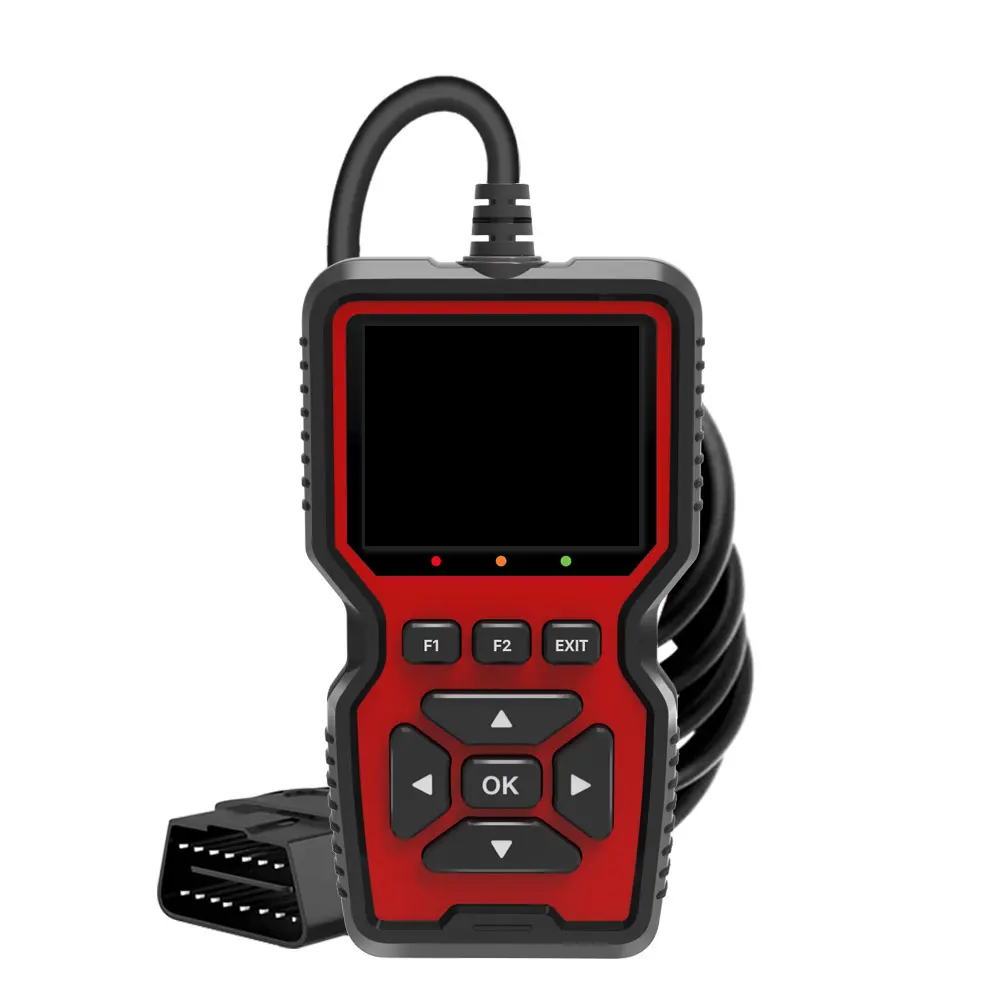
Diagnosing P1684 requires a methodical approach, utilizing an OBD-II scanner, a digital multimeter (DMM), and thorough visual inspections.
- Visual Inspection: Begin with a comprehensive visual inspection of the MOP assembly, its wiring harness, and connectors. Look for signs of physical damage, corrosion, fraying, or rodent damage to the wiring. Ensure all connectors are securely seated and free of moisture or debris. Pay close attention to the harnesses near hot engine components or moving parts where chafing could occur.
- OBD-II Scanner Live Data Analysis: Connect an advanced OBD-II scanner capable of displaying live data. Monitor the “MOP Position Sensor” reading (or similar parameter) while the engine is running and during varying engine loads (if safe to do so). Compare the actual MOP position to the ECM/PCM’s commanded MOP position. A healthy system should show the sensor responding smoothly and logically to changes in commanded position. If the sensor reading is stuck, erratic, or shows an implausible value (e.g., 0% or 100% permanently), it strongly suggests a circuit or sensor issue. Check for any associated codes, especially those related to MOP actuation or power supply.
- Wiring Harness Continuity and Resistance Checks:
- Disconnect the MOP position sensor connector and the ECM/PCM connector (consult service manual for specific pinouts).
- Power Supply Check: With the ignition ON, use a DMM to check for the correct reference voltage (typically 5V or 12V, depending on the system) at the MOP position sensor’s power supply pin on the harness side.
- Ground Circuit Check: Verify good ground continuity (less than 0.5 ohms) between the MOP position sensor ground pin on the harness side and a known good chassis ground or battery negative terminal.
- Signal Circuit Continuity: Check for continuity between the signal wire pin at the MOP sensor connector and its corresponding pin at the ECM/PCM connector. An open circuit (OL) indicates a break in the wire.
- Short to Ground/Power Check: With the harness disconnected from both ends, check for shorts between each MOP sensor wire and ground, and between each MOP sensor wire and the vehicle’s 12V supply. Any significant continuity indicates a short.
- MOP Position Sensor Internal Resistance/Voltage Check: If the sensor is a potentiometer type, you can often check its internal resistance across its terminals while manipulating the MOP plunger (if accessible and safe to do so) or by measuring the voltage output if it’s a Hall effect sensor. Consult the manufacturer’s service manual for specific resistance values or voltage ranges. A sensor that shows infinite resistance, zero resistance, or no voltage change during movement is likely faulty.
- MOP Actuator Test (if available): Some advanced scanners allow for bidirectional control or actuator tests. If available, command the MOP to different positions while monitoring the MOP position sensor feedback. If the MOP moves but the sensor doesn’t report a change, the sensor or its internal linkage is suspect. If the MOP doesn’t move at all, it could indicate a mechanical MOP failure or a problem with the MOP’s internal motor/actuator, which would then affect the position sensor’s ability to report.
Recommended Repairs and Solutions
Based on the diagnostic findings, the following repairs are typically recommended:
- Repair or Replace Wiring Harness: If visual inspection or DMM tests reveal damaged, corroded, or open/shorted wiring, the affected sections of the harness should be professionally repaired or the entire MOP sub-harness replaced. Ensure proper soldering, heat-shrinking, and loom protection for durability.
- Replace Metering Oil Pump Position Sensor: If diagnostic tests confirm an internal fault with the sensor itself (e.g., incorrect resistance, no signal output), replacement is necessary. In many applications, the position sensor is an integral part of the MOP assembly, meaning the entire MOP unit may need to be replaced.
- Replace Metering Oil Pump Assembly: If the MOP’s internal mechanism is seized, obstructed, or otherwise mechanically faulty, leading to incorrect position sensor readings despite a functional sensor, the entire MOP unit must be replaced. This is a common repair, especially on higher mileage rotary engines where carbon buildup can impede plunger movement.
- Clean and Secure Electrical Connectors: If corrosion or poor contact was found, clean the connector terminals thoroughly using electrical contact cleaner and a small brush. Ensure all pins are straight and make solid contact when reconnected. Apply dielectric grease to protect against future corrosion.
- ECM/PCM Replacement (Rare): Only consider ECM/PCM replacement after absolutely ruling out all other possibilities, as this is an expensive and complex repair. Typically, an ECM/PCM failure would manifest with multiple, seemingly unrelated codes or broader system malfunctions.
- Post-Repair Procedures: After replacing the MOP or sensor, it is crucial to clear the DTCs and perform any manufacturer-specified relearn procedures for the MOP or oil injection system. This ensures the ECM/PCM accurately calibrates itself to the new component. For rotary engines, verifying proper oil metering through extended driving and monitoring live data is highly recommended to prevent catastrophic engine damage from insufficient lubrication.