
Overview & Design Features
The Lexus V35A-FTS is a highly advanced 3.5-liter (3445 cc) twin-turbocharged V6 gasoline engine, a cornerstone of Toyota’s Dynamic Force engine family. Introduced by Lexus in 2017, this powerplant represents a significant shift from the brand’s traditional naturally aspirated V8s, offering a potent blend of performance, efficiency, and refined power delivery. Its development aimed to provide V8-comparable power and torque while achieving improved fuel economy and reduced emissions, setting a new standard for luxury performance vehicles and heavy-duty trucks within the Lexus and Toyota lineups.
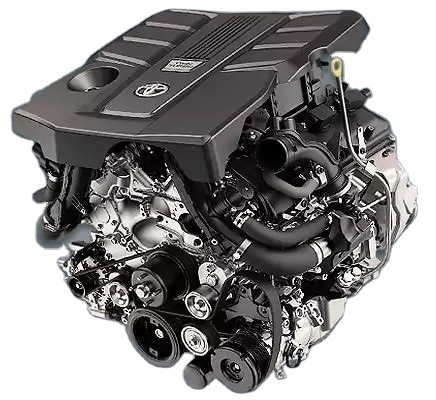
Engineered with a strong focus on durability and efficiency, the V35A-FTS features a robust construction comprising an aluminum cylinder block and aluminum cylinder heads. It incorporates Toyota’s sophisticated D-4ST fuel injection system, which intelligently combines both direct fuel injection for precise fuel delivery and port fuel injection to minimize intake valve carbon buildup and enhance low-load efficiency. The valvetrain is a Dual Overhead Camshaft (DOHC) design, utilizing Dual VVT-i (Variable Valve Timing with intelligence) on both intake and exhaust camshafts to optimize valve overlap and lift for various operating conditions. Two low-inertia turbochargers, one for each cylinder bank, work in conjunction with electronic wastegates to provide responsive boost and a broad, flat torque curve across the RPM range.
This powerful and versatile engine has been deployed across several key models since its inception. It first appeared in the 2017 Lexus LS 500 (XF50 generation), serving as the primary powertrain. Subsequently, it was adopted by the 2021 Toyota Land Cruiser 300 Series, the 2022 Lexus LX 600 (J300 generation), the 2022 Toyota Tundra (XK70 generation), and the 2023 Toyota Sequoia (XK80 generation). In some applications, notably the Tundra and Sequoia, it is also integrated into hybrid powertrains under the “i-FORCE MAX” designation, further enhancing its capabilities.
Technical Specifications
| Specification | Value (Lexus LS 500 specific where applicable) |
|---|---|
| Displacement | 3445 cc (3.5 L) |
| Max Power | 416 hp (310 kW) @ 6000 RPM |
| Max Torque | 600 Nm (61.2 kg*m) @ 1600-4800 RPM |
| Fuel Type | Premium Unleaded (91+ RON) |
| Fuel Consumption | ~10.4 l/100 km (Combined, LS 500 RWD) |
| Engine Type | Twin-turbocharged V6, DOHC |
| Compression Ratio | 10.5:1 |
| Cylinder Bore | 85.5 mm |
| Piston Stroke | 100.0 mm |
| Valvetrain | DOHC, Chain-driven |
| Valves per Cylinder | 4 (24 total) |
| Additional Info | Dual VVT-i, D-4ST Direct/Port Fuel Injection, Electronic Wastegates |
Common Problems & Reliability
As a relatively new engine, long-term reliability data for the V35A-FTS is still accumulating. However, early indications suggest a high degree of robustness, consistent with Lexus and Toyota’s reputation for engineering excellence. Specific areas that warrant attention or represent potential weak points in any sophisticated turbocharged direct-injection engine include:
- Carbon Buildup: While the D-4ST system utilizes port injectors to help wash intake valves, direct-injection engines are still susceptible to carbon accumulation over very high mileage. Regular maintenance and the use of quality fuel are crucial mitigators.
- Turbocharger Longevity: Turbochargers operate under extreme heat and stress. Potential issues typically include wastegate actuator malfunctions, oil seal degradation, or bearing wear, particularly in vehicles subjected to frequent heavy loads or poor maintenance.
- Oil Consumption: Modern turbocharged engines can sometimes exhibit higher oil consumption than naturally aspirated counterparts due to tighter tolerances and the demands of turbo lubrication. Monitoring oil levels between service intervals is important.
Under proper and diligent maintenance, the V35A-FTS engine is engineered for an expected service life exceeding 250,000 kilometers (approximately 155,000 miles) before requiring any major overhaul, a testament to Toyota’s commitment to durability.
Maintenance Tips & Service Schedule
Adherence to the manufacturer’s recommended maintenance schedule is paramount for the V35A-FTS to ensure optimal performance and longevity. Key maintenance practices include:
- Oil Changes: Utilize high-quality synthetic engine oil, typically 0W-20 or 5W-30, conforming to API SN/SP standards. The recommended interval is every 10,000 kilometers (6,000 miles) or 6 months, whichever comes first. Frequent checks of the oil level are advised.
- Spark Plugs: Iridium-tipped spark plugs are specified, with replacement intervals typically set at 100,000 kilometers (60,000 miles).
- Timing Chain: The engine employs a timing chain system, designed for the lifetime of the engine under normal operating conditions. Routine replacement is not part of the standard service schedule unless specific issues arise.
- Coolant Flush: Use Toyota’s Super Long Life Coolant (SLLC) or equivalent. The initial replacement is generally recommended at 160,000 kilometers (100,000 miles) or 10 years, followed by subsequent replacements every 80,000 kilometers (50,000 miles) or 5 years.
- Air Filters: Inspect the engine air filter and cabin air filter at every service interval, replacing as needed, typically every 20,000 to 40,000 kilometers (12,000 to 24,000 miles) depending on driving conditions.
- Fuel System Cleaning: While the D-4ST system helps, periodic use of a high-quality fuel system cleaner can assist in maintaining injector and combustion chamber cleanliness, particularly for port injectors.
Conclusion
The Lexus V35A-FTS engine represents a technologically sophisticated and robust powertrain option. Its blend of twin-turbocharged performance, advanced fuel injection, and variable valve timing delivers a compelling driving experience coupled with commendable efficiency. For a used vehicle buyer, this engine generally stands as a very reliable choice, especially if it has a documented history of adherence to the specified maintenance schedule using premium fuels and lubricants. While the complexity of its forced induction and dual-injection system means potential repair costs could be higher than simpler naturally aspirated engines if issues arise, its fundamental design and Lexus’s engineering prowess instill high confidence in its long-term durability and operational integrity.