
Overview & Design Features
The Infiniti OM651DE22LA engine is a highly significant direct-injection, common-rail diesel powerplant primarily known for its application within certain Infiniti models, notably in European and UK markets. While branded by Infiniti, this engine is a product of Mercedes-Benz engineering, specifically a variant of the widely utilized OM651 family. With a displacement of 2.143 liters (commonly referred to as 2.2L), this inline-four turbocharged diesel engine represents a strategic collaboration, allowing Infiniti to offer competitive diesel options in regions where such powertrains are highly sought after for their fuel efficiency and torque characteristics. Its historical significance lies in its role in broadening Infiniti’s market appeal beyond traditional gasoline offerings.
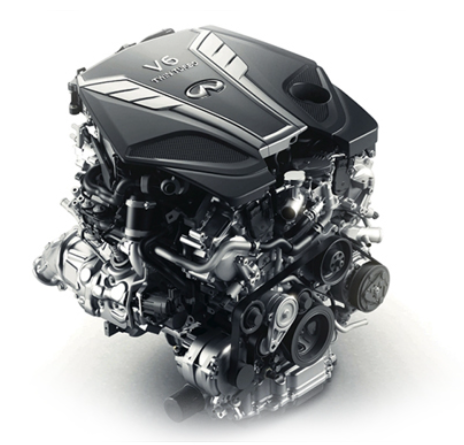
Engineered for efficiency and robust performance, the OM651DE22LA features an aluminum cylinder head mated to a durable cast-iron block, a common combination for managing thermal and mechanical stresses in high-output diesel engines. Fuel delivery is handled by a sophisticated common-rail direct injection system, typically employing solenoid injectors in the Infiniti applications, which are known for their precision and improved reliability over earlier piezo designs in the OM651 family. The valvetrain utilizes a Double Overhead Camshaft (DOHC) design with four valves per cylinder, optimizing airflow for combustion efficiency. A key feature for its power delivery is the sequential turbocharging system, which employs a smaller turbocharger for quick response at low RPMs and a larger unit for sustained power at higher engine speeds, ensuring a broad and flat torque curve.
The Infiniti OM651DE22LA engine was primarily deployed in the following vehicle models, production years, and trims:
- Infiniti Q50 (V37 platform): Introduced from late 2013, available in 2.2d trims, particularly in European markets.
- Infiniti Q30 (H15 platform): Available from 2015, utilizing the 2.2d engine variant, sharing its platform with the Mercedes-Benz A-Class.
- Infiniti QX30 (H15 platform): Launched from 2016, equipped with the 2.2d engine, built on the same architecture as the Mercedes-Benz GLA.
Technical Specifications
| Displacement (cc) | 2143 |
| Max Power (hp (kW) @ RPM) | 168 hp (125 kW) @ 3200-4200 RPM |
| Max Torque (Nm (kg*m) @ RPM) | 400 Nm (40.8 kg*m) @ 1600-2800 RPM |
| Fuel Type | Diesel |
| Fuel Consumption (l/100 km) | 4.8 – 5.3 (Combined, Varies by vehicle application) |
| Engine Type | Inline-4, DOHC, Common-rail Direct Injection, Sequential Twin-Turbo Diesel |
| Compression Ratio | 16.2:1 |
| Cylinder Bore (mm) | 83 |
| Piston Stroke (mm) | 99 |
| Valvetrain | DOHC |
| Valves per Cylinder | 4 |
| Additional Info | Cast iron block, aluminum head, sequential turbocharging, common-rail direct injection with solenoid injectors |
Common Problems & Reliability
The OM651DE22LA engine generally exhibits good reliability, but like most modern diesel powerplants, it has specific areas that warrant attention. One common concern relates to the Exhaust Gas Recirculation (EGR) valve and cooler. Over time, these components can accumulate carbon deposits, leading to reduced efficiency, error codes, and in some cases, requiring expensive replacement. Regular maintenance and ensuring the engine reaches operating temperature can mitigate this.
Another area of potential concern for high-mileage examples involves the Diesel Particulate Filter (DPF). Frequent short journeys where the DPF cannot properly regenerate can lead to premature clogging, resulting in reduced power, increased fuel consumption, and costly DPF cleaning or replacement. While typically robust, issues with the fuel injectors, particularly if contaminated fuel is used or seals degrade, can also lead to performance problems or fuel leaks.
The timing chain, located at the rear of the engine, is designed for the engine’s lifespan. However, in extremely high-mileage scenarios (typically beyond 250,000 km or 150,000 miles), wear can occur. Replacement is a significant undertaking due to its location, often necessitating engine removal. Under proper care and adherence to service schedules, the OM651DE22LA engine can realistically achieve a service life of 250,000 to 350,000 kilometers (150,000 to 220,000 miles) before requiring major overhaul or facing significant component failures.
Maintenance Tips & Service Schedule
Optimal performance and longevity of the OM651DE22LA engine depend significantly on diligent adherence to its prescribed maintenance schedule. Key service intervals and recommendations include:
- Engine Oil and Filter: Replacement is recommended every 15,000 km (9,000 miles) or annually, whichever comes first. It is critical to use low-ash, fully synthetic engine oil conforming to Mercedes-Benz specifications (e.g., MB 229.51 or MB 229.52), typically a 5W-30 or 0W-30 viscosity grade, to protect the DPF and turbocharger.
- Fuel Filter: A clean fuel filter is paramount for common-rail systems. Replacement is advised every 60,000 km (36,000 miles) to prevent contamination of the high-pressure fuel system and injectors.
- Air Filter: Replacement should occur every 30,000-60,000 km (18,000-36,000 miles) to ensure optimal airflow and prevent premature wear of turbocharger components.
- Coolant Flush: Coolant should be replaced every 5 years or 100,000 km (60,000 miles) to maintain cooling system efficiency and prevent corrosion.
- DPF Regeneration: Owners should ensure regular highway driving to allow for passive and active DPF regeneration cycles, preventing soot accumulation. Manual regeneration may be necessary if primarily driven in urban conditions.
- Timing Chain: No fixed replacement interval is specified; however, it is prudent to have the timing chain inspected for noise or slack during high-mileage services (e.g., beyond 200,000 km).
Conclusion
The Infiniti OM651DE22LA engine offers a compelling blend of efficiency, torque, and refined performance within the Infiniti lineup. For a used vehicle buyer, it represents a generally reliable and robust choice, provided that its specific diesel maintenance requirements have been diligently met throughout its service history. Its Mercedes-Benz engineering heritage contributes to its solid foundation. However, potential owners must be aware of the higher repair costs associated with advanced diesel components such as DPFs, EGR systems, and fuel injectors if these become problematic. A pre-purchase inspection by a specialist familiar with this engine, along with a thorough review of service records, is highly advisable to ensure a satisfactory ownership experience.