
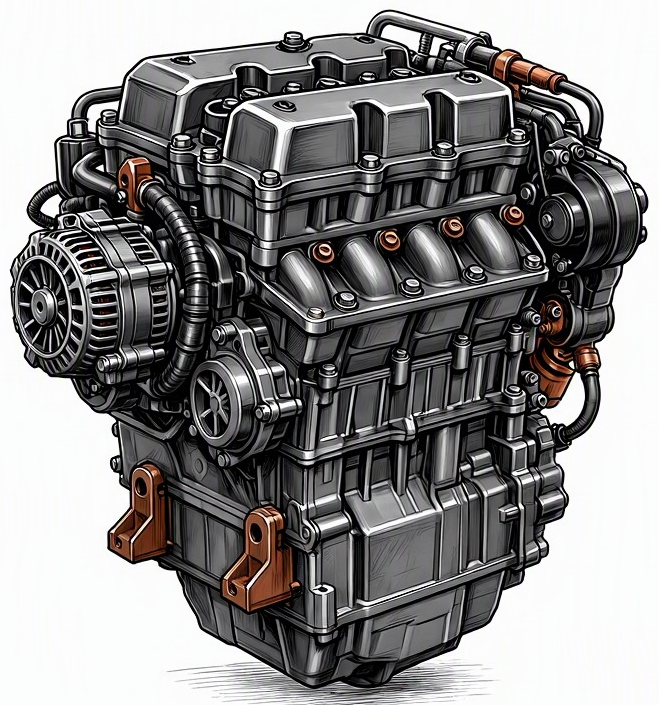
Problem Overview & Engine Systems
Turbocharger oil feed line restriction is a critical malfunction primarily affecting the Lubrication System and subsequently the Turbocharger System of an internal combustion engine. The turbocharger oil feed line is a vital conduit responsible for delivering pressurized engine oil to the turbocharger’s journal and thrust bearings. This oil serves a dual purpose: it lubricates the high-speed rotating components, minimizing friction and wear, and it acts as a coolant, dissipating the extreme heat generated by the turbine section. A restriction in this line, typically due to carbon buildup, sludge, or foreign debris, impedes the flow of oil. This leads to oil starvation at the turbocharger bearings, causing excessive friction, overheating, accelerated wear, and ultimately, premature turbocharger failure. Internal components directly affected include the turbocharger’s journal bearings, thrust bearings, shaft and wheel assembly, and subsequently, turbocharger seals due to increased shaft play. Prolonged restriction can also put strain on the engine’s oil pump and potentially affect other oil-dependent systems like variable valve timing (VVT/VTC) actuators if overall oil pressure drops significantly.
Common Symptoms
- Primary Signs:
- Check Engine Light (CEL) illuminated, often accompanied by diagnostic trouble codes (DTCs) such as P0299 (Turbocharger/Supercharger Underboost), P0234 (Turbocharger/Supercharger Overboost), or potentially P0011/P0012/P0021/P0022 if VVT/VTC systems are affected by low oil pressure.
- Low Oil Pressure Warning Light may illuminate if the restriction is severe enough to cause a measurable drop in overall oil pressure, although this is less common for isolated turbo line restriction.
- Distinctive high-pitched whining, screeching, or grinding noises emanating from the turbocharger area, indicative of failing or starved bearings.
- Visible blue/grey exhaust smoke, especially upon acceleration, signifying burning oil that has leaked past damaged turbocharger seals due which fail due to excessive shaft play.
- Black exhaust smoke, indicating an overly rich fuel mixture due to insufficient boost pressure.
- Engine Behavior Changes:
- Significant loss of engine power and acceleration, often described as sluggishness or a lack of responsiveness, due to reduced boost pressure.
- Pronounced turbo lag, where the turbocharger takes an unusually long time to spool up and deliver boost.
- The vehicle may enter “limp home mode” to prevent further engine or turbocharger damage.
- Increased engine oil consumption without visible external leaks, as oil is burned through the exhaust.
- Hesitation or surging under load or during acceleration.
- In severe cases, rough running or misfires can occur if burning oil contaminates spark plugs.
Root Causes & Failure Mechanisms
- Thermal Carbonization and Sludge Buildup: The most prevalent cause. High temperatures generated by the turbocharger, particularly during engine shutdown (heat soak), can cause residual oil within the feed line to carbonize and form hard deposits. This process is exacerbated by improper cool-down procedures after spirited driving.
- Use of Incorrect Oil Specifications or Extended Oil Drain Intervals: Utilizing engine oil that does not meet manufacturer specifications for thermal stability or extending oil change intervals beyond recommended limits leads to accelerated oil degradation, increased sludge formation, and carbon deposits.
- Restrictive Banjo Bolts with Integrated Filters: Many OEM designs incorporate a fine mesh screen filter within the banjo bolt connecting the oil feed line to the turbocharger or engine block. These screens are highly susceptible to clogging from microscopic carbon particles or debris, effectively restricting oil flow. This is a common design flaw in several engine families.
- Foreign Debris or Manufacturing Residue: Metal shavings from previous engine wear, remnants from prior repairs (e.g., sealant, gasket material), or manufacturing debris inadvertently left in the oil passages can migrate and restrict the narrow bore of the feed line.
- Physical Damage or Kinking of the Line: Accidental kinking, crushing, or damage to the rigid or flexible sections of the oil feed line during other maintenance procedures or external impact can restrict oil flow.
- Aftermarket Component Incompatibility: Installation of inferior quality aftermarket oil feed lines that may have smaller internal diameters, inadequate heat shielding, or prone to internal delamination.
How to Diagnose and Troubleshoot
Accurate diagnosis of a turbocharger oil feed line restriction requires a systematic approach:
- Initial Visual Inspection: Begin by visually inspecting the turbocharger oil feed line for any obvious signs of external damage, kinks, leaks, or severe carbon buildup around the connections. Check for proper routing and secure mounting.
- OBD-II Scan and Live Data Analysis: Connect an OBD-II scanner to retrieve any stored DTCs (e.g., P0299, P0234). Monitor live data parameters such as “actual boost pressure” vs. “requested boost pressure,” “oil pressure sensor” readings (if available), and “turbocharger speed” (if equipped) under various engine loads. A significant discrepancy between actual and requested boost, combined with turbo-related symptoms, points towards a turbo system issue.
- Oil Pressure Measurement (Mechanical Gauge): The most definitive step. Install a mechanical oil pressure gauge at the engine’s main oil galley or, ideally, at the turbocharger oil feed inlet (if an appropriate port is available). Compare readings to manufacturer specifications at idle and various RPMs. Significantly lower pressure at the turbo inlet compared to the main gallery or overall low oil pressure strongly suggests a restriction or failing oil pump.
- Oil Feed Line Disconnection and Inspection: This is crucial.
- Safely disconnect the oil feed line from both the engine block/oil filter housing and the turbocharger inlet.
- Carefully inspect the internal diameter of the line for carbon deposits, sludge, or debris. Use a small pick or wire to gently probe for blockages.
- Pay particular attention to the banjo bolts. Many contain small, integrated mesh filters that are highly prone to clogging. These must be thoroughly inspected and cleaned or, preferably, replaced.
- Turbocharger Shaft Play Assessment: With the intake hose removed, manually check the turbocharger shaft for excessive radial (side-to-side) and axial (in-and-out) play. A noticeable increase in play, accompanied by a gritty feel, indicates damaged bearings due to oil starvation.
- Oil Flow Test (Optional but Recommended): If the line appears clear but symptoms persist, disconnect the line from the turbocharger and place the end into a clean container. With the engine briefly cranked (fuel/ignition disabled to prevent start-up), observe the oil flow rate. Compare to a known good flow or manufacturer specifications if available. A weak trickle or intermittent flow confirms a restriction.
- Endoscopic Inspection: Use an endoscope to inspect the turbocharger’s bearing housing internally if possible, looking for signs of oil starvation such as discoloration, scoring, or excessive carbonization.
Recommended Repairs and Solutions
Addressing a turbocharger oil feed line restriction typically involves the following:
- Oil Feed Line Replacement: In most cases, the restricted oil feed line should be entirely replaced, rather than attempting to clean it. The internal diameters are often small, and it’s nearly impossible to ensure complete removal of all carbon and debris, especially from integrated filters. Always use an OEM or high-quality aftermarket line.
- Turbocharger Replacement or Rebuild: If the restriction has led to significant turbocharger bearing damage (indicated by excessive shaft play, noise, or smoke), the turbocharger itself will require replacement or a professional rebuild. Neglecting this will lead to repeated failure.
- Banjo Bolt and Integrated Filter Replacement/Modification: If the restriction is solely within a banjo bolt with an integrated screen, replace the bolt. In some specific applications known for this issue, some engineers recommend replacing the screened banjo bolt with a non-screened version if the engine’s primary oil filtration system is robust and adequately maintained, to eliminate a recurring failure point. This decision should be made with careful consideration of potential risks and specific engine design.
- Thorough Oil System Flush and Oil/Filter Change: After replacing the feed line and any damaged turbo components, perform a comprehensive engine oil system flush to remove any remaining contaminants. Subsequently, replace the engine oil and oil filter with new, manufacturer-specified fluids.
- Inspection of Related Components: If DTCs for VVT/VTC systems were present, inspect these components for sludge or damage, as their operation is also oil pressure dependent.
- Driving Safety Risk Factors: Operating a vehicle with a restricted turbo oil feed line carries significant risks. Continued driving will inevitably lead to catastrophic turbocharger failure, which can propel metal fragments into the intake and exhaust systems, potentially causing severe engine damage. A severely failed turbocharger can also lead to massive oil leaks onto hot exhaust components, posing a significant fire hazard, or sudden loss of power during critical driving maneuvers.
Maintenance Recommendations
Preventing turbocharger oil feed line restriction is paramount for the longevity of turbocharged engines:
- Strict Adherence to Oil Change Intervals: Follow the manufacturer’s recommended oil change intervals diligently. For vehicles subjected to severe driving conditions (frequent short trips, heavy towing, extreme temperatures, or prolonged idling), consider performing oil changes at shorter intervals than recommended.
- Use of Manufacturer-Specified Engine Oil: Always use engine oil that meets or exceeds the manufacturer’s specific viscosity grade and performance certifications (e.g., API, ACEA, ILSAC, specific OEM approvals like Dexos, VW 504.00/507.00, etc.). High-quality, full-synthetic oils are typically recommended for turbocharged engines due to their superior thermal stability and resistance to breakdown.
- Proper Engine Cool-Down Procedure: After spirited driving or sustained high-load operation, allow the engine to idle for 30-60 seconds before shutdown. This allows the turbocharger to cool down and prevents oil from “coking” (carbonizing) in the feed line due to residual heat soak without oil circulation.
- Regular Inspection of Oil Feed Lines: During routine maintenance, visually inspect the turbocharger oil feed line for any signs of external damage, kinks, or leaks.
- Consider Preventive Replacement: For engines notoriously prone to this issue (e.g., certain Ford EcoBoost, VW/Audi 2.0T FSI/TSI), consider preventatively replacing the turbo oil feed line and its banjo bolts at specific mileage intervals, typically between 80,000 to 120,000 miles, as a proactive measure.
- Avoid Aftermarket Oil Additives: Generally, avoid using aftermarket oil additives unless specifically recommended or approved by the engine manufacturer, as some can alter oil properties negatively and contribute to sludge formation.
- Use High-Quality Oil Filters: Always use OEM or high-quality aftermarket oil filters that meet manufacturer specifications to ensure proper filtration and flow.
