
Due to stricter environmental regulations, the 1.7-liter F2N engine was replaced in 1992 by the 1.8-liter 8-valve Renault F3P engine. Models like the Renault 19, Clio, and Laguna have it. This single-injection engine has the B18U index under the Volvo hood.
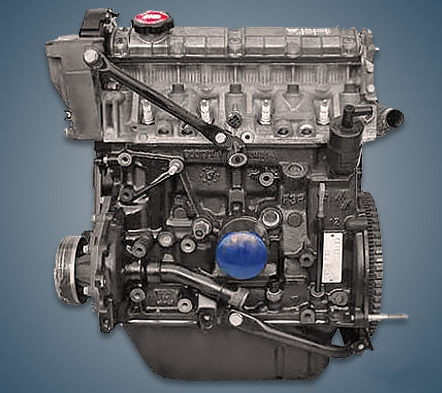
F3P, F4P, F7P, F2R, F3R, F4R, F4Rt, F5R, and F7R are all part of the F-series.
French designers were forced to update the F2N engine in the early 1990s due to stricter environmental regulations for all automobiles. The end product was a power unit with electronic fuel injection, initially mono-point and later multi-point, and a standard catalytic converter. The working volume rose from 1721 to 1783 cm3 (or 1794 cm³ in the 678 version) as a result of the larger pistons.
The timing drive was still a belt drive that needed to be replaced every 120,000 kilometers. Because there were no hydraulic lifters, valve clearances had to be adjusted on a regular basis.
The engine was mounted on:
- Renault 19 (X53) in 1992 – 1997;
- Renault Clio 1 (X57) in 1993 – 1998;
- Renault Laguna 1 (X56) in 1993 – 1999;
- Volvo 440 in 1990 – 1996 (as B18U);
- Volvo 460 in 1990 – 1996 (as B18U).
Specifications
| Production years | 1992-1999 |
| Displacement, cc | 1783 – 1794 |
| Fuel system | injector |
| Power output, hp | 88 – 110 |
| Torque output, Nm | 142 – 160 |
| Cylinder block | cast iron R4 |
| Block head | aluminum 8v |
| Cylinder bore, mm | 82.7 |
| Piston stroke, mm | 83 – 83.5 |
| Compression ratio | 9.6 – 10 |
| Hydraulic lifters | no |
| Timing drive | belt |
| Turbocharging | no |
| Fuel type | petrol |
| Euro standards | EURO 1/2 |
| Engine lifespan, km | ~250 000 |
| Weight, kg | 132 |
Disadvantages of the Renault F3P engine
Ignition system problems are nearly always linked to unstable engine operation. Additionally, both distributors and individual coils are problematic.
Actually, there could be a number of causes for this, such as a buggy coolant temperature sensor, a burned-out lambda probe, or a throttle valve covered in dirt.
Oil and coolant leaks typically start after 200,000 kilometers. As soon as one leak is fixed, another one appears right away.
A clogged fuel filter or injectors are typically the cause of power outages, up to the point where the vehicle just stalls; fuel pump failures are less common.