
The small turbo engines found under the hood of the company’s racing cars were replaced in 1990 by the Renault F7P 1.8-liter 16-valve engine. Sports versions of the 19 and Clio models with the 16S index also had it installed.
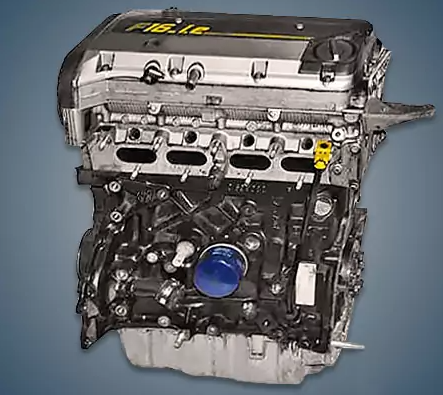
F3P, F4P, F7P, F2R, F3R, F4R, F4Rt, F5R, and F7R are all part of the F-series.
One of the most sophisticated engines in the F-family is this one. Multi-point injection, a 16-valve aluminum cylinder head, branded X-shaped pistons with oil-washing bottoms, an advanced double throttle intake, sodium-cooled exhaust valves from the inside, and other contemporary innovations enable you to extract an impressive 140 horsepower and 160 Nm from a 1.8-liter volume.
Nevertheless, the timing belt drive needs to be changed every 120,000 kilometers, and the cylinder block is still made of cast iron. The fact that hydraulic lifters eliminate the need to regularly adjust valve clearances is a good thing.
The engine was mounted on:
- Renault 19 (X53) in 1990 – 1997;
- Renault Clio 1 (X57) in 1991 – 1996.
Specifications
| Production years | 1990-1997 |
| Displacement, cc | 1764 |
| Fuel system | injector |
| Power output, hp | 135 – 140 |
| Torque output, Nm | 157 – 162 |
| Cylinder block | cast iron R4 |
| Block head | aluminum 16v |
| Cylinder bore, mm | 82 |
| Piston stroke, mm | 83.5 |
| Compression ratio | 10.0 |
| Hydraulic lifters | yes |
| Timing drive | belt |
| Turbocharging | no |
| Fuel type | petrol |
| Euro standards | EURO 1/2 |
| Engine lifespan, km | ~250 000 |
| Weight, kg | 150 |
Disadvantages of the Renault F7P engine
A dirty throttle valve or its position sensor, a burned-out lambda probe or idle speed controller, and a timing belt that has stretched or jumped one tooth are the main causes of the motor’s unstable operation.
The ignition system malfunction is the issue with all French engines. Furthermore, the distributor cap, coil, candles, or high-voltage wires could be the source of the issue. It can be quite challenging to determine the actual cause of tripping.
Problems can arise from an unreliable oil pressure sensor. Low lubrication during extended driving is risky and frequently causes crankshaft liners to spin or camshafts to break.