
From 1995 to 2005, the company produced the 1.6-liter gasoline engine Rover 16K4F, which was fitted to the company’s models with indexes 200 and 400 as well as comparable 25 and 45. Under the hood of the well-known MG ZS and TF vehicles in the UK is this unit.
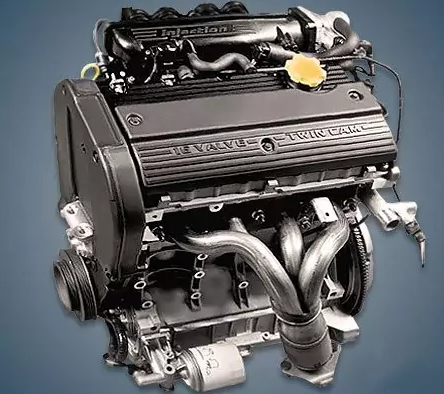
K-series engines include the 11K4F, 14K2F, 14K4F, 16K4F, 18K4F, 18K4K, and 18K4G.
Specifications
| Production years | 1995-2005 |
| Displacement, cc | 1589 |
| Fuel system | distributed injection |
| Power output, hp | 107 – 112 |
| Torque output, Nm | 138 – 145 |
| Cylinder block | aluminum R4 |
| Block head | aluminum 16v |
| Cylinder bore, mm | 80 |
| Piston stroke, mm | 79 |
| Compression ratio | 10.5 |
| Features | DOHC |
| Hydraulic lifters | yes |
| Timing drive | belt |
| Phase regulator | no |
| Turbocharging | no |
| Recommended engine oil | 5W-30 |
| Engine oil capacity, liter | 4.5 |
| Fuel type | petrol |
| Euro standards | EURO 3 |
| Fuel consumption, L/100 km (for Rover 416 Si 1998) — city — highway — combined |
9.2 5.6 6.8 |
| Engine lifespan, km | ~280 000 |
| Weight, kg | 107 |
The engine was installed on:
- Rover 200 III (RF) in 1995 – 1999;
- Rover 25 I (RF) in 1999 – 2005;
- Rover 400 II (RT) in 1995 – 1999;
- Rover 45 I (RT) in 1999 – 2004;
- Rover Streetwise I (RF) in 2003 – 2005;
- MG ZS in 2001 – 2005;
- MG F in 1999 – 2002;
- MG TF in 2002 – 2005.
Disadvantages of the Rover 16K4F engine
These motors are terrified of overheating because it can lead to the cylinder head in addition to breaking through the gasket; a lot of issues here also result in a proprietary MEMS fuel injection system;
The timing belt needs to be changed every 100,000 kilometers; if it breaks, the valves will bend; frequent oil leaks happen at the valve cover or camshaft seals.