
Overview & Design Features
The Acura C32A is a naturally aspirated, 3.2-liter (3206 cc) V6 gasoline engine, developed and manufactured by Honda for its luxury Acura division. Introduced in the early 1990s, it represents a significant engineering achievement for its time, embodying Honda’s commitment to refinement, reliability, and advanced technology. This engine was a cornerstone of Acura’s flagship models, providing a blend of smooth power delivery and a sophisticated driving experience. Its longitudinal placement in front-wheel-drive platforms was unusual but allowed for excellent weight distribution and balance, contributing to the vehicles’ dynamic characteristics.
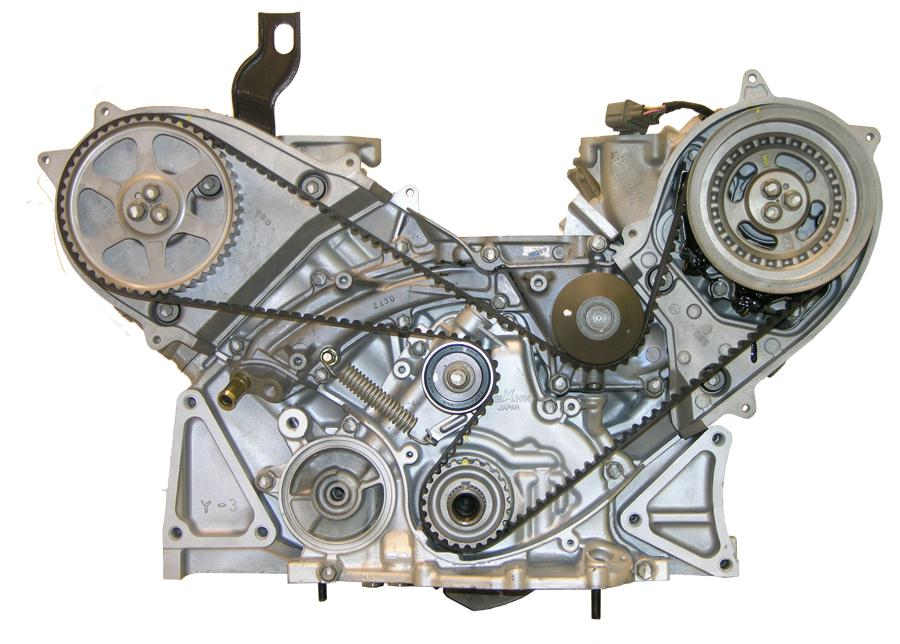
Engineered with an all-aluminum block and cylinder heads, the C32A prioritizes weight reduction and heat dissipation. The single overhead camshaft (SOHC) configuration features four valves per cylinder, totaling 24 valves for efficient breathing. Key to its performance, particularly in later iterations, was the integration of Honda’s Variable Valve Timing and Lift Electronic Control (VTEC) system, specifically on the intake side. This technology allowed for optimized valve timing and lift profiles at different RPMs, enhancing both low-end torque and high-RPM power. Multi-port fuel injection (MPFI) was standard, ensuring precise fuel delivery and combustion efficiency. The C32A also utilizes hydraulic lash adjusters, contributing to quieter operation and reduced valvetrain maintenance.
The Acura C32A engine was prominently featured in several key Acura models. It first appeared in the second-generation Acura Legend (KA7 chassis for sedans, KA8 chassis for coupes) from 1991 to 1995, where it was offered in both a 200 hp (C32A1) and a 230 hp VTEC-equipped version (C32A2). Following the Legend, the C32A2 variant continued its service in the first-generation Acura 3.2CL coupe, produced from 1997 to 1999. Its deployment across these luxury and sport-luxury platforms cemented its reputation as a refined and capable powerplant for the premium segment.
Technical Specifications
| Specification | Value |
|---|---|
| Displacement (cc) | 3206 |
| Max Power (hp (kW) @ RPM) | 230 hp (172 kW) @ 6200 RPM |
| Max Torque (Nm (kg*m) @ RPM) | 294 Nm (30 kg*m) @ 5000 RPM |
| Fuel Type | Premium Unleaded Gasoline (91+ RON) |
| Fuel Consumption (l/100 km) | Approximately 10.5 – 12.0 (Combined) |
| Engine Type | Naturally Aspirated V6, Longitudinal |
| Compression Ratio | 10.0:1 |
| Cylinder Bore (mm) | 90.0 |
| Piston Stroke (mm) | 84.0 |
| Valvetrain | SOHC 24-Valve (with VTEC on later variants) |
| Valves per Cylinder | 4 |
| Additional Info | Aluminum Block and Heads, Multi-Port Fuel Injection, Timing Belt Driven |
Common Problems & Reliability
The Acura C32A engine is widely regarded for its inherent reliability and durability, a testament to Honda’s engineering. However, like any engine, it exhibits certain characteristic wear points and potential issues, particularly with increasing mileage. One of the most critical maintenance items is the timing belt and water pump replacement. Neglecting this service can lead to catastrophic engine failure due as the C32A is an interference engine. Another common concern involves various oil leaks, typically manifesting from the distributor O-ring, valve cover gaskets, and the VTEC solenoid gasket. These are generally minor but can become unsightly and messy if unaddressed. Furthermore, the EGR (Exhaust Gas Recirculation) system ports can accumulate carbon deposits over time, leading to rough idle, reduced performance, and potential misfires, especially on vehicles with higher mileage. The ignition system, particularly the distributor unit, can also experience wear in its internal bearings or seals, resulting in ignition issues or oil leaks. With proper and timely maintenance, including adherence to the timing belt schedule and addressing minor leaks proactively, the C32A engine is capable of achieving impressive service life, often exceeding 250,000 miles (400,000 km) before requiring a major overhaul.
Maintenance Tips & Service Schedule
Proactive maintenance is key to maximizing the longevity and performance of the Acura C32A engine. Adhering to manufacturer-recommended service intervals with quality parts and fluids is essential.
- Engine Oil: Regular oil changes are crucial. Use a high-quality 5W-30 synthetic blend or full synthetic motor oil every 5,000 to 7,500 miles (8,000 to 12,000 km), or every 6 months, whichever comes first.
- Oil Filter: Always replace the oil filter with each oil change to ensure proper filtration.
- Timing Belt and Water Pump: This is the most critical service. The timing belt, tensioner, and water pump should be replaced proactively every 90,000 to 105,000 miles (145,000 to 170,000 km) or every 7 years, whichever occurs first. Failure to do so risks severe internal engine damage.
- Spark Plugs: Replace iridium or platinum-tipped spark plugs every 60,000 to 100,000 miles (100,000 to 160,000 km) to maintain ignition efficiency.
- Coolant: Flush and replace the engine coolant every 3 years or 30,000 miles (48,000 km) using Honda Type 2 (blue) long-life coolant or an equivalent silicate-free, phosphate-free, and borate-free ethylene glycol-based coolant.
- Air Filter: Inspect and replace the engine air filter annually or every 15,000 to 30,000 miles (24,000 to 48,000 km), depending on driving conditions.
- Fuel Filter: The fuel filter is typically a long-life item, but inspection or replacement every 100,000 miles (160,000 km) can be beneficial, especially if fuel quality is suspect.
- EGR System Cleaning: For higher mileage engines, periodic cleaning of the EGR passages and valve can prevent common rough idle issues.
Conclusion
The Acura C32A engine stands as a testament to Honda’s robust engineering philosophy of the era. Its combination of a lightweight aluminum construction, sophisticated SOHC 24-valve design with VTEC technology (in later variants), and inherent balance makes it a remarkably smooth, capable, and durable powerplant. For a used vehicle buyer, an Acura model equipped with the C32A engine can be an exceptionally reliable choice, provided that its critical maintenance, particularly the timing belt and water pump service, has been diligently performed or is addressed immediately upon acquisition. Engines with documented service history and evidence of regular fluid changes are generally safe and continue to offer a premium driving experience for many years and miles to come.