
Overview & Design Features
The Infiniti MR16DDT is a 1.6-liter (1618cc) inline four-cylinder, turbocharged gasoline engine developed by Nissan, prominently featured in Infiniti models. It represents a significant advancement in compact engine design, combining forced induction with direct fuel injection to deliver a compelling balance of power, efficiency, and responsiveness. Initially introduced in the early 2010s, this engine became a cornerstone for Nissan’s performance-oriented compact vehicles and crossovers, offering a modern alternative to naturally aspirated larger displacement units.
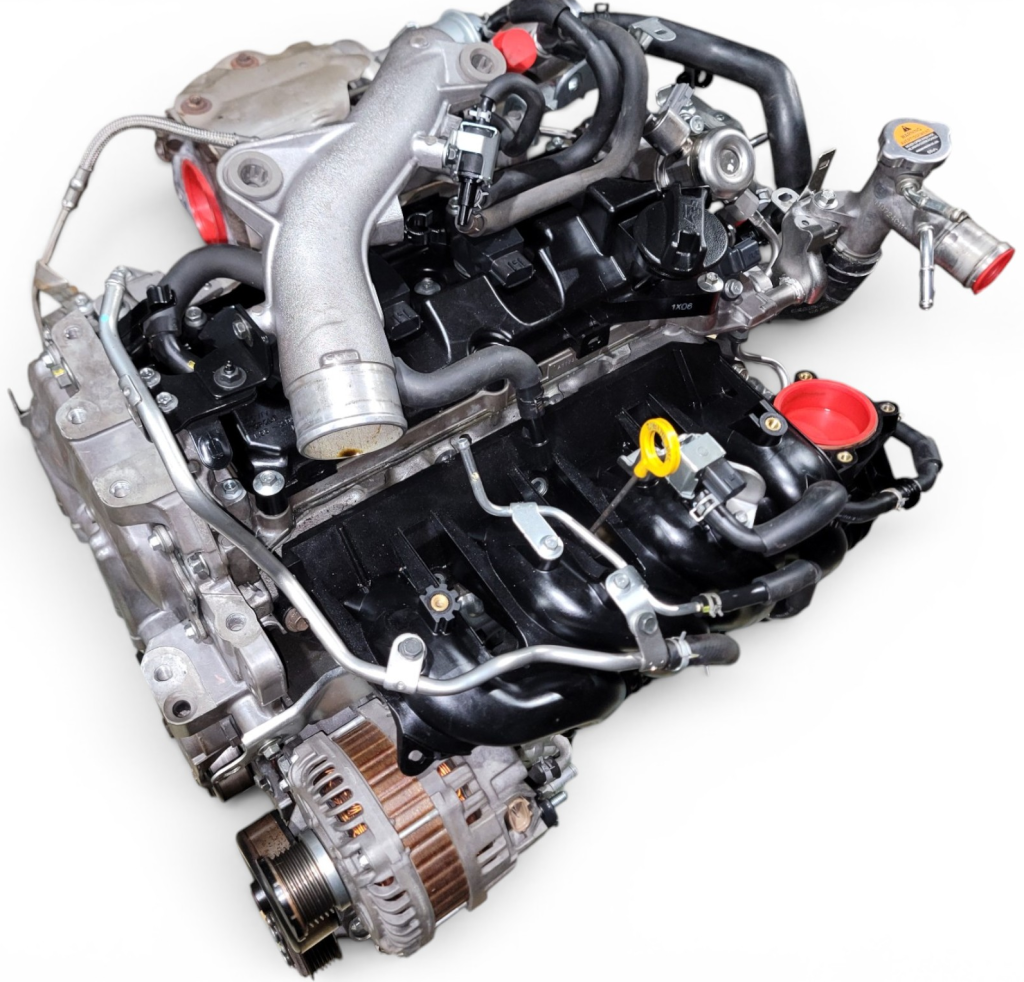
Engineered with an all-aluminum construction for both its cylinder block and cylinder head, the MR16DDT benefits from reduced weight and improved thermal management. It incorporates Nissan’s advanced direct fuel injection system (DIG-T – Direct Injection Gasoline – Turbo) for precise fuel delivery directly into the combustion chambers, enhancing fuel economy and power output while minimizing emissions. The valvetrain features Dual Overhead Camshafts (DOHC) with Continuously Variable Valve Timing Control (CVTC) on both intake and exhaust camshafts, optimizing valve overlap and lift across various engine speeds for broader torque delivery and improved efficiency.
This robust and technologically advanced powertrain was deployed across a range of compact luxury and performance vehicles. Its primary application within the Infiniti lineup was in the Infiniti QX30 and Infiniti Q30, particularly in the 2.0t and higher-output variants in specific markets, where it was often marketed as a “2.0-liter equivalent” due to its performance characteristics. The engine also found extensive use in various Nissan models, including the Nissan Juke NISMO, Nissan Pulsar SSS, and certain configurations of the Nissan Qashqai, showcasing its versatility and performance capabilities across different brand segments.
Technical Specifications
| Displacement | 1618 cc |
| Max Power | 208 hp (155 kW) @ 5600 RPM (Infiniti QX30 specification) |
| Max Torque | 250 Nm (25.5 kg*m) @ 1600-5200 RPM (Infiniti QX30 specification) |
| Fuel Type | Premium Unleaded Gasoline (91+ RON recommended) |
| Fuel Consumption | Approximately 7.9 l/100 km (combined cycle for QX30 AWD) |
| Engine Type | Inline-4, DOHC, Turbocharged, Direct Injection |
| Compression Ratio | 9.5:1 |
| Cylinder Bore | 79.7 mm |
| Piston Stroke | 81.1 mm |
| Valvetrain | DOHC, 4 Valves per Cylinder, CVTC (Intake & Exhaust) |
| Valves per Cylinder | 4 |
| Additional Info | Single-scroll Turbocharger, Direct Injection Gasoline (DIG-T), Continuously Variable Valve Timing Control (CVTC) |
Common Problems & Reliability
- Carbon Buildup on Intake Valves: As with many direct-injection engines, carbon deposits on the intake valves can accumulate over time due to the lack of fuel washing over the valve stems. This can lead to reduced airflow, decreased performance, and rough idling. Regular use of top-tier fuels and periodic intake cleaning services are recommended to mitigate this issue.
- Turbocharger Longevity: While generally robust, the turbocharger unit can be a point of concern at higher mileages, particularly if proper oil change intervals and cool-down procedures are neglected. Bearing wear, wastegate actuator issues, or oil supply restrictions can lead to reduced boost pressure, noise, or complete failure. Prompt attention to any perceived performance degradation is crucial.
- High-Pressure Fuel Pump (HPFP) Wear: The MR16DDT’s direct injection system relies on a high-pressure fuel pump which is subject to significant stress. Failures, though not excessively common, can occur at higher mileages, leading to misfires, reduced power, or engine stalling. Ensuring clean fuel filters and avoiding persistent low-fuel driving can help prolong its life.
Under a regimen of consistent and proper maintenance, the Infiniti MR16DDT engine typically demonstrates a commendable service life. An expected mileage of 200,000 kilometers (approximately 125,000 miles) before requiring significant overhaul is a realistic expectation, with many units exceeding this figure when meticulously cared for.
Maintenance Tips & Service Schedule
- Engine Oil Changes: Regular oil changes are paramount for turbocharged direct injection engines. It is recommended to use a high-quality synthetic engine oil, such as 5W-30 or 0W-20, as specified in the owner’s manual for the operating climate. Intervals of 8,000 to 12,000 kilometers (5,000 to 7,500 miles) or every 6 months, whichever comes first, are generally advisable.
- Spark Plug Replacement: Spark plugs should be inspected and replaced typically every 96,000 kilometers (60,000 miles). Using the manufacturer-specified iridium-tipped plugs is crucial for optimal ignition and longevity in a turbocharged environment.
- Timing Chain Inspection: The MR16DDT utilizes a timing chain, which is designed for the life of the engine. However, it should be inspected for stretch or excessive noise around 160,000 to 240,000 kilometers (100,000 to 150,000 miles). Replacement is only necessary if symptoms of wear are present.
- Coolant System Flush: Engine coolant should be flushed and replaced approximately every 3 to 5 years or 96,000 to 160,000 kilometers (60,000 to 100,000 miles), using the manufacturer-specified long-life coolant.
- Fuel System Cleaning: Given the direct injection design, periodic use of a high-quality fuel system cleaner (added to the fuel tank) can help minimize carbon deposit formation on fuel injectors. For more severe buildup, professional intake manifold cleaning (e.g., walnut blasting) may be required.
Conclusion
The Infiniti MR16DDT engine, a product of advanced Nissan engineering, stands as a generally reliable and high-performing compact turbocharged unit. Its blend of power and efficiency makes it an attractive choice for those seeking a dynamic driving experience in a smaller package. For a used vehicle buyer, an MR16DDT-equipped car represents a safe choice, provided the vehicle has a documented history of consistent and diligent maintenance. Adherence to the prescribed service schedule, particularly concerning oil changes and addressing direct injection-specific maintenance, will ensure the engine delivers its designed performance and longevity throughout its operational life.