
Overview & Design Features
The Infiniti VQ35HR engine, a distinguished member of Nissan’s VQ engine family, represents a significant evolution of the acclaimed VQ35DE. Introduced in 2007, this 3.5-liter (3498 cc) naturally aspirated V6 engine is renowned for its smooth power delivery, exceptional durability, and characteristic exhaust note. The “HR” designation stands for “High Revolution,” reflecting its increased redline and performance enhancements over its predecessors. It was engineered to deliver a more responsive and higher-revving driving experience, cementing its place as a cornerstone in Nissan and Infiniti’s performance-oriented vehicles of the late 2000s.
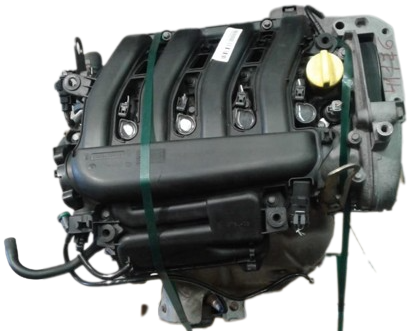
Core engineering features of the VQ35HR include a lightweight, all-aluminum cylinder block and cylinder heads, optimizing thermal management and reducing overall engine weight. Fuel delivery is managed by a multi-point electronic fuel injection system. A key technological advancement is the incorporation of Continuously Variable Valve Timing Control System (CVTCS) on both the intake and exhaust camshafts, allowing for optimal valve overlap and lift across the entire RPM range, enhancing both power output and fuel efficiency. Furthermore, it features a redesigned intake manifold with dual throttle bodies, improved cylinder head design for better airflow, a stiffer crankshaft, and strengthened connecting rods, all contributing to its higher redline and robust performance characteristics.
The VQ35HR engine was primarily deployed in a range of Nissan and Infiniti models known for their sporting credentials. Notable applications include the 2007-2008 Nissan 350Z, specifically in its Roadster and Coupe iterations, and the Infiniti G35 Sedan (V36 chassis) from 2007 to 2008. It also powered the Nissan Skyline 350GT (V36) in the Japanese domestic market. This engine served as a bridge between the earlier VQ35DE and the subsequent, larger displacement VQ37VHR, establishing a high benchmark for V6 performance in its segment.
Technical Specifications
| Displacement | 3498 cc |
| Max Power | 306 hp (228 kW) @ 6800 RPM |
| Max Torque | 363 Nm (37 kg*m) @ 4800 RPM |
| Fuel Type | Premium Unleaded (91+ RON) |
| Fuel Consumption (combined) | Approximately 11.2 – 12.4 l/100 km (varies by vehicle and transmission) |
| Engine Type | V6, DOHC, Naturally Aspirated |
| Compression Ratio | 10.6:1 |
| Cylinder Bore | 95.5 mm |
| Piston Stroke | 81.4 mm |
| Valvetrain | DOHC, Continuously Variable Valve Timing (CVTCS) on Intake and Exhaust |
| Valves per Cylinder | 4 |
| Additional Info | All-aluminum block and heads, dual electronic throttle bodies, fully counterweighted crankshaft |
Common Problems & Reliability
The VQ35HR is largely regarded as a highly reliable engine, though it is not without a few specific areas requiring attention over its lifespan. One common issue involves the rear timing cover gallery gaskets. These gaskets, made of paper, can degrade over time, leading to oil pressure drops, which can trigger check engine lights and, if severe, potentially cause engine damage. Replacement involves significant labor due to the engine-out procedure required for some applications. Another frequent occurrence involves oil leaks from the valve cover gaskets and spark plug tube seals, manifesting as oil pooling in the spark plug wells or visible seepage on the engine exterior. This typically necessitates valve cover replacement rather than just gasket replacement, as the seals are integrated.
While less prevalent than in earlier VQ iterations, some VQ35HR engines may exhibit elevated oil consumption at higher mileages, often attributable to piston ring wear. Regular oil level checks are therefore recommended. Compared to the VQ35DE, the HR variant features revised timing chain components that generally exhibit greater longevity, though occasional tensioner wear can occur after significant mileage. With diligent maintenance, including regular oil changes and addressing minor leaks promptly, the VQ35HR is engineered to deliver a realistic service life extending well beyond 200,000 miles (320,000 km), with many examples exceeding 300,000 miles (480,000 km) before requiring a major overhaul.
Maintenance Tips & Service Schedule
Proactive maintenance is key to maximizing the longevity and performance of the VQ35HR engine. Adherence to manufacturer-recommended service intervals, often with a slight increase in frequency for high-performance driving or severe conditions, is advised. Engine oil and filter should be changed every 5,000 miles (8,000 km) or every 6 months, using a high-quality synthetic oil meeting API SN or SP specifications, with a viscosity of 5W-30 or 0W-30 for optimal protection across varying temperatures. Regular oil level checks between changes are also crucial due to potential consumption.
Spark plugs should be replaced every 105,000 miles (168,000 km) using OEM-specified iridium-tipped plugs to ensure efficient combustion. The engine’s timing chains are designed for the life of the vehicle and typically do not require routine replacement, but inspection may be warranted if unusual noises develop at high mileage. The coolant system should be flushed and refilled with genuine Nissan/Infiniti Long Life Coolant (Blue) or an equivalent extended-life, ethylene glycol-based coolant every 60,000 miles (96,000 km) or 4 years. Air filters should be inspected regularly and replaced every 30,000 miles (48,000 km) or as needed. Attention to fluid levels, visual inspections for leaks, and prompt addressing of any warning lights contribute significantly to long-term reliability.
Conclusion
The Infiniti VQ35HR engine stands as a testament to Nissan’s engineering prowess, offering a compelling blend of performance, refinement, and durability. Its enhanced design features and higher-revving nature provide an engaging driving experience. While specific high-mileage issues such as gallery gasket failure and valve cover leaks are known, these are well-documented and resolvable. For a used vehicle buyer, the VQ35HR is generally considered a robust and reliable choice, provided the vehicle has a documented history of consistent maintenance. A pre-purchase inspection by a qualified mechanic, with particular attention to oil pressure and leak detection, can help ensure a confident acquisition of a vehicle equipped with this commendable powerplant.