
Overview & Design Features
The Infiniti VQ35DD is a 3.5-liter, naturally aspirated V6 gasoline engine, a prominent member of Nissan’s award-winning VQ engine family. Distinguished by its “DD” suffix, which signifies the integration of Direct Injection Gasoline (DIG) technology, this engine represents a significant evolution from its VQ35DE and VQ35HR predecessors. Primarily designed for front-wheel-drive and all-wheel-drive platforms, the VQ35DD combines robust performance with improved fuel efficiency and emissions control, making it a cornerstone for Infiniti and Nissan’s mid-size and crossover vehicles.
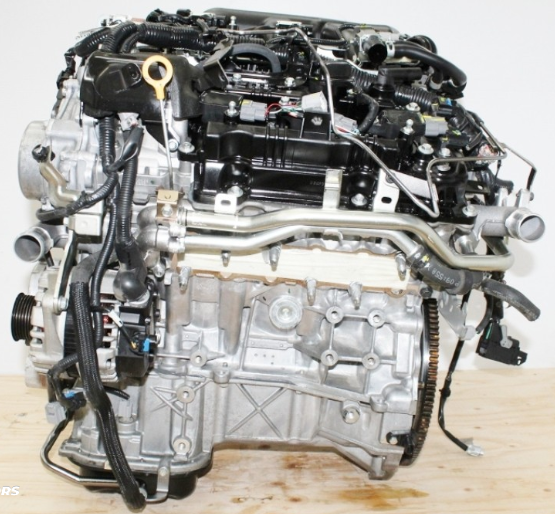
Engineering features of the VQ35DD include an all-aluminum alloy cylinder block and cylinder heads, contributing to its light weight and efficient heat dissipation. The most notable technological advancement is the Direct Injection Gasoline (DIG) system, which precisely injects fuel directly into the combustion chambers, optimizing fuel atomization and combustion efficiency. The engine also incorporates Nissan’s Continuously Variable Valve Timing Control System (CVTCS) on both intake and exhaust camshafts, allowing for dynamic adjustment of valve overlap to enhance power delivery across the RPM range and improve fuel economy. Further refinements include a micro-finished crankshaft and camshafts, along with lightweight pistons, to reduce internal friction and improve rotational balance.
The VQ35DD engine was primarily deployed in the following vehicle models and production years: the Infiniti QX60 (from 2017 onwards, including hybrid variants in some markets), the Nissan Pathfinder (R52 generation, from 2017 onwards), and the Infiniti Q50 Hybrid (earlier models, paired with an electric motor). These applications leveraged the VQ35DD’s blend of power and efficiency to deliver a refined driving experience suitable for luxury crossovers and sedans.
Technical Specifications
| Displacement | 3498 cc |
| Max Power | 284 hp (212 kW) @ 6400 RPM |
| Max Torque | 350 Nm (35.7 kg*m) @ 4800 RPM |
| Fuel Type | Premium Unleaded Gasoline (91+ RON recommended) |
| Fuel Consumption (combined) | Approx. 9.8-10.7 l/100 km (varies by vehicle and drivetrain) |
| Engine Type | V6, DOHC, Direct Injection |
| Compression Ratio | 10.3:1 |
| Cylinder Bore | 95.5 mm |
| Piston Stroke | 81.4 mm |
| Valvetrain | DOHC (Dual Overhead Camshaft) |
| Valves per Cylinder | 4 |
| Additional Info | Aluminum block and heads, Nissan Direct Injection Gasoline (DIG), Continuously Variable Valve Timing Control System (CVTCS) on intake & exhaust. |
Common Problems & Reliability
The VQ35DD, like many direct-injection engines, is susceptible to carbon buildup on the intake valves. Without the washing effect of fuel passing over the intake valves, oil vapor from the PCV system can deposit carbon, leading to reduced airflow, decreased performance, misfires, and potentially triggering check engine lights over time. Regular preventative measures or periodic cleaning may be necessary.
Another potential concern, though less common with diligent maintenance, relates to the Continuously Variable Valve Timing Control System (CVTCS) actuators or solenoids. Malfunctioning components can result in rough idling, reduced fuel economy, or a loss of power. While the VQ series is generally robust, some instances of timing chain stretch have been reported in exceptionally high-mileage examples, especially if oil change intervals were neglected, although the timing chain is typically designed for the engine’s lifespan.
Under proper care and adherence to manufacturer-recommended service schedules, the VQ35DD engine is known for its durability. A realistic expected service life before requiring a major overhaul typically exceeds 200,000 miles (320,000 km), with many units lasting significantly longer.
Maintenance Tips & Service Schedule
- Engine Oil & Filter: Utilize a high-quality, full-synthetic engine oil with the manufacturer-specified viscosity (e.g., 0W-20 or 5W-30). Due to the direct injection system, which can lead to increased fuel dilution and carbon production, oil and filter changes should be performed every 5,000 to 7,500 miles (8,000 to 12,000 km) or every 6 months, whichever comes first.
- Spark Plugs: Replace iridium-tipped spark plugs every 60,000 to 100,000 miles (96,000 to 160,000 km) to maintain optimal combustion efficiency.
- Timing Chain: The timing chain is designed to be a lifetime component and generally does not require replacement under normal conditions. However, it should be inspected for excessive slack or noise at high mileage intervals, typically beyond 150,000 miles (240,000 km).
- Coolant Flush: Perform a coolant system flush and refill with genuine Nissan/Infiniti long-life coolant every 5 years or 60,000 miles (96,000 km).
- Fuel System Cleaning: To mitigate carbon buildup common in direct injection engines, consider a professional fuel induction cleaning service every 30,000 to 50,000 miles (48,000 to 80,000 km). Using top-tier gasoline can also help reduce deposit formation.
- Air Filter: Inspect the engine air filter at every oil change and replace it as needed, or every 15,000-30,000 miles (24,000-48,000 km), depending on driving conditions.
Conclusion
The Infiniti VQ35DD engine stands as a capable and generally reliable powerplant within its class. It delivers a strong balance of performance and efficiency, making it a suitable choice for the luxury crossovers and sedans it powers. While the inherent characteristic of direct injection introduces the potential for intake valve carbon buildup, this issue can be effectively managed through vigilant maintenance and proactive fuel system cleanings. For a used vehicle buyer, an Infiniti or Nissan equipped with the VQ35DD is a safe and reliable option, provided there is a documented history of consistent and proper maintenance.