
Overview & Design Features
The Infiniti VQ30DE is a prominent 3.0-liter (2987 cc) naturally aspirated V6 gasoline engine, a distinguished member of Nissan’s highly acclaimed VQ engine family. Produced by Nissan Motor Corporation, this powerplant gained widespread recognition for its smoothness, responsiveness, and robust construction. Debuting in the mid-1990s, the VQ30DE quickly became a cornerstone for Nissan and Infiniti’s front-wheel-drive platforms, solidifying its reputation as a reliable and enthusiast-friendly engine for performance-oriented sedans.
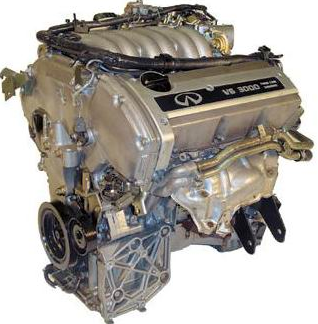
Engineered for efficiency and durability, the VQ30DE features an aluminum alloy cylinder block and cylinder heads, contributing to its relatively light weight and improved heat dissipation. This design choice enhances overall engine longevity and performance. Fuel delivery is managed by a sophisticated multi-point electronic fuel injection system, ensuring precise fuel metering for optimal combustion across various operating conditions. The valvetrain incorporates a Dual Overhead Camshaft (DOHC) configuration with four valves per cylinder, totaling 24 valves, which facilitates efficient airflow and contributes to its broad power band. Early versions of the VQ30DE generally utilized fixed valve timing, focusing on a balance of low-end torque and high-RPM power without relying on complex variable valve timing mechanisms present in later VQ iterations.
This specific iteration of the VQ engine saw extensive deployment across several key models. The VQ30DE primarily powered the 1996 to 1999 Infiniti I30, serving as its standard engine. Concurrently, it was a central powertrain for the fourth-generation (A32 chassis, 1995-1999) and early fifth-generation (A33 chassis, 2000-2001) Nissan Maxima in North America. Beyond these primary markets, the VQ30DE also saw duty in the Nissan Cefiro (A32 and A33 chassis) and various JDM (Japanese Domestic Market) models such as the Nissan Gloria and Cedric, showcasing its versatility and global presence within the Nissan/Infiniti lineup.
Technical Specifications
| Specification | Value |
|---|---|
| Displacement (cc) | 2987 |
| Max Power (hp (kW) @ RPM) | 190 (142) @ 5600 (for 1996-1999 I30/Maxima) |
| Max Torque (Nm (kg*m) @ RPM) | 278 (28.3) @ 4000 (for 1996-1999 I30/Maxima) |
| Fuel Type | Premium Unleaded Gasoline (91+ RON recommended) |
| Fuel Consumption (l/100 km) | Approximately 9.5-11.5 (Combined cycle, varies by vehicle) |
| Engine Type | V6, Naturally Aspirated |
| Compression Ratio | 10.0:1 |
| Cylinder Bore (mm) | 93.0 |
| Piston Stroke (mm) | 73.3 |
| Valvetrain | DOHC, 4 valves per cylinder |
| Valves per Cylinder | 4 |
| Additional Info | Aluminum block and heads, Multi-point electronic fuel injection. Member of the VQ engine family, multiple Ward’s 10 Best Engine awards. |
Common Problems & Reliability
The VQ30DE is generally regarded as a highly reliable engine, often praised for its longevity when properly maintained. However, like any internal combustion engine, it exhibits a few common weak points that owners should be aware of. One frequently reported issue involves increased oil consumption at higher mileages, often attributable to worn piston rings or a malfunctioning PCV (Positive Crankcase Ventilation) system. Regular monitoring of oil levels and timely PCV valve replacement can mitigate this problem.
Another common concern relates to the ignition system, specifically aging ignition coils, which can lead to misfires and reduced performance. The knock sensor is also known for premature failure, typically resulting in a check engine light and reduced engine power due as the ECU retards timing for protection. While not a critical failure, its location beneath the intake manifold makes replacement labor-intensive. Additionally, failures of the camshaft position sensor and crankshaft position sensor, although not unique to the VQ30DE, are known to occur, leading to starting issues or engine stalling. The timing chain system itself is robust and typically lasts the life of the engine, though tensioners and guides may show wear at extremely high mileages.
With diligent maintenance and timely addressing of minor issues, the VQ30DE engine is capable of achieving an impressive service life. It is not uncommon for well-maintained examples to surpass 250,000 miles (approximately 400,000 km) before requiring any significant internal overhaul, with many units reaching or exceeding 300,000 miles (480,000 km).
Maintenance Tips & Service Schedule
Maintaining the VQ30DE engine according to manufacturer specifications is crucial for maximizing its renowned longevity and performance. Adhering to a strict service schedule is paramount.
- Engine Oil & Filter: Regular oil changes are vital. It is recommended to use a high-quality 5W-30 synthetic or synthetic blend engine oil and replace the oil filter every 5,000 miles (8,000 km) or every 6 months, whichever comes first. This helps prevent sludge buildup and reduces wear on internal components.
- Spark Plugs: Replace iridium-tipped spark plugs every 60,000 to 100,000 miles (96,000 to 160,000 km). Use OEM or equivalent quality plugs to ensure optimal ignition performance and fuel efficiency.
- Coolant Flush: Perform a coolant flush and refill with Nissan Long Life Coolant or an equivalent high-quality ethylene glycol-based coolant every 60,000 miles (96,000 km) or 5 years. This prevents corrosion and maintains efficient engine cooling.
- PCV Valve: Inspect and consider replacing the PCV valve every 30,000 miles (48,000 km) to prevent excessive oil consumption and maintain proper crankcase ventilation.
- Air Filter: Replace the engine air filter every 15,000 to 30,000 miles (24,000 to 48,000 km), or more frequently in dusty environments, to ensure proper airflow and prevent contamination.
- Timing Chain: The VQ30DE utilizes a robust timing chain system designed for the life of the engine. Routine replacement is not typically required. However, inspection of the timing chain guides and tensioners may be warranted at very high mileages (>150,000 miles) if unusual noises are present.
- Fuel Filter: For most VQ30DE applications, the fuel filter is an in-tank unit designed for extended service life and typically does not require regular replacement under normal operating conditions.
Conclusion
The Infiniti VQ30DE stands as a testament to Nissan’s engineering prowess, offering a compelling blend of smooth power delivery, refined operation, and exceptional durability. Its robust construction and straightforward design contribute significantly to its high reliability and long service life. For a used vehicle buyer, an Infiniti I30 or Nissan Maxima equipped with the VQ30DE engine represents a generally safe and reliable choice, provided the vehicle has a documented history of consistent and proper maintenance. While susceptible to minor age-related issues common in high-mileage engines, these are typically well-understood and manageable. The VQ30DE’s legacy as a consistently top-ranked engine underscores its enduring value and performance credibility, making it a highly recommendable option for those seeking a dependable and enjoyable driving experience.