
Overview & Design Features
The Infiniti HR16DE engine, part of Nissan’s HR-series powertrain family, represents a significant engineering effort in efficient and reliable compact internal combustion engines. This naturally aspirated, 1.6-liter (1598cc) inline four-cylinder unit was developed by Nissan for its global compact vehicle platforms, contributing to the broader technological portfolio under the Infiniti brand umbrella. Introduced in the late 2000s, it rapidly gained recognition for its balanced performance, fuel efficiency, and robust construction, becoming a workhorse for various models designed to meet diverse market demands for accessible and economical motoring.
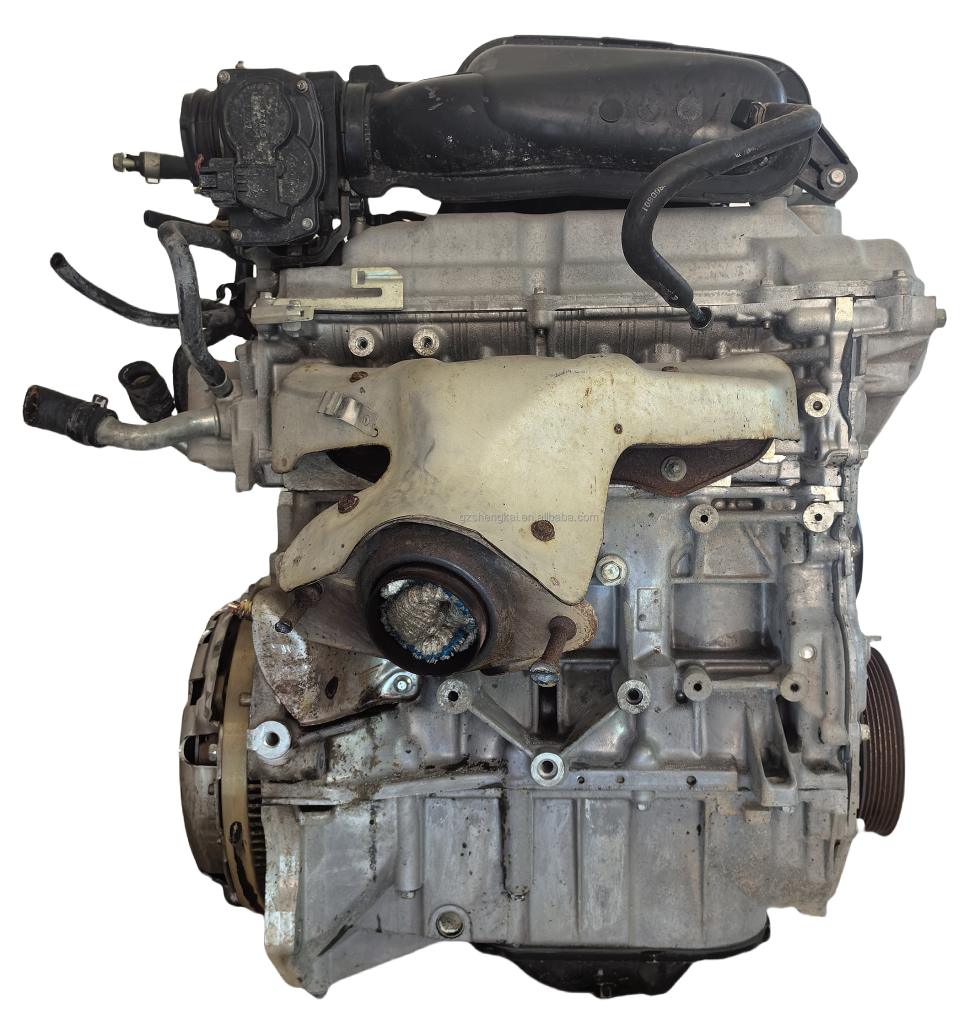
Engineered with a focus on lightweight design and thermal efficiency, the HR16DE features an all-aluminum construction for both its cylinder block and cylinder head. This contributes to reduced vehicle weight and improved fuel economy. It employs a multi-point (port) fuel injection system, which, while not direct injection, is finely tuned for optimal combustion and emissions control. A key technological feature is Nissan’s Continuously Variable Valve Timing Control (CVTC) system on both intake and exhaust camshafts. This technology dynamically adjusts valve overlap, enhancing torque delivery across the RPM range and improving fuel efficiency without sacrificing responsiveness.
While primarily a Nissan-branded engine in most consumer markets, the HR16DE’s design philosophy and manufacturing standards align with the broader engineering excellence expected from vehicles within the Infiniti corporate family. This engine has been widely deployed in various Nissan models globally, including the Nissan Juke (F15), Nissan Kicks, Nissan Qashqai/Dualis (J10 and J11 generations), Nissan Micra (K13 and K14 generations), and Nissan Note (E12 generation). Its widespread adoption underscores its versatility and suitability for a range of compact and subcompact applications, catering to a global customer base seeking dependability and economic operation.
Technical Specifications
| Displacement | 1598 cc |
| Max Power | 117 hp (86 kW) @ 6000 RPM |
| Max Torque | 158 Nm (16.1 kg*m) @ 4400 RPM |
| Fuel Type | Gasoline (Petrol), RON 91+ |
| Fuel Consumption (Combined) | ~6.5 l/100 km (Varies by vehicle and driving conditions) |
| Engine Type | Inline 4-Cylinder, DOHC |
| Compression Ratio | 10.7:1 |
| Cylinder Bore | 78.0 mm |
| Piston Stroke | 83.6 mm |
| Valvetrain | DOHC (Double Overhead Camshaft) |
| Valves per Cylinder | 4 |
| Additional Info | Multi-point Fuel Injection, Continuously Variable Valve Timing Control (CVTC) on intake & exhaust |
Common Problems & Reliability
The HR16DE engine is generally regarded as highly reliable, benefiting from a robust design and widespread production. However, like any internal combustion engine, it exhibits a few specific characteristics and potential issues that owners should be aware of. One common point of concern for some high-mileage units is the timing chain. While designed for the lifespan of the engine, extended oil change intervals or use of incorrect oil viscosity can accelerate wear, leading to chain rattle, particularly upon cold start. Failure to address this can result in significant engine damage. Another issue reported in some instances involves the VTC (Variable Valve Timing Control) actuators, specifically the cam phasers. Malfunctions can manifest as rough idling, reduced performance, or diagnostic trouble codes related to camshaft position, often due to sludge buildup or wear in the actuator mechanism. Lastly, a small number of older, high-mileage HR16DE engines may exhibit slightly elevated oil consumption. This is typically minor and often attributable to worn piston rings or valve stem seals, rather than a catastrophic failure, but requires diligent oil level monitoring.
Under proper and consistent maintenance, the Infiniti HR16DE engine has a realistic expected service life exceeding 250,000 to 300,000 kilometers before requiring a major overhaul. Numerous examples are known to surpass this mileage with diligent care.
Maintenance Tips & Service Schedule
Maintaining the HR16DE engine primarily revolves around adherence to manufacturer-recommended service intervals and using specified fluids to ensure its longevity and performance. Regular oil changes are paramount, recommended every 8,000 to 10,000 kilometers or every six months, whichever comes first. Use a high-quality synthetic or semi-synthetic motor oil with a viscosity grade of 0W-20 or 5W-30, depending on climate and manufacturer specifications. Consistent fresh oil is crucial for the hydraulic timing chain tensioner and VTC system.
Spark plugs should be inspected and replaced every 100,000 kilometers, utilizing the specified iridium-tipped plugs to ensure efficient combustion and prevent misfires. The engine coolant requires attention, with a flush and replacement typically advised every 60,000 kilometers or every four years, using the appropriate long-life coolant. While the timing chain is designed for the life of the engine, it should be audibly checked during services for any signs of rattle or excessive slack, especially beyond 150,000 kilometers. Air filters and fuel filters (if externally serviceable) should also be changed at regular intervals to maintain optimal engine breathing and fuel delivery.
Conclusion
The Infiniti HR16DE engine stands as a testament to practical and reliable automotive engineering. Its all-aluminum construction, coupled with continuously variable valve timing, delivers a commendable balance of fuel efficiency and adequate power for its segment. Despite a few minor potential issues common with high mileage, its overall reputation for durability is excellent. For a used vehicle buyer, an HR16DE-equipped car represents a safe and dependable choice, provided a comprehensive service history is available and proper maintenance has been rigorously followed. With consistent care, this engine offers a long and trouble-free operational life, making it a sound investment for economical and reliable transportation.