
Overview & Design Features
The Infiniti VQ37VHR engine represents a significant evolution within Nissan’s renowned VQ engine family, prominently featured in Infiniti and Nissan performance vehicles. Introduced in 2007, this naturally aspirated V6 power unit boasts a displacement of 3.7 liters (3696 cc) and is celebrated for its blend of high-revving performance, robust construction, and refined character. As a direct successor to the VQ35HR, the VQ37VHR enhanced power delivery and efficiency through advanced valve control technology, earning continued accolades within the automotive industry, including multiple appearances on Ward’s 10 Best Engines list, solidifying its reputation as a benchmark for V6 engineering.
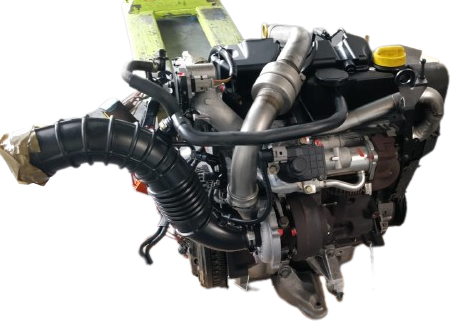
At its core, the VQ37VHR utilizes a lightweight yet durable aluminum alloy block and cylinder heads, ensuring optimal thermal management and a favorable power-to-weight ratio. Fuel delivery is managed by a multi-point port fuel injection system, known for its reliability and consistent performance. The defining technological highlight is the incorporation of Nissan’s advanced Variable Valve Event and Lift (VVEL) system on the intake camshafts, which precisely controls valve lift and duration for improved throttle response, increased power across the RPM range, and enhanced fuel efficiency. Complementing VVEL, the exhaust camshafts feature a Continuously Variable Valve Timing Control System (CVTCS), optimizing gas flow and further contributing to the engine’s broad torque curve.
The VQ37VHR engine was extensively deployed across Infiniti’s performance and luxury lines, as well as Nissan’s sports car offerings. It powered the Infiniti G37 coupe, sedan, and convertible from 2007 to 2013, the M37 (2011-2013), and the subsequent Q40 (2014-2015), Q50 3.7 (2014-2015), Q60 3.7 (2014-2015), and Q70 3.7 (2014-2019). SUV applications included the Infiniti EX37/QX50 (2013-2017) and FX37/QX70 (2013-2017). Notably, this engine was also the exclusive powerplant for the Nissan 370Z from its inception in 2009 through its production run, underscoring its performance credentials.
Technical Specifications
| Specification | Value |
|---|---|
| Displacement (cc) | 3696 |
| Max Power (hp (kW) @ RPM) | 330 (246) @ 7000 (typical, varies slightly by application) |
| Max Torque (Nm (kg*m) @ RPM) | 366 (37.3) @ 5200 (typical, varies slightly by application) |
| Fuel Type | Premium Unleaded (91+ RON) |
| Fuel Consumption (l/100 km) | ~10.7 (combined, varies by vehicle and driving conditions) |
| Engine Type | Naturally Aspirated V6, DOHC |
| Compression Ratio | 11.0:1 |
| Cylinder Bore (mm) | 95.5 |
| Piston Stroke (mm) | 86.0 |
| Valvetrain | Dual Overhead Camshafts (DOHC), 4 valves per cylinder |
| Valves per Cylinder | 4 (24 total) |
| Additional Info | Aluminum alloy block and heads, VVEL (Variable Valve Event and Lift) on intake, CVTCS (Continuously Variable Valve Timing Control System) on exhaust |
Common Problems & Reliability
The VQ37VHR is generally considered a highly reliable engine, capable of extended service life with proper maintenance. However, certain common issues have been identified. One notable concern, particularly in earlier production models (approximately 2007-2012), involves the paper gasket failure within the rear timing cover, known as the “gallery gasket.” This can lead to a significant drop in oil pressure, potentially causing internal engine damage if not addressed. Later models received revised metal gaskets, largely mitigating this issue.
Another common characteristic, particularly in higher mileage or aggressively driven examples, is elevated oil consumption. While not always indicative of a severe problem, regular monitoring of oil levels is essential to prevent low oil conditions. Lastly, valve cover gaskets can become brittle over time, leading to oil leaks into the spark plug wells. This issue is typically remedied by replacing the valve covers, often necessitating ignition coil and spark plug replacement concurrently due to oil contamination.
Under a regimen of diligent maintenance, including regular oil changes with appropriate viscosity lubricants, the VQ37VHR engine can reliably achieve service lives exceeding 250,000 kilometers (approximately 155,000 miles) and often well beyond 300,000 kilometers (over 185,000 miles) before requiring any major overhaul.
Maintenance Tips & Service Schedule
Adherence to a strict maintenance schedule is paramount for maximizing the longevity and performance of the VQ37VHR engine. Engine oil and filter changes should be performed every 8,000 to 12,000 kilometers (5,000-7,500 miles) or every six months, whichever comes first, utilizing a high-quality synthetic 5W-30 engine oil. Regular oil analysis can further inform optimal change intervals based on driving conditions.
Spark plugs (iridium-tipped) are recommended for replacement every 96,000 kilometers (60,000 miles) to maintain optimal ignition efficiency. The timing chain system is designed for the life of the engine and typically does not require scheduled replacement, provided oil change intervals are strictly observed. However, inspection for excessive slack or noise may be warranted at very high mileage. Engine coolant should be flushed and replaced every 96,000 kilometers (60,000 miles) or every five years, using Nissan Genuine Long Life Antifreeze/Coolant (blue) or an equivalent extended-life ethylene glycol-based coolant.
Air filters should be inspected regularly and replaced every 48,000 kilometers (30,000 miles) or more frequently in dusty environments. The drive belt (serpentine belt) should be inspected every 48,000 kilometers and replaced if cracks, fraying, or excessive wear are observed, typically between 96,000 and 160,000 kilometers (60,000-100,000 miles).
Conclusion
The Infiniti VQ37VHR engine stands as a testament to Nissan’s engineering prowess, offering a compelling combination of power, refinement, and remarkable reliability. For a used vehicle buyer, an engine equipped with the VQ37VHR is generally considered a safe and dependable choice. Prospective owners should prioritize vehicles with a comprehensive service history and evidence of regular oil changes to mitigate the risk of gallery gasket issues in earlier models and ensure proper lubrication throughout its lifespan. With diligent maintenance and awareness of its few common quirks, the VQ37VHR provides a rewarding and enduring driving experience.