
Overview & Design Features
The Lexus 1UZ-FE is a 4.0-liter (3969 cc) 90-degree V8 gasoline engine, engineered by Toyota for its luxury Lexus division. Introduced in 1989 as the flagship powerplant for the inaugural Lexus LS 400 (XF10 chassis), it marked a significant engineering achievement for Toyota, establishing the brand’s reputation for smoothness, reliability, and refinement. Its development involved a stringent quality control process and extensive testing, aiming to compete directly with established European luxury marques. The 1UZ-FE quickly became synonymous with the Lexus brand’s commitment to quiet operation and robust performance, propelling several of its key models through the 1990s and early 2000s.
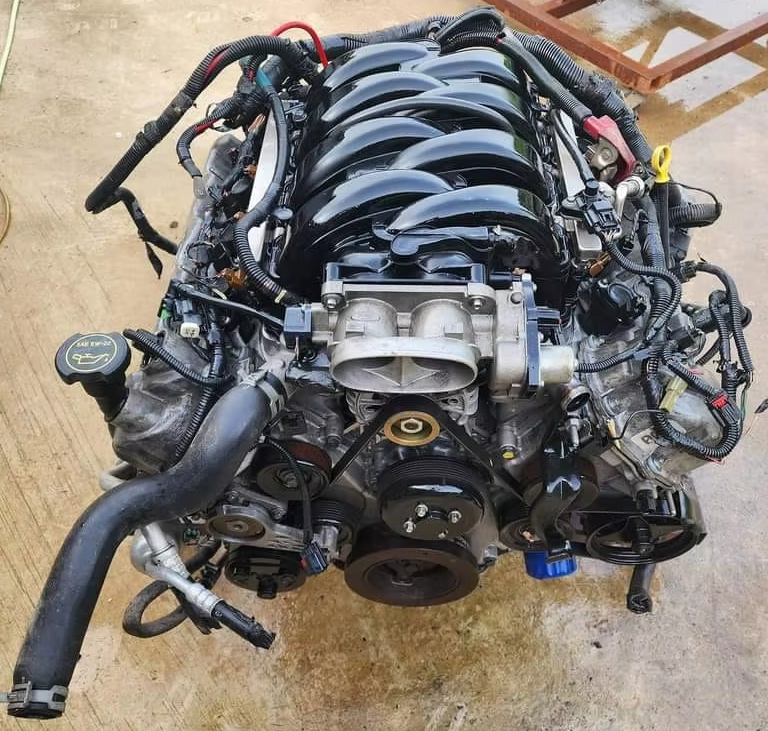
Constructed with an all-aluminum alloy cylinder block and cylinder heads, the 1UZ-FE utilized a dual overhead camshaft (DOHC) valvetrain with four valves per cylinder, totaling 32 valves. Early versions featured sequential multi-port electronic fuel injection (SFI) and a fixed valve timing system. Later iterations, notably from 1997 onwards, incorporated Toyota’s Variable Valve Timing with intelligence (VVTi) system, which enhanced both power output and fuel efficiency across the RPM range. The engine typically employed hydraulic lash adjusters, contributing to its quiet operation and reduced maintenance requirements for valve clearance. Its design prioritized low vibration and high durability, with an emphasis on precise manufacturing tolerances.
This venerable engine served as the primary motivator for several prominent Lexus and Toyota models across its production span. Key applications include the Lexus LS 400 (XF10, XF20 chassis) from 1989 to 2000, the Lexus SC 400 (Z30 chassis) luxury coupe from 1991 to 2000, and the Lexus GS 400 (S160 chassis) sport sedan from 1997 to 2000. Additionally, it powered several Japanese market Toyota models such as the Celsior (the Japanese market LS 400), Crown, and Soarer. The 1UZ-FE underwent various internal revisions and power upgrades, with the VVTi variant being the most technologically advanced and powerful factory version.
Technical Specifications
| Specification | Value |
|---|---|
| Displacement (cc) | 3969 cc (4.0 L) |
| Max Power (hp (kW) @ RPM) | 250 hp (186 kW) @ 5600 RPM (non-VVTi) 290 hp (216 kW) @ 6000 RPM (VVTi) |
| Max Torque (Nm (kg*m) @ RPM) | 353 Nm (36 kg*m) @ 4400 RPM (non-VVTi) 407 Nm (41.5 kg*m) @ 4000 RPM (VVTi) |
| Fuel Type | Gasoline (Premium Unleaded Recommended) |
| Fuel Consumption (l/100 km) | Approximately 11-14 L/100 km (combined, vehicle dependent) |
| Engine Type | 90-degree V8, DOHC |
| Compression Ratio | 10.0:1 (non-VVTi) 10.5:1 (VVTi) |
| Cylinder Bore (mm) | 87.5 mm |
| Piston Stroke (mm) | 82.5 mm |
| Valvetrain | Dual Overhead Camshafts (DOHC), 4 valves per cylinder, hydraulic lash adjusters (VVTi variants include Variable Valve Timing with intelligence) |
| Valves per Cylinder | 4 |
| Additional Info | Aluminum alloy block and heads, sequential multi-port electronic fuel injection (SFI), distributor ignition (early), coil-on-plug ignition (later). |
Common Problems & Reliability
The Lexus 1UZ-FE engine is renowned for its exceptional reliability and durability, frequently exceeding 250,000 miles (400,000 km) and often reaching 400,000-500,000 miles (640,000-800,000 km) or more with proper maintenance. Despite its robust nature, certain common issues may arise due to age and high mileage.
- Starter Motor Location: A significant maintenance concern is the starter motor’s location within the engine valley, beneath the intake manifold. While the starter itself is generally reliable, replacement can be labor-intensive and costly due to the extensive disassembly required. This is often addressed preemptively during major timing belt services.
- Harmonic Balancer Delamination: Over time, the rubber dampening material within the crankshaft harmonic balancer can degrade and delaminate, leading to excessive engine vibration, particularly at idle or lower RPMs. Failure to replace a delaminated balancer can result in damage to the crankshaft or other accessories.
- Oil Leaks: As with many engines of its vintage, the 1UZ-FE can develop oil leaks from various seals and gaskets over extended periods. Common culprits include the valve cover gaskets, oil pan gasket, and rear main seal. While not typically catastrophic, these leaks can be unsightly and necessitate repairs to prevent oil loss and potential damage to other components.
The inherent strength of the 1UZ-FE’s bottom end and cylinder heads contributes to its impressive service life, making it a benchmark for V8 longevity. Critical components such as the crankshaft, connecting rods, and pistons are generally robust and rarely fail under normal operating conditions.
Maintenance Tips & Service Schedule
Proactive and consistent maintenance is crucial to preserving the longevity and performance of the 1UZ-FE engine.
- Engine Oil & Filter: Regular oil changes are paramount. Engine oil and filter replacement should occur every 5,000 miles (8,000 km) or every 6 months, whichever comes first. Recommended viscosities typically range from 5W-30 to 10W-30, depending on climate and specific manufacturer recommendations. Using high-quality synthetic or semi-synthetic oil is beneficial.
- Timing Belt & Water Pump: The timing belt, along with the water pump, tensioner, and idler pulleys, represents a critical service. Replacement is recommended every 90,000-100,000 miles (145,000-160,000 km). Neglecting this service can lead to catastrophic engine damage if the belt fails.
- Spark Plugs: Replace iridium or platinum spark plugs every 60,000 miles (100,000 km) to maintain optimal ignition and fuel efficiency.
- Coolant Flush: The engine coolant should be flushed and replaced every 50,000 miles (80,000 km) or every 3-5 years to prevent corrosion and maintain cooling system efficiency. Use Toyota Super Long Life Coolant or an equivalent.
- Air Filter & Fuel Filter: The air filter should be inspected regularly and replaced every 15,000-30,000 miles (24,000-48,000 km). The fuel filter generally requires replacement every 30,000-60,000 miles (48,000-96,000 km), depending on fuel quality and vehicle usage.
- Power Steering Fluid: Periodically check and replace the power steering fluid, as the pumps on these engines can be prone to leaks or premature wear if fluid quality degrades.
Conclusion
The Lexus 1UZ-FE engine stands as a testament to exceptional Japanese automotive engineering, offering a rare combination of refined power, silk-smooth operation, and remarkable long-term reliability. For a used vehicle buyer, an engine powered by the 1UZ-FE represents an exceptionally safe and reliable choice, provided it has been adequately maintained throughout its life. Its strong internals and over-engineered components make it highly durable, even in high-mileage applications. Prospective buyers should prioritize vehicles with comprehensive service records, particularly confirming timely timing belt replacements and addressing any known oil leaks or starter motor issues. Its enduring reputation for robustness and performance ensures the 1UZ-FE remains a highly sought-after and respected powerplant in the automotive world.