
Overview & Design Features
The GMC LB4, often referenced alongside the Z79 RPO code for specific vehicle configurations, is a 4.3-liter (262 cubic inch) V6 internal combustion engine manufactured by General Motors. It stands as a significant derivative of the venerable Chevrolet small-block V8 architecture, effectively being a small-block V8 with the two front cylinders removed. Introduced in the mid-1980s, the LB4 became a ubiquitous workhorse, powering a wide range of light trucks, SUVs, and vans, and is recognized for its robust design and impressive low-end torque characteristics.
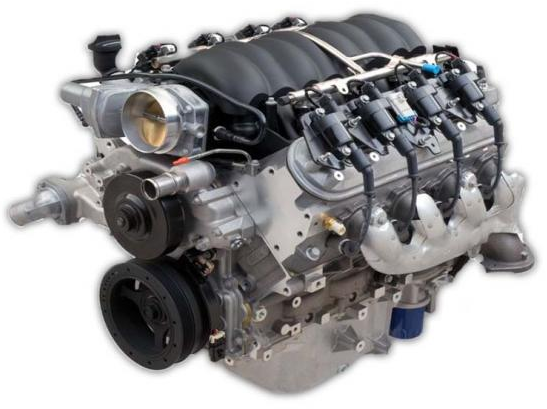
This engine features a durable cast iron block and cylinder heads, embodying a traditional overhead valve (OHV) pushrod design. This configuration utilizes a single camshaft located within the engine block to actuate two valves per cylinder. Early iterations of the LB4 employed Throttle Body Injection (TBI) systems, evolving to Central Port Injection (CPI) by the mid-1990s, and later to Sequential Fuel Injection (SFI) in its final production years. The absence of complex variable valve timing systems or direct injection contributes to its straightforward mechanical simplicity and renowned reliability, focusing instead on proven durability and ease of maintenance.
The LB4/Z79 engine was extensively deployed across various GM light-duty truck and SUV platforms. Its primary applications include the Chevrolet S-10 pickup and Blazer, GMC S-15 Sonoma pickup and Jimmy SUV, and the Chevrolet Astro and GMC Safari full-size vans. It also found its way into some entry-level C/K 1500 series trucks. Production spanned from approximately 1986 through the early 2000s, with later iterations like the LU3 evolving from its design, solidifying its legacy as a foundational powerplant for GM’s utility vehicle segment.
Technical Specifications
| Specification | Value |
|---|---|
| Displacement (cc) | 4300 |
| Max Power (hp (kW) @ RPM) | 160-200 hp (119-149 kW) @ 4000-4400 RPM (varies by year/tune) |
| Max Torque (Nm (kg*m) @ RPM) | 312-353 Nm (31.8-36.0 kg*m) @ 2800-3600 RPM (varies by year/tune) |
| Fuel Type | Gasoline (87 RON) |
| Fuel Consumption (l/100 km) | Refer to specific vehicle manufacturer’s documentation (typically 12-18 L/100km combined) |
| Engine Type | V6, naturally aspirated |
| Compression Ratio | 9.1:1 – 9.2:1 |
| Cylinder Bore (mm) | 101.6 |
| Piston Stroke (mm) | 88.4 |
| Valvetrain | Overhead Valve (OHV), Pushrod |
| Valves per Cylinder | 2 |
| Additional Info | Cast iron block & heads; Central Port Injection (CPI) or Sequential Fuel Injection (SFI) |
Common Problems & Reliability
The LB4/Z79 engine is largely known for its durability, but certain issues became prevalent over its long production run and high-mileage usage. A common concern is the propensity for the lower intake manifold gaskets to fail, often exacerbated by the use of DEX-COOL coolant which, if not properly maintained, can become acidic and degrade gasket materials. This can lead to external coolant leaks, internal coolant consumption, or oil contamination. Addressing this typically involves replacing the gaskets, often with improved aftermarket designs.
Another frequently reported problem, particularly with CPI-equipped models (mid-1990s to early 2000s), involves the “spider” fuel injector assembly. This complex unit, which feeds fuel to each cylinder via individual lines, can experience clogged nozzles, leaks, or electrical failures, leading to misfires, rough idle, poor fuel economy, and difficulty starting. Replacement with updated units, sometimes converting to a more traditional multi-port injector setup, is a common solution.
Furthermore, issues related to the ignition system, such as distributor gear wear or failure of the distributor cap and rotor, can occur with age and mileage, leading to intermittent misfires or stalling. The crankshaft position sensor and camshaft position sensor can also fail, though less frequently, causing no-start conditions or erratic engine behavior. Despite these specific points of potential failure, the core mechanical components of the LB4, such as the block, crankshaft, and connecting rods, are exceptionally robust, contributing to its reputation for high mileage. With proper and timely maintenance, an LB4/Z79 engine can realistically achieve a service life well over 200,000 to 300,000 miles before requiring a major overhaul.
Maintenance Tips & Service Schedule
Prolonging the life and reliability of the LB4/Z79 engine hinges on diligent adherence to a regular maintenance schedule. Engine oil and filter changes are critical; using a high-quality 5W-30 conventional or synthetic blend oil every 3,000-5,000 miles (5,000-8,000 km) is recommended, depending on driving conditions and oil type. Regular oil analysis can further optimize intervals.
Spark plugs should be inspected and replaced every 50,000-100,000 miles (80,000-160,000 km), with platinum or iridium plugs often offering longer service life. Air filters should be checked and replaced every 15,000-30,000 miles (24,000-48,000 km) to ensure optimal air intake. The fuel filter, often overlooked, should be replaced every 30,000 miles (48,000 km) to protect the fuel injection system. Coolant flushes with fresh, compatible antifreeze are advised every 5 years or 100,000 miles (160,000 km) to prevent cooling system degradation and protect the vulnerable intake manifold gaskets. It is also prudent to regularly inspect the distributor cap, rotor, and ignition wires for wear and replace as needed, typically every 50,000 miles (80,000 km).
Conclusion
The GMC LB4/Z79 engine stands as a testament to straightforward, durable engineering. Its robust construction and widespread use have established its reputation as a reliable and high-torque powerplant, particularly suited for utilitarian roles. While certain age-related issues, primarily concerning the intake manifold gaskets and CPI fuel system, are common and require attention, these are generally well-understood and addressable with readily available parts and skilled technicians. For a used vehicle buyer, an LB4-equipped vehicle represents a potentially safe and economical choice, provided there is evidence of consistent maintenance and that any known issues have been proactively addressed. Its longevity and simplicity make it an engine that can continue to serve reliably for many years and miles.