
Overview & Design Features
The GMC LM4 engine, commercially marketed as the Vortec 5300 LM4, is a 5.3-liter V8 powerplant belonging to General Motors’ acclaimed Generation III small-block engine family. Introduced in 2003 as a lighter alternative to the iron-block LM7, the LM4 was developed to provide high-displacement torque while minimizing front-end vehicle weight. This lightweight design allowed GM to install a powerful V8 into mid-size SUVs without compromising handling dynamics or exceeding front axle weight ratings. It remains a highly sought-after engine among custom car builders and enthusiasts due to its structural benefits and performance potential.
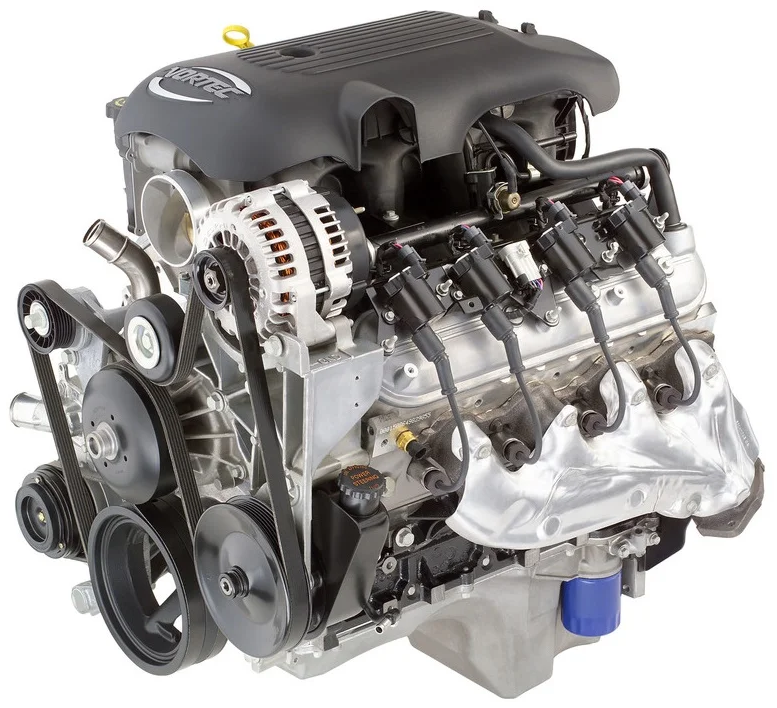
Engineering features of the LM4 revolve around its cast aluminum cylinder block and matching aluminum cylinder heads. This structural choice saved roughly 100 pounds (45 kg) compared to the standard iron-block Vortec engines of the same era. The engine relies on a traditional overhead valve (OHV) valvetrain with a single camshaft in the block, pushrods, and two valves per cylinder. It does not utilize variable valve timing (VVT) or cylinder deactivation, resulting in a simpler, highly durable mechanical layout. Fuel delivery is managed through a reliable sequential multi-port fuel injection system, which ensures precise fuel atomization and consistent power across the operating range.
The production run for the LM4 was remarkably short, spanning only the 2003 and 2004 model years. It was strictly reserved for premium mid-size sport utility vehicles and specialized configurations. The primary applications for this specific engine version include the GMC Envoy XL, GMC Envoy XUV, Chevrolet TrailBlazer EXT, Buick Rainier, Isuzu Ascender, and early production versions of the Chevrolet SSR retro roadster.
Technical Specifications
| Specification | Data / Value |
|---|---|
| Displacement (cc) | 5,327 cc (325 cu in) |
| Max Power (hp (kW) @ RPM) | 290 hp (216 kW) @ 5,200 RPM |
| Max Torque (Nm (kg*m) @ RPM) | 441 Nm (45 kg*m) @ 4,000 RPM |
| Fuel Type | Gasoline (Regular Unleaded) |
| Fuel Consumption (l/100 km) | 15.0 l/100 km (combined average, vehicle dependent) |
| Engine Type | Naturally Aspirated 90-degree V8 |
| Compression Ratio | 9.5:1 |
| Cylinder Bore (mm) | 96.01 mm |
| Piston Stroke (mm) | 92.00 mm |
| Valvetrain | OHV (Pushrod), 16-valve |
| Valves per Cylinder | 2 |
| Additional Info | Deep-skirt aluminum block, 6-bolt main bearing caps |
Common Problems & Reliability
The LM4 is widely regarded as a highly durable engine, but it is not immune to specific mechanical weaknesses. A significant concern involves the Castech cylinder heads. Some 2003–2004 heads, cast by the manufacturer Castech, developed micro-porosity cracks near the head bolts. This flaw allows engine coolant to slowly seep into the engine oil, leading to bearing damage if left unnoticed. Owners should monitor oil caps for milky residue and watch for unexplained coolant loss.
Another common issue is the failure of the knock sensors. Located under the intake manifold valley cover, water can collect in the sensor wells, corroding the electrical connections and triggering check engine lights. Furthermore, the exhaust manifold bolts are prone to shearing off at the cylinder head due to thermal expansion and contraction over time. Despite these issues, a well-maintained LM4 engine boasts an impressive expected service life, frequently surpassing 250,000 to 300,000 miles (400,000 to 480,000 km) before requiring a major overhaul.
Maintenance Tips & Service Schedule
To maximize the service life of the LM4, strict adherence to a professional maintenance schedule is essential. Engine oil changes should be performed every 5,000 miles (8,000 km) or six months. The manufacturer specifies high-quality 5W-30 engine oil. Utilizing a synthetic oil blend provides superior protection for the aluminum block and bearings against high-temperature stress.
The engine utilizes a robust single-row timing chain instead of a belt. This chain is designed to last the lifetime of the engine, but tensioners should be inspected if any front-cover noise develops. Spark plugs should be replaced every 100,000 miles (160,000 km) using premium iridium-tipped plugs to maintain optimal combustion efficiency. Additionally, a complete flush of the Dex-Cool coolant is required every 5 years or 150,000 miles (240,000 km) to prevent cooling system corrosion.
Conclusion
The GMC LM4 V8 engine represents a highly successful engineering effort to deliver small-block power in a lightweight package. For used car buyers, the LM4 is a very safe and reliable choice, provided the Castech cylinder head issue has been verified and ruled out. Its simplicity, lack of complex cylinder deactivation systems, and robust design make it an exceptionally dependable engine for daily driving, towing, or custom project swaps.