
Overview & Design Features
The GMC L18, officially known as the Vortec 8100, represents the final iteration of General Motors’ venerable big-block V8 engine family. Manufactured by GMC (a division of General Motors), this engine boasts a substantial displacement of 8.1 liters (496 cubic inches) and features a traditional overhead valve (OHV) V8 configuration. Introduced in 2001 as a direct replacement for the L29 Vortec 7400 (7.4L), the L18 was engineered specifically for heavy-duty applications, prioritizing immense torque output and robust durability in trucks, SUVs, and commercial vehicles.
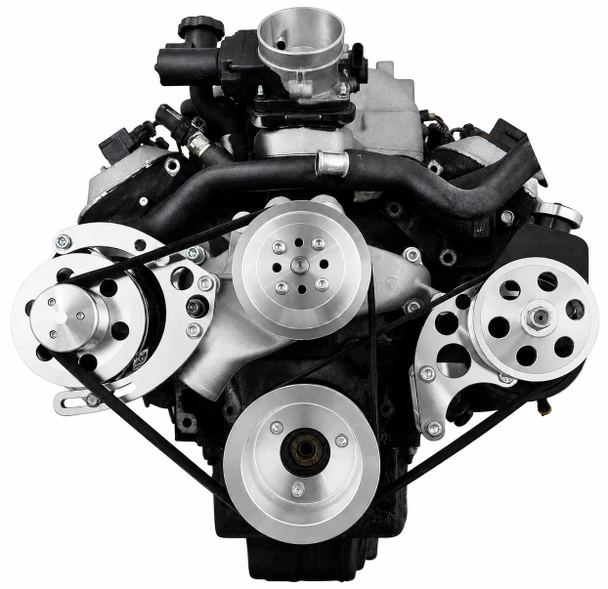
At its core, the L18 utilizes a sturdy cast-iron cylinder block and equally durable cast-iron cylinder heads, underscoring its design for high stress and longevity. Fuel delivery is managed by a sequential port fuel injection (SFI) system, which precisely meters fuel to each cylinder. The valvetrain employs a conventional pushrod design with hydraulic roller lifters, contributing to its reliable and low-maintenance operation without complex variable valve timing systems. This straightforward, robust engineering philosophy aligns with its intended use in demanding environments.
The GMC L18 engine was a prevalent powerplant in a variety of heavy-duty vehicles across the General Motors lineup during its production run from 2001 to 2009. Primary deployments included the Chevrolet Silverado and GMC Sierra 2500HD/3500HD pickup trucks, the Chevrolet Suburban 2500 and GMC Yukon XL 2500 full-size SUVs. Beyond consumer vehicles, it also found extensive use in commercial applications such as the Chevrolet Kodiak and GMC TopKick medium-duty trucks, various RV chassis (e.g., Workhorse), and specialized industrial equipment, reflecting its reputation for relentless performance.
Technical Specifications
| Specification | Value |
|---|---|
| Displacement (cc) | 8128 (496 cu in) |
| Max Power (hp (kW) @ RPM) | 340 hp (254 kW) @ 4200 RPM |
| Max Torque (Nm (kg*m) @ RPM) | 610 Nm (62 kg*m) @ 3200 RPM |
| Fuel Type | Gasoline (Regular Unleaded) |
| Fuel Consumption (l/100 km) | Refer to manufacturer’s technical documentation |
| Engine Type | V8, OHV (Overhead Valve) |
| Compression Ratio | 9.1:1 |
| Cylinder Bore (mm) | 107.95 mm |
| Piston Stroke (mm) | 111.00 mm |
| Valvetrain | Pushrod, Hydraulic Roller Lifters |
| Valves per Cylinder | 2 |
| Additional Info | Cast iron block and heads, Sequential Port Fuel Injection (SFI) |
Common Problems & Reliability
The GMC L18 engine is widely regarded for its inherent robustness and longevity, but like any powerplant, it exhibits certain common issues that warrant attention. One frequent concern involves leaks from the intake manifold gaskets. Over time, these gaskets can degrade, leading to external coolant leaks or internal vacuum leaks, potentially affecting engine performance and efficiency. Another common point of failure is the crankshaft position sensor (CPS), which can malfunction and cause intermittent stalling or no-start conditions. Additionally, exhaust manifold bolts are prone to breaking, particularly in high-mileage or rust-prone environments, due to repeated heat cycles and corrosion, leading to exhaust leaks and ticking noises.
Despite these known issues, the L18 is a remarkably durable engine. With diligent maintenance and proper care, it is not uncommon for these engines to achieve service lives exceeding 250,000 to 300,000 miles (400,000-480,000 km) before requiring a major overhaul. Its heavy-duty construction contributes significantly to this impressive lifespan.
Maintenance Tips & Service Schedule
Proactive maintenance is key to maximizing the lifespan and performance of the GMC L18 engine. Regular oil changes are critical; it is recommended to replace engine oil and filter every 5,000 to 7,500 miles (8,000-12,000 km) or every six months, utilizing a high-quality 5W-30 or 10W-30 conventional or synthetic blend motor oil depending on climate and vehicle usage. Spark plugs typically require replacement every 100,000 miles (160,000 km).
The L18 utilizes a robust timing chain, designed to last the life of the engine, thus eliminating the need for periodic timing belt replacements. However, inspection for excessive slack is advisable during high-mileage services. Coolant flushes should be performed every 5 years or 100,000 miles (160,000 km), using an extended-life coolant compatible with GM specifications (e.g., DEX-COOL). The fuel filter should be replaced every 30,000 to 50,000 miles (48,000-80,000 km), and the air filter annually or every 15,000-30,000 miles, depending on driving conditions.
Conclusion
The GMC L18 Vortec 8100 engine stands as a testament to traditional American big-block power and durability. Its robust construction and high torque output make it an exceptionally capable engine for towing, hauling, and commercial applications. For a used vehicle buyer seeking a reliable heavy-duty truck or SUV, a vehicle equipped with the L18 can be a safe and dependable choice. While potential buyers should be aware of common age-related issues like intake manifold leaks and exhaust manifold bolt failures, these are generally manageable concerns. When supported by a history of consistent and proper maintenance, the L18 offers significant longevity and powerful performance, making it a highly regarded and enduring powerplant.