
Overview & Design Features
The GMC L05 engine is a widely recognized 5.7-liter (350 cubic inch) V8 gasoline engine, a prominent member of General Motors’ venerable small-block engine family. Manufactured between approximately 1987 and 1996, the L05 served as a foundational powerplant for a vast array of light trucks, SUVs, and full-size sedans under the Chevrolet and GMC marques. Its introduction marked a significant step in GM’s transition from carbureted fuel delivery to electronic fuel injection, offering improved emissions control, cold-start performance, and fuel efficiency compared to its predecessors. The L05 engine built a reputation for its robust design, ease of maintenance, and broad availability, making it a workhorse for both commercial and personal use vehicles during its production run.
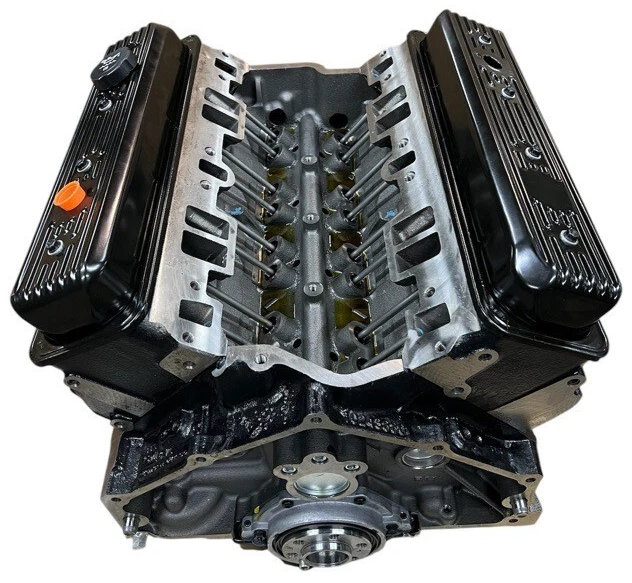
Engineered for durability and straightforward operation, the L05 features a 90-degree V8 configuration with a heavy-duty cast iron block and matching cast iron cylinder heads. This robust construction contributes significantly to its longevity. Fuel delivery is handled by a Throttle Body Injection (TBI) system, which centrally sprays fuel into the intake manifold, mimicking the simplicity of a carburetor but with electronic precision. The valvetrain consists of a traditional overhead valve (OHV) pushrod design utilizing hydraulic flat-tappet camshafts, actuating two valves per cylinder. This straightforward architecture foregoes complex technologies like variable valve timing, prioritizing reliability and cost-effectiveness.
The L05 engine was extensively deployed across GM’s truck and full-size vehicle lines during the late 1980s and early to mid-1990s. Primary applications include the GMT400 platform pickup trucks, specifically the Chevrolet C/K 1500, 2500, and 3500 series, and their GMC Sierra counterparts. It also powered the Chevrolet Suburban, Tahoe (K5 Blazer prior to 1995), GMC Yukon, and various G-series vans. Furthermore, the L05 was found in full-size passenger cars such as the Chevrolet Caprice, Buick Roadmaster, and Cadillac Fleetwood Brougham, demonstrating its versatility across different vehicle segments.
Technical Specifications
| Specification | Value |
|---|---|
| Displacement (cc) | 5733 cc |
| Max Power (hp (kW) @ RPM) | 190 hp (142 kW) @ 4000 RPM |
| Max Torque (Nm (kg*m) @ RPM) | 393 Nm (40 kg*m) @ 2400 RPM |
| Fuel Type | Gasoline (Unleaded Recommended) |
| Fuel Consumption (l/100 km) | 16-20 l/100 km (Varies by application) |
| Engine Type | V8, 90-degree, Naturally Aspirated |
| Compression Ratio | 9.3:1 |
| Cylinder Bore (mm) | 101.6 mm |
| Piston Stroke (mm) | 88.4 mm |
| Valvetrain | Overhead Valve (OHV), Pushrod, Hydraulic Flat Tappet |
| Valves per Cylinder | 2 |
| Additional Info | Throttle Body Injection (TBI) |
Common Problems & Reliability
The L05 engine is generally regarded as highly reliable, but specific issues can arise due to age and high mileage. A common weak point involves the Throttle Body Injection (TBI) unit, where injector pod seals can leak, causing rich running conditions or fuel odors, and the throttle shaft bushings can wear, leading to vacuum leaks and erratic idle. Distributor gear wear is another known concern, as the gear, driven by the camshaft, can degrade over time, affecting ignition timing and potentially leading to no-start conditions if severe. Oil leaks from valve covers, the oil pan, and particularly the rear main seal are also prevalent on higher mileage units, typical of older cast iron designs. EGR valve clogging is frequent, contributing to rough idle and hesitation. With diligent maintenance, an L05 engine can realistically exceed 250,000 to 300,000 miles (400,000 to 480,000 km) before requiring a major overhaul.
Maintenance Tips & Service Schedule
Maintaining the L05 engine emphasizes adherence to a consistent schedule and awareness of its specific design. Engine oil and filter changes should occur every 5,000 km (3,000 miles) or every six months, using a high-quality 5W-30 or 10W-30 conventional motor oil formulated with adequate Zinc Dialkyldithiophosphate (ZDDP) for its flat-tappet camshaft. Spark plugs (copper core recommended) require replacement every 50,000 km (30,000 miles), along with inspection or replacement of the distributor cap and rotor. The fuel filter should be replaced every 25,000-50,000 km (15,000-30,000 miles). Coolant flushes are recommended every 2-3 years or 50,000 km (30,000 miles), using silicate-based green antifreeze unless the system has been thoroughly flushed and converted to a different type. The PCV valve should be inspected and replaced as needed, typically every 50,000 km (30,000 miles). Regular inspection of vacuum lines and cleaning of the TBI unit are also beneficial for optimal performance.
Conclusion
The GMC L05 engine represents a robust and dependable choice for a used vehicle buyer seeking simplicity and proven reliability. Its cast iron construction, straightforward TBI fuel system, and durable OHV design translate into excellent longevity when properly maintained. While some age-related issues are common, these are generally well-documented and repairable without excessive cost, often making it an ideal engine for DIY enthusiasts. For those prioritizing a workhorse engine over cutting-edge technology, the L05 offers a strong, easily serviceable, and generally safe and reliable option for a used truck or SUV.