
Overview & Design Features
The MG 16K4F is a specific variant within the widely recognized Rover K-series engine family, primarily associated with vehicles manufactured by MG Rover. This 1.6-liter (1588 cc) inline-four, naturally aspirated petrol engine was a cornerstone powerplant for many of the company’s compact and medium-sized models during the early to mid-2000s. Renowned for its lightweight all-aluminum construction and compact design, the K-series, including the 16K4F, was initially an advanced design for its era, offering a good balance of performance and fuel efficiency for the vehicles it powered.
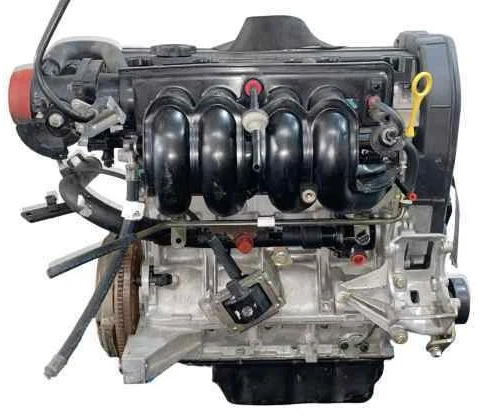
Engineered with an all-aluminum alloy cylinder block and cylinder head, the 16K4F utilizes a “wet liner” design for its cylinders, which contributes to its light mass and serviceability. Fuel delivery is managed by a multi-point electronic fuel injection (MPFI) system, providing precise fuel metering. The valvetrain features a Double Overhead Camshaft (DOHC) configuration with four valves per cylinder, totaling 16 valves. This setup enhances volumetric efficiency, allowing for better breathing and power output across the rev range, without incorporating variable valve timing technology in this specific iteration.
The MG 16K4F engine was primarily deployed in several key models under the MG and Rover brands. Its most notable applications include the MG ZR 1.6, produced from 2001 to 2005, and the MG ZS 1.6, also spanning the 2001-2005 period. Beyond the MG marque, it powered the Rover 25 1.6 and Rover 45 1.6 variants during their respective production runs, typically from 1999/2000 through to the cessation of MG Rover production in 2005. This engine was a common choice for trims seeking a balance between the entry-level 1.4L and higher-performance 1.8L K-series options.
Technical Specifications
| Displacement (cc) | 1588 |
| Max Power (hp (kW) @ RPM) | 107 hp (79 kW) @ 6000 RPM |
| Max Torque (Nm (kg*m) @ RPM) | 145 Nm (14.8 kg*m) @ 4500 RPM |
| Fuel Type | Unleaded Petrol (minimum 95 RON) |
| Fuel Consumption (l/100 km) | Approximately 7.5 (Combined cycle, model dependent) |
| Engine Type | Inline-4, Naturally Aspirated |
| Compression Ratio | 10.5:1 |
| Cylinder Bore (mm) | 80.0 |
| Piston Stroke (mm) | 79.0 |
| Valvetrain | DOHC 16-Valve |
| Valves per Cylinder | 4 |
| Additional Info | Aluminum alloy block and head, Wet cylinder liners |
Common Problems & Reliability
The MG 16K4F, like other engines in the K-series family, is notoriously associated with specific reliability concerns, the most prominent being head gasket failure (HGF). This issue often stems from a combination of factors including thermal expansion differences between the aluminum block and cylinder head, the original design of the head gasket, and the use of plastic locating dowels. Symptoms typically include unexplained coolant loss, engine overheating, white exhaust smoke, loss of power, and often, coolant mixing with engine oil, forming a “mayonnaise-like” sludge. If left unaddressed, HGF can lead to severe engine damage, including cylinder head warping or cracking.
Another common weak point is the original plastic thermostat housing and inlet manifold gasket. These components are prone to cracking or degrading over time, leading to coolant leaks that exacerbate the risk of overheating and HGF. Furthermore, failures of the water pump, often due to bearing wear or impeller degradation, are also reported and contribute to the engine’s susceptibility to overheating. While a well-maintained 16K4F can achieve upwards of 120,000 to 150,000 miles, the realistic expected service life before requiring a major overhaul (often including a revised head gasket and cooling system components) is generally between 60,000 and 90,000 miles if the common failure points are not proactively addressed.
Maintenance Tips & Service Schedule
Proactive and meticulous maintenance is crucial for maximizing the longevity and reliability of the MG 16K4F engine. Regular engine oil changes are paramount, ideally every 10,000 kilometers (6,000 miles) or every six months, whichever comes first. Recommended oil viscosity is typically 5W-30 or 10W-40, adhering to appropriate ACEA specifications for the engine’s operating environment. Consistent monitoring of the coolant level is highly advised, and any unexplained drops should be investigated immediately.
The timing belt is a critical component, requiring replacement every 90,000 kilometers (54,000 miles) or every six years, whichever occurs first. It is strongly recommended to replace the water pump simultaneously with the timing belt, as a failing water pump can lead to catastrophic engine damage. Coolant flushes should be performed every two to three years or 48,000 kilometers (30,000 miles), using an OAT (Organic Acid Technology) type coolant specified for aluminum engines. Spark plugs typically require replacement every 48,000 kilometers (30,000 miles). Crucially, after any coolant system work, ensuring proper air bleeding of the system is vital to prevent airlocks and subsequent overheating.
Conclusion
The MG 16K4F engine, while offering a spirited and lightweight driving experience in its host vehicles, presents a nuanced proposition for a used vehicle buyer. Its historical reputation for head gasket issues necessitates careful consideration. However, if a specific vehicle’s service history clearly documents a professional “multi-layer steel” (MLS) head gasket upgrade, along with a revised cooling system (including metal dowels, a quality water pump, and a robust thermostat housing), then the engine can prove to be a reasonably reliable choice. Buyers should prioritize examples with comprehensive maintenance records demonstrating regular servicing and addressing these known weak points, as a well-maintained and upgraded 16K4F can provide many more miles of enjoyable motoring.