
Overview & Design Features
The MG 18K4C is a naturally aspirated 1.8-liter (1796 cc) inline-four petrol engine, a significant member of the highly successful Rover K-Series engine family. Manufactured by Powertrain Ltd., a subsidiary of MG Rover Group, it represents a lightweight and compact design. Its historical significance stems from its widespread application across various Rover and MG models, known for its decent power-to-weight ratio and respectable fuel economy, becoming a staple powerplant for numerous British sports cars and sedans during its production run.
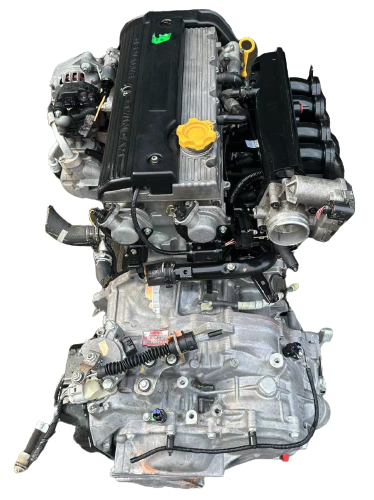
Engineering features of the 18K4C include an all-alloy construction, with both the cylinder block and cylinder head cast from aluminum. This design contributes to its low weight, benefiting vehicle dynamics. The engine utilizes a multi-point electronic fuel injection (MPI) system, ensuring precise fuel delivery and combustion. It features a double overhead camshaft (DOHC) valvetrain, actuating 16 valves (four per cylinder), which enhances breathing efficiency and power output compared to earlier single overhead camshaft designs within the K-Series lineage. Specific variants of the K-series featured VVC (Variable Valve Control), but the standard 18K4C does not incorporate this technology, instead relying on fixed valve timing for reliability and cost-effectiveness.
The 18K4C engine was prominently deployed in a range of vehicles. Key applications include the MG ZS (2001-2005), MG ZR (2001-2005), and the MG TF (2002-2005), often in 120 PS (118 hp) specification. It also powered the Rover 75 (1999-2005) and Rover 45 (1999-2005). Notably, a version of the K-Series 1.8L was famously used in the Lotus Elise Series 1 and Series 2 (up to 2004), demonstrating its suitability for lightweight sports car applications, albeit often with performance-tuned components differing from the standard 18K4C.
Technical Specifications
| Specification | Value |
|---|---|
| Displacement | 1796 cc |
| Max Power | 118 hp (88 kW) @ 5500 RPM |
| Max Torque | 160 Nm @ 2750 RPM |
| Fuel Type | Petrol (Unleaded 95 RON) |
| Fuel Consumption (combined) | Approx. 7.8-8.5 l/100 km (vehicle dependent) |
| Engine Type | Inline 4-cylinder, DOHC, Naturally Aspirated |
| Compression Ratio | 10.5:1 |
| Cylinder Bore | 80.0 mm |
| Piston Stroke | 89.3 mm |
| Valvetrain | Belt-driven DOHC |
| Valves per Cylinder | 4 |
| Additional Info | All-alloy construction, Multi-Point Injection (MPI) |
Common Problems & Reliability
- Head Gasket Failure (HGF): This is the most widely recognized and significant weak point of the K-Series engines, including the 18K4C. The original composite head gasket and the engine’s “wet liner” design, coupled with cooling system vulnerabilities, made it susceptible to failure, particularly under sustained high temperatures or inadequate coolant levels. Symptoms include coolant loss, overheating, milky oil, and exhaust gas in the coolant reservoir. A common solution involves upgrading to a multi-layer steel (MLS) head gasket and fitting improved dowels and a low-coolant alarm.
- Cooling System Component Failure: Beyond the head gasket, plastic components within the cooling system, such as the thermostat housing, bleed screws, and some radiator end tanks, are prone to cracking and leaks due to heat cycling and material degradation over time. Regular inspection and proactive replacement of these items are critical to preventing coolant loss and subsequent engine damage.
- Water Pump Bearing Wear: The water pump, often driven by the timing belt, can develop bearing play or leakage, especially on higher mileage engines. Failure can lead to overheating and potential timing belt issues if the pump seizes.
With diligent maintenance, particularly addressing the head gasket issue with an uprated replacement and ensuring the cooling system remains in robust condition, the 18K4C engine can offer a realistic service life extending beyond 150,000 miles (240,000 km) before requiring a major overhaul.
Maintenance Tips & Service Schedule
- Engine Oil and Filter: Replacement is recommended every 10,000 km (6,000 miles) or annually, whichever comes first. Use a good quality 10W-40 semi-synthetic or 5W-40 full-synthetic engine oil, meeting API SL/SM or ACEA A3/B4 specifications.
- Timing Belt and Water Pump: Critical maintenance item. The timing belt, tensioner, and idlers, along with the water pump, must be replaced every 90,000 km (56,000 miles) or every 6 years, whichever occurs first. Failure to adhere to this interval will almost certainly result in catastrophic engine damage.
- Spark Plugs: Replace iridium or platinum-tipped spark plugs every 40,000 km (25,000 miles), or standard copper plugs more frequently, following manufacturer guidelines.
- Coolant System: Flush and replace engine coolant every 2-3 years, utilizing a high-quality OAT (Organic Acid Technology) coolant specified for aluminum engines. Regular checks of coolant level and condition are paramount.
- Fuel Filter: Replace the fuel filter every 40,000 km (25,000 miles) to maintain optimal fuel delivery and protect injectors.
- Air Filter: Inspect and replace the air filter annually or every 20,000 km (12,000 miles), more frequently in dusty conditions.
Conclusion
The MG 18K4C engine, despite its infamous head gasket vulnerability, can be a safe and reliable choice for a used vehicle buyer, provided its known weaknesses have been professionally addressed. Engines that have received a modern multi-layer steel (MLS) head gasket upgrade and demonstrate a well-maintained cooling system typically offer robust performance. Prospective buyers should prioritize a comprehensive pre-purchase inspection by a specialist familiar with K-Series engines, with particular attention to coolant integrity, service history regarding the timing belt, and evidence of previous head gasket work. With proactive maintenance, the 18K4C delivers an engaging driving experience, characteristic of its British sports car heritage.