
Overview & Design Features
The MG LIY engine is a modern, efficient 1.5-liter turbocharged inline-four gasoline engine developed under the joint venture between SAIC Motor and General Motors. Representing the Small Gasoline Engine (SGE) family, this powerplant balances robust performance with strict environmental compliance. Since its introduction, the LIY has served as a cornerstone of MG’s powertrain strategy, powering mid-sized crossovers and sedans across international markets.
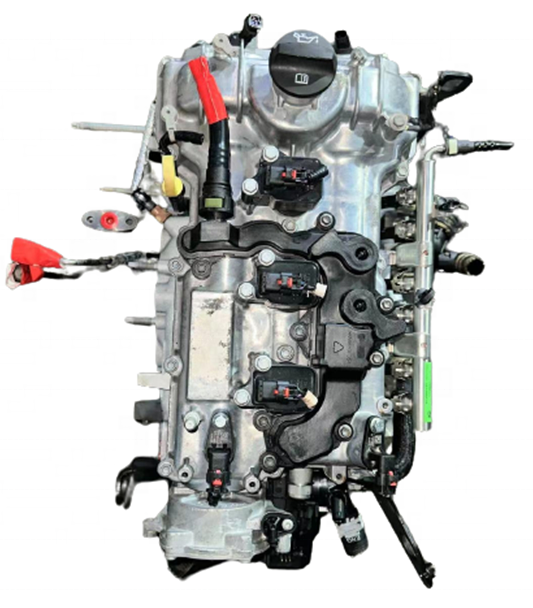
Engineered with modern efficiency standards in mind, the LIY features a lightweight aluminum cylinder block and cylinder head, aiding thermal management and vehicle weight reduction. It utilizes a high-pressure direct fuel injection system that sprays fuel directly into the combustion chamber to optimize atomization. This system is paired with double overhead camshafts (DOHC) and a dual variable valve timing (DVVT) setup, enabling precise control over valve overlap to maximize torque at low engine speeds.
The MG LIY engine has been primarily deployed in several prominent SAIC-produced vehicles. Most notably, it serves as the primary powertrain option for the first-generation MG HS crossover (2018–present) and the second-generation MG 6 fastback sedan (2017–present). It is also used in select Roewe SUVs, such as the RX5, typically mated to either a six-speed manual or a seven-speed dual-clutch transmission (DCT).
Technical Specifications
| Displacement (cc) | 1490 cc |
| Max Power (hp (kW) @ RPM) | 169 hp (124 kW) @ 5500 RPM |
| Max Torque (Nm (kg*m) @ RPM) | 250 Nm (25.5 kg*m) @ 1700–4300 RPM |
| Fuel Type | Petrol (Gasoline) |
| Fuel Consumption (l/100 km) | 6.8 – 7.3 l/100 km |
| Engine Type | Turbocharged Inline-4, Direct Injection |
| Compression Ratio | 10.0:1 |
| Cylinder Bore (mm) | 74.0 mm |
| Piston Stroke (mm) | 86.6 mm |
| Valvetrain | DOHC, Chain Drive with Dual VVT |
| Valves per Cylinder | 4 |
| Additional Info | Co-developed with General Motors (SAIC SGE family) |
Common Problems & Reliability
- Carbon Buildup on Intake Valves: The most prevalent issue is carbon accumulation on the intake valves, which occurs because fuel does not wash over the valves in direct-injection systems. Over time, this accumulation restricts airflow, leading to rough idling, decreased performance, and increased fuel consumption. Periodic intake tract cleaning is necessary to mitigate this effect.
- Low-Speed Pre-Ignition (LSPI): There is a risk of fuel-air mixture premature ignition under high loads at low engine speeds. LSPI can cause severe engine knock, potentially leading to cracked pistons or bent connecting rods. Using high-quality fuel and specialized lubricants designed to resist LSPI is vital to prevent this damage.
- Turbocharger Wastegate Actuator Wear: The electronic wastegate actuator on the turbocharger has been reported to fail prematurely in some high-mileage units, causing a loss of boost pressure and triggering engine fault codes.
Under a proper maintenance regimen, the realistic expected service life of the MG LIY engine before requiring a major overhaul is approximately 200,000 to 250,000 kilometers. Achieving this lifespan depends heavily on strict adherence to service intervals and using high-grade fluids.
Maintenance Tips & Service Schedule
- Engine Oil: Use premium full-synthetic oil with a viscosity grade of 5W-30 or 0W-20, adhering strictly to the Dexos 1 Gen 2 or Gen 3 specifications. These oils contain additives to combat LSPI. The oil and filter must be changed every 10,000 kilometers or 12 months.
- Spark Plugs: Spark plugs should be replaced every 40,000 to 50,000 kilometers to maintain ignition efficiency and prevent misfires under boost.
- Timing Chain: While designed to last the lifetime of the engine, the timing chain and guides should be visually inspected for wear or stretch at 150,000 kilometers.
- Coolant Flush: The cooling system must be flushed, and the coolant replaced, every 5 years or 100,000 kilometers to protect the aluminum cylinder block from corrosion.
Conclusion
In conclusion, the MG LIY engine represents a technologically competitive, fuel-efficient powerplant that delivers adequate performance for daily driving. For a used vehicle buyer, it presents a safe choice, provided there is a verifiable service history proving consistent oil changes with the correct specifications. Prospective buyers should inspect for carbon buildup and verify turbocharger function before finalizing a purchase.