
Overview & Design Features
The MG NLE (NetBlue Large Engine) is a 2.0-liter turbocharged four-cylinder inline gasoline engine designed and manufactured by SAIC Motor, the parent company of MG. Positioned as a flagship power unit within the NetBlue powertrain family, this engine was introduced to meet the demand for higher-torque applications in mid-size sport utility vehicles and executive sedans. Representing a significant step forward in modern Chinese automotive engineering, the NLE series successfully balances robust power delivery with stringent global emission standards, making it a critical asset for MG’s modern model lineup.
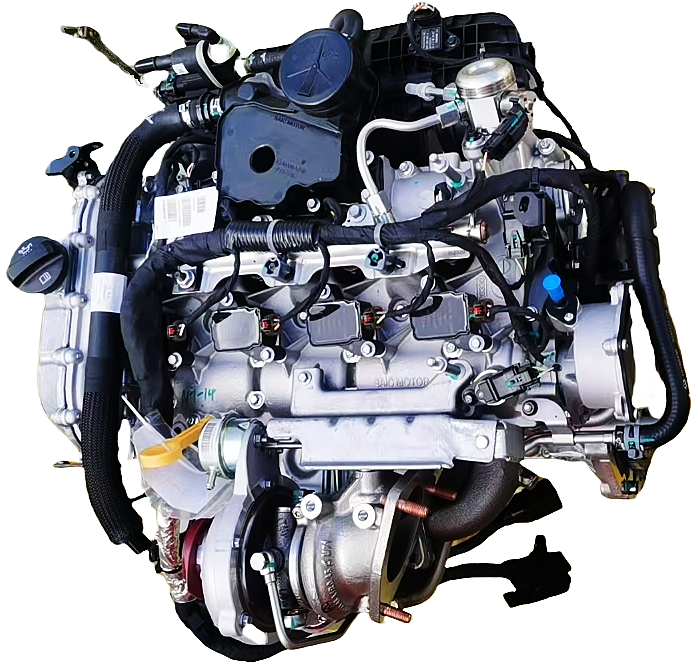
From an engineering perspective, the MG NLE utilizes a lightweight aluminum alloy cylinder block and cylinder head, which effectively reduces the front-end mass of the vehicle to optimize weight distribution. Fuel delivery is managed by a high-pressure gasoline direct injection (GDI) system, injecting fuel directly into the combustion chambers at up to 200 bar to maximize thermal efficiency. This setup is complemented by a responsive twin-scroll turbocharger and a dual overhead camshaft (DOHC) valvetrain configuration featuring dual variable valve timing (DVVT) on both the intake and exhaust sides.
This engine was officially deployed in several high-specification vehicles starting around 2015. Key applications include the MG GS (specifically the 2.0T Trophy trims) and the first-generation MG HS (2.0 TGI variants). It has also found its way into sibling models from SAIC brands, including the Roewe RX5 and RX8. In these configurations, the engine is typically mated to a wet six-speed or seven-speed dual-clutch transmission (DCT) to efficiently transfer the performance to either a front-wheel-drive or an intelligent all-wheel-drive system.
Technical Specifications
| Displacement (cc) | 1995 cc |
| Max Power (hp (kW) @ RPM) | 220 hp (162 kW) @ 5000 – 5300 RPM |
| Max Torque (Nm (kg*m) @ RPM) | 350 Nm (35.7 kg*m) @ 2500 – 4000 RPM |
| Fuel Type | Petrol (95 RON / Premium Unleaded) |
| Fuel Consumption (l/100 km) | 8.2 l/100 km (combined cycle, vehicle dependent) |
| Engine Type | Inline-4, Turbocharged, GDI |
| Compression Ratio | 10.0:1 |
| Cylinder Bore (mm) | 88.0 mm |
| Piston Stroke (mm) | 82.0 mm |
| Valvetrain | DOHC, Dual Variable Valve Timing (DVVT) |
| Valves per Cylinder | 4 |
| Additional Info | Twin-scroll turbocharger and integrated exhaust manifold |
Common Problems & Reliability
While the MG NLE is built to modern engineering standards, it exhibits a few known vulnerabilities that owners and mechanics have identified over years of operation. The primary concern relates to its gasoline direct injection design, which lacks the self-cleaning effect of port injection; this makes the engine susceptible to carbon buildup on the intake valves over high mileage, occasionally causing rough idling and reduced throttle response. Additionally, some high-mileage units have experienced premature wear of the turbocharger oil seals or oil feed lines, typically accelerated by aggressive driving styles without proper engine warm-up and cool-down cycles.
Under a strict regime of preventative maintenance and proper lubricant care, the realistic expected service life of the MG NLE engine is estimated to be between 200,000 and 250,000 kilometers before requiring any major mechanical overhaul.
Maintenance Tips & Service Schedule
- Engine Lubrication: Use high-quality full synthetic oil matching the factory specification (typically SAE 5W-30 or 0W-30, meeting ACEA C3 or dexos2 standards). The oil and filter should be changed every 7,500 to 10,000 kilometers or once a year, whichever comes first.
- Spark Plugs: Replace the OEM iridium spark plugs every 40,000 to 50,000 kilometers to prevent misfires and reduce strain on the ignition coils.
- Cooling System: Perform a complete coolant flush every 60,000 kilometers or 4 years to prevent heat spots and preserve the cooling efficiency of the turbocharger.
- Timing Chain & Drive Belts: Inspect the timing chain tensioner and look for signs of chain stretch at approximately 120,000 kilometers. Auxiliary drive belts should be checked for cracks every 40,000 kilometers.
Conclusion
In conclusion, the MG NLE engine represents a capable and technologically advanced powertrain that offers strong performance and modern efficiency. For a used vehicle buyer, it presents a solid and relatively reliable choice, provided that the previous owner has documented a consistent service history. Ensuring that the direct injection system is clean and that high-quality synthetic oils have been consistently used will guarantee a satisfying ownership experience with this turbocharged powerplant.