
Overview & Design Features
The MG LE2 is a 1.4-liter turbocharged four-cylinder inline engine that represents a significant collaborative engineering milestone between SAIC Motor and General Motors. Developed under the modular Small Gasoline Engine (SGE) family, this power unit was designed to replace larger-displacement naturally aspirated engines by leveraging downsized displacement and turbocharging. Deployed across a variety of compact and mid-size passenger vehicles, the LE2 successfully delivers competitive performance and reduced carbon emissions, aligning with modern global environmental regulations.
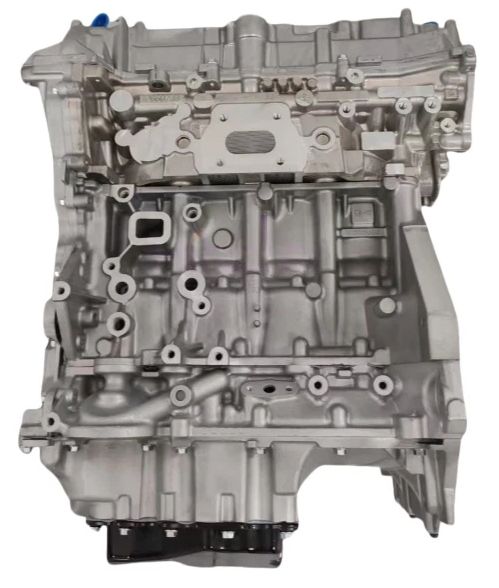
Engineered with a strong emphasis on lightweight construction, the LE2 features an aluminum alloy cylinder block and a matching aluminum DOHC cylinder head. A defining characteristic of this engine is its integrated exhaust manifold, which is cast directly into the cylinder head to accelerate warm-up times and improve overall thermal efficiency. Fuel delivery is controlled by a high-pressure spark-ignition direct injection (SIDI) system, while dual continuous variable valve timing (CVVT) manages the intake and exhaust camshafts to optimize torque across the engine’s entire operational range.
This engine has been primarily utilized in MG’s crossover utility vehicle segment, serving as a core powertrain option. Key applications include the first-generation MG GS (produced from 2015 to 2019) and the first-generation MG HS (introduced in 2018) in various global markets. It was paired with both six-speed manual and seven-speed dry dual-clutch automatic transmissions to suit different driving dynamics and trim configurations.
Technical Specifications
| Displacement (cc) | 1399 cc |
| Max Power (hp (kW) @ RPM) | 150 hp (110 kW) @ 5600 RPM |
| Max Torque (Nm (kg*m) @ RPM) | 235 Nm (24.0 kg*m) @ 1600-4000 RPM |
| Fuel Type | Petrol / Gasoline (95 RON recommended) |
| Fuel Consumption (l/100 km) | 6.6 – 7.2 l/100 km (combined cycle depending on model) |
| Engine Type | Inline 4-cylinder, Turbocharged, Direct Injection (SIDI) |
| Compression Ratio | 10.0:1 |
| Cylinder Bore (mm) | 74.0 mm |
| Piston Stroke (mm) | 81.3 mm |
| Valvetrain | DOHC, Timing Chain, Dual CVVT |
| Valves per Cylinder | 4 (16 valves total) |
| Additional Info | Features an integrated exhaust manifold and variable displacement oil pump. |
Common Problems & Reliability
- Carbon Buildup on Intake Valves: Due to the direct-injection system, fuel does not wash over the intake valves, leading to progressive carbon accumulation. This can result in rough idling, a loss of engine power, and misfires.
- PCV System and Valve Cover Failures: The positive crankcase ventilation (PCV) diaphragm, which is integrated directly into the plastic valve cover, is prone to tearing. A ruptured diaphragm leads to oil consumption, whistling noises, and abnormal crankcase pressure.
- Turbocharger Wastegate Wear: In high-mileage units, the turbocharger wastegate linkage can loosen, resulting in rattle noises and potential boost pressure loss codes.
Under optimal operating conditions and with strict adherence to scheduled maintenance, the MG LE2 is capable of delivering a reliable service life. The expected service mileage before requiring a major mechanical overhaul or significant internal component replacement is approximately 200,000 to 250,000 kilometers.
Maintenance Tips & Service Schedule
To maximize the longevity of the MG LE2, vehicle owners must follow a precise maintenance regimen tailored to direct-injection turbocharged engines. Using the correct engine oil is paramount to preventing Low-Speed Pre-Ignition (LSPI), a destructive phenomenon common in small turbocharged engines.
- Engine Oil: Change the oil and filter every 8,000 to 10,000 kilometers. Use fully synthetic 0W-20 or 5W-30 oil meeting dexos1 Gen 2 or Gen 3 specifications.
- Spark Plugs: Replace the iridium spark plugs every 60,000 kilometers to ensure optimal combustion and protect the ignition coils from strain.
- Intake Valve Cleaning: Perform a professional intake tract cleaning every 50,000 kilometers to mitigate carbon accumulation.
- Cooling System: Flush the coolant every 100,000 kilometers or 5 years using a Dex-Cool compatible organic acid technology (OAT) mixture.
- Timing Chain Inspection: Inspect the timing chain tensioner and guides for wear at 120,000 kilometers to prevent catastrophic engine timing failure.
Conclusion
The MG LE2 engine stands out as an efficient and technologically advanced power unit that provides a lively driving experience. For a used car buyer, this engine represents a safe purchase, provided the vehicle possesses a fully documented and transparent service history showing on-time oil changes with high-grade synthetic oil.