
Overview & Design Features
The MG KV6 engine is a 2.5-liter, naturally aspirated, 90-degree V6 gasoline engine developed by the Rover Group and later manufactured by Powertrain Ltd under MG Rover ownership. Introduced in 1996 to replace the Honda-derived 2.7-liter V6 engines, the KV6 gained recognition for its lightweight all-aluminum construction, compact external dimensions, and highly distinctive exhaust note. This power unit served as the flagship internal combustion powertrain for several iconic MG and Rover performance sedans, representing a major engineering effort to deliver executive-class refinement alongside sporty performance characteristics.
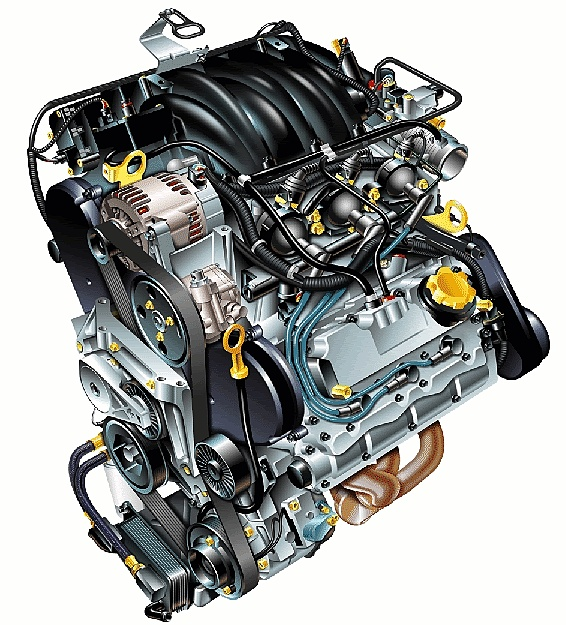
From an engineering perspective, the KV6 utilizes an advanced configuration featuring an aluminum-alloy cylinder block and cylinder heads, supported by a structural bedplate design and damp cylinder liners. The valvetrain consists of double overhead camshafts (DOHC) per cylinder bank driving 24 valves via hydraulic bucket tappets. Notably, the engine does not use variable valve timing (VVT); instead, it employs a sophisticated variable geometry intake system known as the Variable Intake System (VIS), which utilizes electronically controlled butterfly valves to alter the plenum chamber volume. Fuel delivery is managed by a multi-point electronic sequential port fuel injection system, which ensures optimal combustion across the rev range.
The MG KV6 was officially deployed in several notable vehicles between 1999 and 2005. Key applications include the performance-oriented MG ZT 160, 180, and flagship 190 trims, as well as the compact MG ZS 180. Additionally, this engine powered the executive Rover 75, the Land Rover Freelander 1, and the first-generation Kia Sedona under a licensing agreement. Production shifted to China under Nanjing Automobile Corporation (NAC) post-2005, where refined iterations continued to power various domestic Roewe and MG models.
Technical Specifications
| Displacement (cc) | 2497 cc |
| Max Power (hp (kW) @ RPM) | 190 hp (140 kW) @ 6500 RPM |
| Max Torque (Nm (kg*m) @ RPM) | 245 Nm (25.0 kg*m) @ 4000 RPM |
| Fuel Type | Petrol (Gasoline) |
| Fuel Consumption (l/100 km) | 9.8 l/100 km (combined average) |
| Engine Type | Naturally Aspirated V6 |
| Compression Ratio | 10.5:1 |
| Cylinder Bore (mm) | 80.0 mm |
| Piston Stroke (mm) | 82.8 mm |
| Valvetrain | DOHC, belt-driven |
| Valves per Cylinder | 4 |
| Additional Info | Features Variable Intake System (VIS) and a 90-degree V-angle layout |
Common Problems & Reliability
- Variable Intake System (VIS) Failure: The plastic actuator motors and internal butterfly valves inside the intake manifold frequently fail. This leads to a severe loss of low-end torque and a metallic rattling noise inside the plenum.
- Thermostat Housing Leaks: The plastic thermostat housing assembly is located deep within the engine’s “V” valley. Intense heat cycling causes this plastic component to degrade, warp, and crack, resulting in sudden coolant loss and subsequent engine overheating.
- Head Gasket and Liner Issues: While head gasket failures are less frequent than in the smaller four-cylinder K-Series, severe overheating will quickly warp the aluminum heads or cause the wet cylinder liners to drop, compromising the block integrity.
- Expected Service Life: With rigorous preventative maintenance and cooling system upgrades, the realistic expected service life of this engine is 220,000 to 250,000 kilometers before requiring a comprehensive mechanical overhaul.
Maintenance Tips & Service Schedule
- Engine Oil Changes: Perform oil changes every 10,000 kilometers or 12 months using premium 10W-40 semi-synthetic or 5W-40 fully synthetic oil to preserve the hydraulic lifters.
- Timing Belt Replacement: The tri-belt timing system is highly complex, requiring specialized timing tools. All three belts, tensioners, and idlers must be replaced strictly every 100,000 kilometers or six years.
- Coolant Maintenance: Perform coolant flushes every four years using an Organic Acid Technology (OAT) mixture to prevent internal corrosion of the aluminum block and heads.
- Spark Plugs: Replace the spark plugs every 80,000 kilometers to ensure proper ignition coil lifespan.
- System Inspections: Visually inspect the plastic thermostat housing and cooling hoses for hairline cracks during every routine service interval.
Conclusion
The MG KV6 offers an engaging driving experience with smooth power delivery and a characterful sound. However, it remains a demanding engine that requires specialized mechanical knowledge. It is only a safe and viable choice for a used vehicle buyer if accompanied by a comprehensive, documented service history verifying timely timing belt replacements and cooling system upgrades.