
Overview & Design Features
The MG 18N4T1 engine represents a significant evolution in MG’s powertrain offerings, a 1.8-liter (1796 cc) turbocharged inline-four cylinder gasoline unit. Developed by SAIC Motor, this engine builds upon the foundational architecture of the Rover K-series, significantly re-engineered to meet modern performance, emissions, and reliability standards. It served as a critical power unit for various MG and Roewe models, establishing itself as a robust and capable engine within its displacement class, particularly in emerging markets and for domestic Chinese production. Its introduction marked a pivot towards forced induction, offering enhanced power and torque compared to naturally aspirated counterparts.
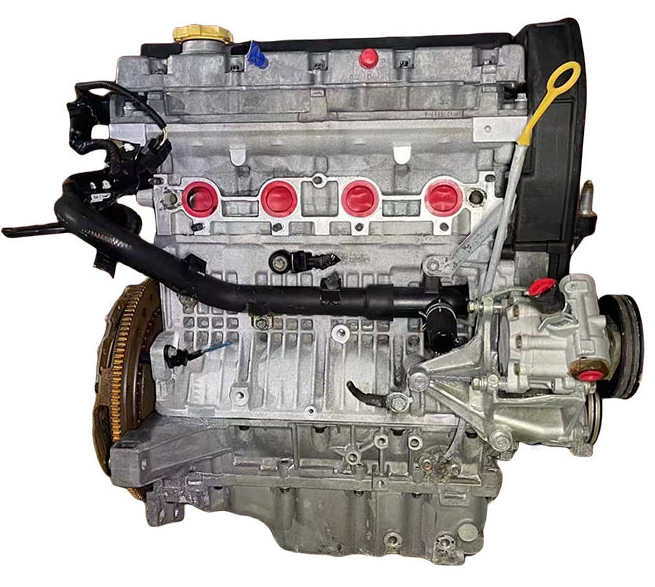
Core engineering features of the 18N4T1 include an all-aluminum alloy cylinder block and cylinder head, contributing to its relatively lightweight construction and efficient heat dissipation. This engine incorporates a Double Overhead Camshaft (DOHC) valvetrain with 16 valves (four per cylinder), optimized for improved volumetric efficiency. Fuel delivery is typically managed by a multi-point fuel injection (MPI) system, ensuring precise fuel-air mixture control. A critical component is the turbocharger, which significantly boosts output across the RPM range. Variable Valve Timing (VVT) on the intake camshaft is also featured in some iterations, further enhancing engine breathability and torque delivery at different engine speeds, balancing performance with fuel economy.
The MG 18N4T1 engine found extensive application across several key models produced by SAIC and MG. It was notably deployed in the MG 6 sedan and hatchback, which debuted in 2010, offering a compelling blend of performance and practicality. Additionally, this engine powered the Roewe 550 and Roewe 750, sedans designed for the domestic Chinese market and select export regions. Its deployment spanned across various trims of these models, typically as the higher-performance option compared to smaller naturally aspirated engines, with production years primarily ranging from the early 2010s well into the mid-2010s and beyond in certain markets.
Technical Specifications
| Displacement (cc) | 1796 |
| Max Power (hp (kW) @ RPM) | 160 (118) @ 5500 |
| Max Torque (Nm (kg*m) @ RPM) | 215 (21.9) @ 2000-4500 |
| Fuel Type | Gasoline (95 RON recommended) |
| Fuel Consumption (l/100 km) | 7.8 – 8.5 (Combined Cycle, model dependent) |
| Engine Type | Inline 4-cylinder, DOHC, Turbocharged |
| Compression Ratio | 9.2:1 |
| Cylinder Bore (mm) | 80 |
| Piston Stroke (mm) | 89.3 |
| Valvetrain | DOHC, 16-valve |
| Valves per Cylinder | 4 |
| Additional Info | Multi-point fuel injection (MPI), Water-cooled Turbocharger, Variable Valve Timing (VVT) on intake |
Common Problems & Reliability
While significantly improved from its K-series origins, the MG 18N4T1 engine is susceptible to a few common issues that prospective owners should be aware of. One frequently reported concern involves the turbocharger unit’s longevity. Over time, particularly with inconsistent oil changes or harsh driving conditions, the turbocharger’s bearings can wear, leading to reduced boost pressure, unusual noises, or excessive oil consumption. Regular inspection of the turbo’s oil feed and return lines for blockages or leaks is crucial.
Another area requiring attention is oil leakage from various seals and gaskets, particularly the valve cover gasket, camshaft seals, and crankshaft seals. As the engine accumulates mileage, these rubber components can harden and crack, leading to oil seepage. Addressing these proactively prevents more significant issues and ensures proper lubrication levels. Lastly, while the notorious K-series head gasket issues were largely resolved through SAIC’s redesign, vigilance regarding the cooling system’s integrity remains important. Leaks from hoses, the radiator, or the water pump can lead to overheating, which, if left unaddressed, can still compromise head gasket integrity over a prolonged period.
Under proper care and adherence to manufacturer-recommended service schedules, the MG 18N4T1 engine can realistically achieve a service life exceeding 200,000 to 250,000 kilometers before requiring a major overhaul. Instances of engines lasting well beyond this mileage are common with diligent maintenance and timely addressal of minor issues.
Maintenance Tips & Service Schedule
Optimal longevity and performance from the MG 18N4T1 engine depend heavily on strict adherence to a comprehensive maintenance schedule. Engine oil and filter changes are paramount, recommended every 10,000 kilometers or every 6 months, whichever comes first. Use a fully synthetic engine oil conforming to API SN/ACEA A3/B4 standards, with a viscosity grade of 5W-40 or 5W-30, suitable for turbocharged engines. Regularly checking oil levels between services is also advised.
The spark plugs should be inspected and replaced every 40,000 to 60,000 kilometers, or as specified by the manufacturer, to maintain optimal combustion efficiency and prevent misfires. The 18N4T1 engine utilizes a timing belt system, which requires replacement every 60,000 to 90,000 kilometers or every 5 years, whichever comes first. This is a critical service item; neglect can lead to catastrophic engine damage. Concurrently, it is prudent to replace the water pump and tensioners when the timing belt service is performed.
Coolant flushes are recommended every 2-3 years or 40,000-60,000 kilometers, using an appropriate long-life coolant. Air filter replacement should occur annually or every 20,000 kilometers, and the fuel filter every 40,000 kilometers to ensure clean air and fuel supply. Regular inspection of all belts, hoses, and fluid levels during routine services will help identify potential issues before they escalate.
Conclusion
The MG 18N4T1 engine, as a re-engineered turbocharged unit, presents a generally reliable and competent powertrain for a used vehicle buyer, offering a strong balance of performance and efficiency for its class. Its robust construction and widespread use in MG and Roewe models attest to its capabilities. A used vehicle equipped with this engine can be a safe choice, provided a comprehensive service history is available, demonstrating diligent adherence to maintenance schedules. A thorough pre-purchase inspection by a qualified mechanic, with particular attention to the turbocharger, oil seals, and cooling system, is highly recommended. Buyers prioritizing a vehicle with adequate power and reasonable running costs, assuming proper care, will likely find the 18N4T1 to be a suitable option.