
Overview & Design Features
The MG Rover L-series engine is a highly regarded 2.0-liter, inline-four, turbocharged direct-injection (DI) diesel engine. Introduced in 1995 by the Rover Group, this powerplant represented a significant engineering advancement over its predecessor, the Perkins Prima. Developed to provide robust durability, superior fuel efficiency, and strong low-end torque, the engine served as the reliable mechanical backbone for numerous passenger cars during a pivotal era in British automotive history.
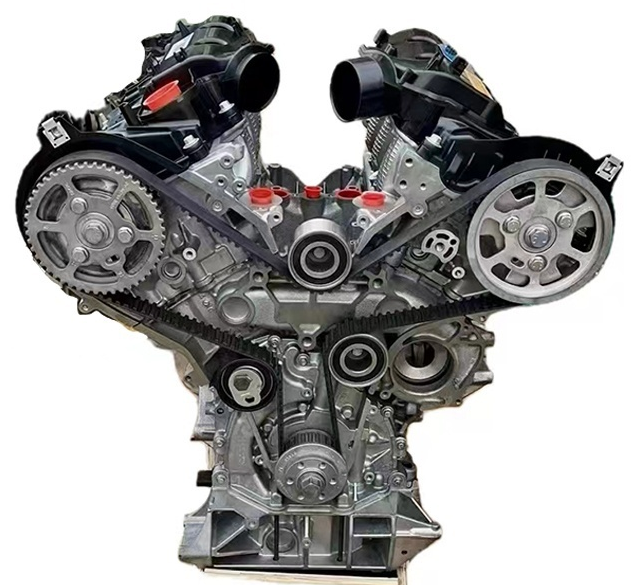
From an engineering perspective, the L-series is constructed around a heavy-duty cast iron cylinder block and a lightweight aluminum alloy cylinder head. Operating with a single overhead camshaft (SOHC) and two valves per cylinder, the engine maintains mechanical simplicity. Fuel delivery is handled by a highly efficient Bosch VP37 electronically controlled rotary injection pump. While it lacks modern variable valve timing (VVT) systems, the integration of dual-stage injectors and a wastegate-controlled Garrett turbocharger ensures dependable performance without excessive mechanical complexity.
The L-series engine was manufactured from 1995 until 2006, seeing widespread application across a broad spectrum of vehicles. It was the standard diesel option for the Rover 200, 400, and 600 series, as well as the later Rover 25, 45, and 75. Performance-oriented MG variants, including the MG ZR, ZS, and ZT, also utilized high-output versions of this engine. Furthermore, Honda utilized the L-series for its European Accord and Civic models, while Land Rover selected it to power the first-generation Freelander.
Technical Specifications
| Displacement (cc) | 1994 cc |
| Max Power (hp (kW) @ RPM) | 101 hp (75 kW) @ 4200 RPM |
| Max Torque (Nm (kg*m) @ RPM) | 240 Nm (24.5 kg*m) @ 2000 RPM |
| Fuel Type | Diesel |
| Fuel Consumption (l/100 km) | 5.8 liters / 100 km (combined cycle) |
| Engine Type | Inline-4 Turbocharged Direct Injection (DI) |
| Compression Ratio | 19.5:1 |
| Cylinder Bore (mm) | 84.5 mm |
| Piston Stroke (mm) | 88.9 mm |
| Valvetrain | SOHC (Belt-driven) |
| Valves per Cylinder | 2 |
| Additional Info | Equipped with a dual-belt drive system and electronic Bosch EDC unit |
Common Problems & Reliability
The L-series is widely regarded as an incredibly resilient engine, often described as nearly indestructible under normal operating conditions. However, specific age-related vulnerabilities do exist. The most frequent mechanical issue stems from the deterioration or split of the rubber intercooler hoses, which leads to immediate boost leaks, a loss of power, and excessive black exhaust smoke. Additionally, electrical issues can manifest as chafed wiring harnesses near the fuel injection pump or engine ECU, occasionally triggering a limp-home mode or intermittent starting failures.
The mechanical core of the engine, including the pistons, crankshaft, and cylinder head, suffers from very few inherent weaknesses. Under conditions of diligent maintenance, a realistic service life of 250,000 miles (approximately 400,000 kilometers) is routinely achievable before a major mechanical overhaul is required.
Maintenance Tips & Service Schedule
- Engine Oil and Filter: Change every 10,000 km (6,000 miles) or once a year. It is optimal to use high-quality 10W-40 semi-synthetic or 5W-40 full synthetic engine oil meeting ACEA B3/B4 standards.
- Dual Timing Belts Replacement: The L-Series utilizes two independent timing belts: a front belt driving the camshaft and a rear belt driving the fuel injection pump. Both belts, along with all tensioners and idler pulleys, must be replaced simultaneously every 75,000–90,000 km (approx. 50,000–55,000 miles) or every 5 years. Neglecting the front belt leads to catastrophic valve-to-piston contact.
- Fuel Filter Care: Replace every 20,000 km. This is vital to protect the highly sensitive high-pressure fuel injection pump (Bosch VP37 or VP30) from water contamination and micro-particles, which cause accelerated wear of the internal rotor.
- Air Filter: Replace every 15,000–20,000 km depending on operating conditions to prevent dust bypass from scoring the compressor wheel of the Garrett turbocharger.
- Cooling System Flush: Drain, flush, and refill the cooling system every 2 years or 60,000 km using high-quality ethylene-glycol based OAT coolant. This protects the aluminum cylinder head from internal galvanic corrosion and guards the plastic heater matrix pipes from scale blockage.
- Valve Clearance Adjustment: The L-Series uses mechanical flat tappets with shims. Check and adjust the mechanical valve clearances every 45,000 km to maintain thermal efficiency and smooth idling.
- Wiring Harness Inspection: Periodically check the engine wiring loom sections routed near the oil filter housing and underneath the injection pump for insulation chafing, as engine vibrations frequently cause short circuits in these areas.